
Managing dog health in boarding is about preventing problems before they become serious and ensuring every dog receives consistent, careful attention throughout their stay. Dogs in boarding are more likely to face stress-related stomach issues, skin and eye problems, or contagious illnesses, which makes daily monitoring, clear routines, and accurate health records essential. By using centralized tools like K9Sky to track vaccinations, medications, observations, and staff updates, boarding facilities can spot health issues early, reduce stress, prevent outbreaks, and provide safer, more reliable care that builds trust with pet owners.

It is a very important task to prevent health complications in dogs in boarding facilities. Dogs come from varying environments, habits, and health backgrounds, and therefore, boarding kennels are high-risk environments for stress-related illnesses and contagious diseases. With appropriate systems and technologies such as K9Sky, boarding facilities can ensure the safety of dogs and avoid disrupting the day-to-day running of the facilities.
Why Dog Health Management Matters in Boarding
The health of dogs kept in boarding facilities is an important issue that must be managed to ensure the safety of each dog, comfort, and well-being. New environments, habits, and other animals are introduced to dogs, which heightens the risk of health problems during boarding, such as stress-related digestive disorders, skin ailments, or eye health issues.
When appropriately managed, pet health helps prevent the transmission of contagious illnesses, minimize emergencies, and reduce stress-related complications. It helps provide steady care, build trust with pet owners, and is crucial to operating a prosperous kennel with high standards of animal welfare.
Common Dog Health Problems in Boarding Kennels

Boarding kennels bring together dogs with different health backgrounds, routines, and stress levels. This increases the likelihood of specific health issues, especially when dogs are exposed to new environments and come into close contact with others.
1. Stress-Related Digestive Issues
One of the most frequent dog health issues in a boarding facility is digestive upset. The anxiety, sudden change of diet, or disrupted feeding schedules can result in dogs having diarrhea, vomiting, or loss of appetite. It has a direct impact on the gut, and even healthy dogs may have temporary stomach problems when staying.
2. Dog Skin Health Conditions
Stress and environmental conditions tend to deteriorate skin issues in the boarding environment. Boarding may cause hot spots, allergic reactions, over-scratching, dry or irritated skin. There is a risk of worsening current dog skin health conditions with frequent use of cleaning agents, moisture from bathing or play, and increased stress when it is not constantly monitored.
3. Dog Eye Health Issues
When in shared indoor and outdoor areas, the dogs develop eye irritation. Common conditions in the eye of the dog during boarding are discharge, redness, irritation, and conjunctivitis. The issues are usually caused by dust, debris, shared toys, or close contact with other dogs, and it is essential to conduct daily eye checks.
4. Respiratory and Contagious Illnesses
Group settings increase the risk of contagious diseases spreading between dogs. Diseases like kennel cough are transmitted quickly through airborne droplets or direct contact. These symptoms may be missed due to repeated health checks or delayed isolation, leading to an increased outbreak in the facility.
What Dog Breeds Have More Health Problems

Some dog breeds are more prone to health issues due to genetic traits and physical characteristics that can be amplified during boarding.
A. French Bulldogs
Prone to breathing difficulties and overheating due to flat faces, especially in stressful or warm boarding environments.
B. Pugs
Characteristically, they have respiratory issues, eye irritation, and heat-sensitivity problems, which should be closely monitored.
C. German Shepherds
Prone to joint and spinal complications like hip dysplasia that may impair mobility when given a prolonged stay.
D. Golden Retrievers
Frequently get skin allergies and ear infections, and are predisposed to some cancers.
E. Cavalier King Charles Spaniels
Has a genetic predisposition to heart disease and neurological illnesses, and hence, health monitoring is necessary when on board.
How Health Issues Impact Daily Kennel Operations
Issues related to dog health directly affect a boarding facility’s day-to-day operations. In cases of sick dogs, employees will have to dedicate extra time to observe the condition, provide treatment, clean up areas, and even seclude the sick dogs. Schedule disruptions, decreased capacity, and liability can also result from health problems, all of which influence the efficiency and quality of services.
Challenges of Tracking Dog Health Without Software

Monitoring the health of dogs in a boarding business is challenging, especially when using traditional, manual methods. The use of paper-based records and oral updates often creates care gaps, increasing the risk of health issues and operational inefficiencies.
1. Miscommunication Between Shifts
Important information can be missed when health updates are shared verbally and/or through notebooks. Important changes in appetite, behavior, and symptoms, such as vomiting or coughing, can be neglected by the workers. This may result in failing to administer medications, arriving late, or being unable to isolate contagious dogs, increasing the risk of outbreaks in the kennel.
2. Record Loss and Inconsistency
Physical records are prone to loss or destruction due to human error. Written messages are illegible, may be lost, or may not be continuously updated by various employees (especially during rushes). This discrepancy complicates the delivery of continuous, standardized care across multiple shifts.
3. Time and Efficiency Limitations
Paper-based documentation will require staff to dedicate more time to recording observations and organizing updates. It minimizes time spent on direct care, behavioral monitoring, and timely actions to address emerging health issues.
4. Limited Historical Data Access
Reading previous health records is a time-consuming process that, in most cases, is incomplete. The lack of convenient access to historical data means staff may lack knowledge of chronic conditions, prior injuries, or recurring issues, which could jeopardize treatment decisions and overall monitoring of the dogs.
Centralized Dog Health Records for Boarding Facilities

Centralized digital health records make managing dog health issues in boarding more accurate and proactive.
1. Immediate Access to Critical Information
Vaccination history, allergies, ongoing conditions, and emergency contacts are instantly available, reducing guesswork and risk. This is especially important for dogs with sensitive conditions, such as chronic skin issues or eye irritation.
2. Organized Medication and Treatment Logs
Automated timestamps, reminders, and treatment records decrease errors and enable every staff member to be on track with care plans without difficulty.
3. Better Preparedness for Emergencies
With health data centralized and readily available, staff will be able to easily identify irregularities and act on them, either by calling a vet or changing routines.
Monitoring Dog Health Issues Before, During, and After Boarding

To prevent illness and keep a dog healthy and safe, it is important to monitor the dog’s health during boarding. Boarding also exposes dogs to new environments, unfamiliar habits, and other pets, and it is important to identify problems early.
1. Before Boarding: Pre-Boarding Health Screening
Preventive health examinations are conducted to prevent the spread of communicable diseases within the kennel. Assessing vaccinations, medications, chronic conditions, and nutritional requirements is another way to ensure staff members can deliver safe, personalized care.
2. During Boarding: Daily Observation and Monitoring
Day-to-day checks enable the staff to identify the emergence of illness or stress in dogs. Observing appetite, behavior, skin, eyes, and energy levels enables timely intervention, preventing minor issues from worsening.
3. After Boarding: Post-Boarding Health Notes
After boarding, documentation assists owners with information about their dog’s health and behavior during their stay. This also helps track recurring problems and enhances care during subsequent visits.
Ensuring Consistent Care Across Staff and Shifts
In boarding, the dog’s health may be compromised due to inconsistent care, which is why multiple personnel look after the dogs. Employees should use standard health check procedures, record immediate observations of the dog’s skin, eyes, and other health issues, and report any changes or problems during shift changes.
K9Sky gives staff real-time access to centralized health records, enables immediate observation logging, and allows follow-up on ongoing treatments across shifts. It will ensure consistent care, early detection of health issues, minimize stress-related problems, support the overall well-being of any dog, and foster trust among owners.
Improving Communication with Pet Owners About Health Concerns
Effective communication with pet owners will be necessary in managing dog health problems in boarding. Communicating on time any symptoms, such as changes in appetite, lethargy, skin health flare-ups, or eye health issues, ensures that owners are informed and can make decisions promptly.
Providing detailed reports on treatments, behavioral observations, and preventive measures enhances care by ensuring that owners and staff respond promptly to health issues. These frequent updates reduce the risk of complications, maintain continuity of care throughout shifts, and foster trust through professionalism and transparency.
Tools like K9Sky also improve this process by enabling the exchange of accurate records in real time, helping staff stay organized and owners feel satisfied with the care their dogs are receiving.
How K9Sky Helps Prevent Health Risks in Boarding

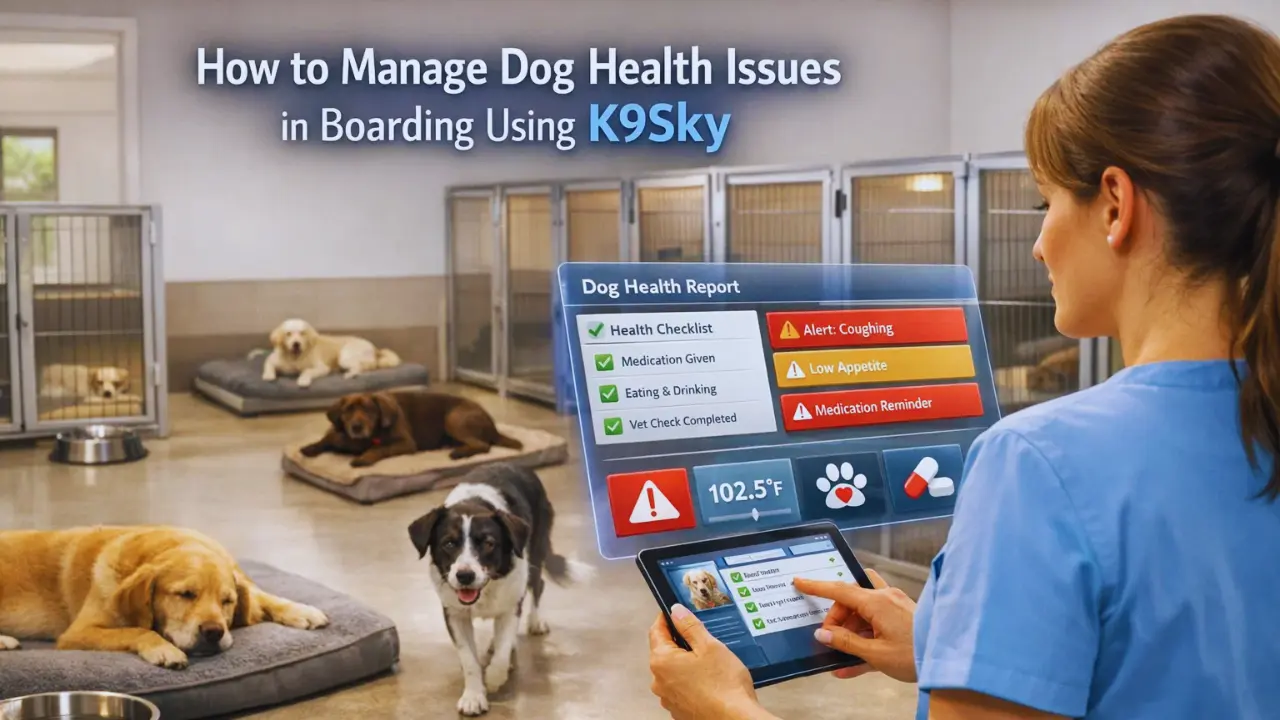
K9Sky is a Boarding Management Software that centralizes all health records, helping boarding locals actively manage their dogs’ health. It enables employees to record daily notes, vaccinations, and medications, and to monitor conditions such as dog skin health and eye health.
K9Sky helps staff identify the first symptoms of an illness and administer treatment promptly, preventing outbreaks and serious consequences by sending real-time alerts and reminders. K9Sky facilities can streamline workflows, maintain accurate health records across shifts, and enhance dog welfare.
Using Health Data to Run a Successful Kennel
Regular health check information is a valuable resource for effective kennel management. By monitoring trends in health issues, stress responses, and recurring diseases in dogs, facility managers can optimize routines, staffing, and facility layout to better meet the needs of the dogs.
Analyzing this data can also reveal patterns in dog health issues, enabling preventive measures before problems escalate. The facilities that use health data to deliver better-quality care and increase customer satisfaction, retention, and their professional reputation as boarding providers.
How Technology Supports Long-Term Dog Health in Boarding
Technology helps shift boarding care from reactive to proactive management, facilitating the long-term health of dogs. Digital solutions help staff track current condition, recognize initial signs of health issues in dogs, and maintain records throughout all stays.
Real-time data access enables facilities to monitor dog skin health, eye health issues, medications, and stress levels. This provides continuity of care, minimizes human error, and sets protocols that enhance overall health outcomes; therefore, technology is a necessary aspect of modern-day Kennel operations.
Conclusion
To successfully maintain the health of dogs in dog boarding, it is necessary to be consistent, monitor actively, and communicate clearly. Solutions like K9Sky can simplify a business’s administrative tasks, make it easier to coordinate staff, and monitor the health and any issues in real time, ensuring each dog receives high-quality, safe care.
Technological integration, health data use, and open communication with pet owners are the keys to preventing common dog health issues, promoting overall well-being, and establishing a reliable, professional relationship, which are the primary requirements for running a successful kennel.
Frequently Asked Questions
Q: What skin problems can dogs develop during boarding?
A: Dogs can develop skin problems due to stress, allergies, or environmental factors. The most frequent include hot spots, rashes, over-scratching, dry or irritated skin, and the exacerbation of underlying conditions.
Q: What eye problems are common in boarded dogs?
A: The health problems dogs may experience in boarding may include redness, irritation, discharge, conjunctivitis, or temporary dryness. They are usually caused by close contact with other dogs, dust, or debris in the play areas, and it is important to monitor them daily.
Q: How important are health records for boarding dogs?
A: Proper dog health documentation is very important for safe boarding. They assist employees in tracking vaccinations, medications, chronic diseases, and past medical problems, allowing them to identify health complications in dogs at an early stage and provide regular care regardless of the shift.
Q: How to make boarding less stressful for dogs?
A: Stress reduction can prevent many dog health issues in boarding. Facilities can provide consistent routines, quiet rest areas, enrichment activities, individualized attention, and gradual acclimation to reduce anxiety.
Q: Can dogs get sick from boarding?
A: Yes, dogs are not immune to disease when they are exposed to contagious disease, stress, dietary, and environmental changes. Quite typical are kennel cough, stomach troubles, or skin rashes; yet good care, observation, and prophylaxis reduce the risks.
Q: Do dogs get sad when boarded?
A: Certain dogs might also have a case of temporary anxiety, loneliness, or mild depression based on separation from their owners. Emotional well-being can be preserved through structured routines, socialization, and staff attention that minimize the negative effects of stress on dog health.