
The pet care industry is growing fast. More people own pets today than ever before. That means more businesses are entering the market every year. Dog walkers, groomers, boarding facilities, and trainers all compete for the same customers. For business owners, this makes things harder. Standing out is no longer optional; it is necessary to survive and grow.
This article breaks down what it really takes to build a strong pet care business. You will learn why competition is rising, what separates good businesses from great ones, and seven proven ways to grow. Each strategy is practical and easy to apply. By the end, you will know exactly how to improve your services and attract more loyal customers.
What Is the Pet Care Industry and Why Is It Growing?
The pet care industry includes all services and products for pets. This covers grooming, boarding, training, walking, daycare, and veterinary support. Pet ownership has increased steadily over the past decade. Families now treat their pets like household members. They spend more money on pet health, comfort, and care than ever before. This growing emotional bond has turned pet care into one of the most profitable service sectors in the world.
Market research shows that pet spending continues to climb each year. People are willing to invest in high-quality care for their animals. This creates a huge opportunity for pet care businesses. However, more demand also brings more providers. New services launch regularly, making the market more crowded and competitive every season.
Why Is Competition Increasing in the Pet Care Industry?

Starting a pet care business is easier today than it was ten years ago. Low startup costs and flexible work models attract many new providers. Online platforms make it simple to advertise and find clients. As a result, pet care is now saturated in many cities and neighborhoods. Business owners find it harder to attract new customers. Holding on to existing ones also takes more effort and strategy than before.
Many small pet businesses struggle without a clear plan. Some offer similar services at similar prices, leaving customers no reason to choose one over the other. Without a unique edge, growth slows down quickly. Owners feel stuck even when they work hard every day. The real problem is not the effort but the lack of smart direction and clear positioning in a busy market.
What Makes a Pet Care Business Stand Out Today?
Standing out means being remembered and trusted by customers. It is not just about having a nice logo or a good social media page. Real differentiation comes from how you treat pets and their owners every single day. Quality of service, clear communication, and consistency build a reputation that lasts. Customers stay loyal when they feel confident in your business. That confidence comes from real experiences, not just marketing messages.
Trust is the most valuable thing in this industry. Pet owners want to know their animals are safe and well cared for. They choose businesses that are reliable, professional, and easy to communicate with. A business that delivers on its promises consistently will always stand above the rest. Focus on the experience you create for both the pet and the owner, and growth will follow naturally.
What Are the Best Ways to Stand Out in the Pet Care Industry?
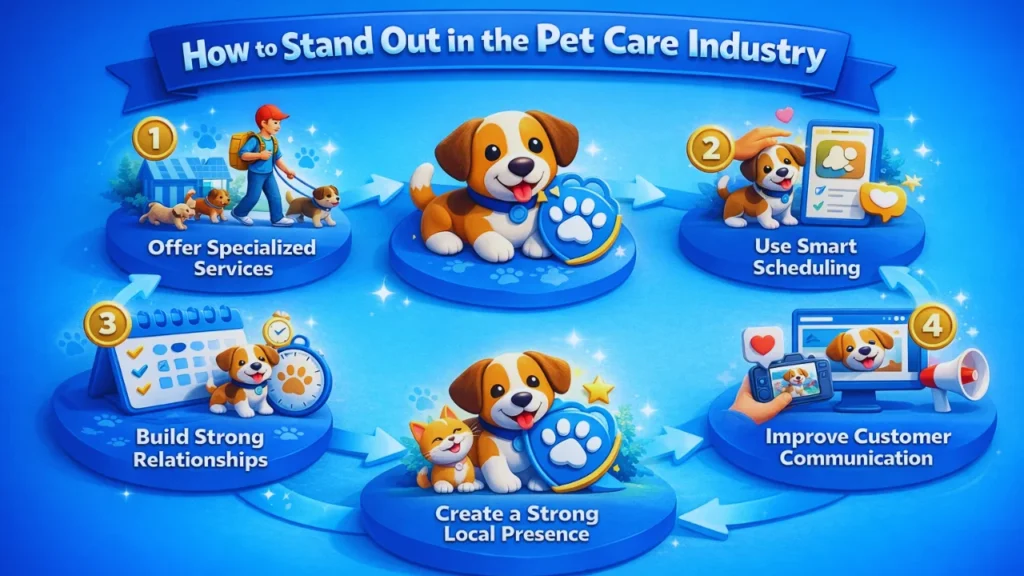
Growing a pet service business takes more than showing up every day. You need smart strategies that attract new clients and keep existing ones happy. The following seven approaches have helped many pet business owners build stronger, more competitive services. Each one addresses a real challenge and offers a clear path forward.
1. Offer Specialized and Flexible Services
Not every pet owner wants the same thing. Some need early morning walks. Others require care for older pets or animals with special needs. Offering specialized services sets you apart from businesses that take a one-size-fits-all approach. Flexible scheduling also shows clients that you respect their time. When you adapt to their needs, they feel valued, and valued clients come back again and again.
2. Build Strong Customer Relationships
Loyalty does not happen by accident. Consistent, caring service builds it over time. Remember client names and pet details. Follow up after appointments to check in. Small gestures make a big difference in how people feel about your business. Strong relationships also reduce the need to constantly find new customers. Happy clients refer friends and family, which is the most powerful and affordable form of marketing available to any small business.
3. Use Smart Booking and Scheduling Systems
Disorganized scheduling creates stress for both staff and clients. Missed appointments or double-bookings quickly damage trust. A reliable booking system keeps everything clear and on track. Clients appreciate being able to schedule, confirm, or reschedule easily. Smooth operations show professionalism. When your business runs without confusion, clients feel confident leaving their pets in your care, and that confidence turns into long-term loyalty.
4. Improve Customer Communication
Good communication is one of the biggest differentiators in pet care. Send appointment reminders so clients never miss a session. Share updates and photos during pet visits to ease owner anxiety. Respond to messages quickly and clearly. Clients who feel informed trust you more. Clear communication also reduces misunderstandings and complaints. Building this habit into your daily routine shows clients that you are attentive, professional, and genuinely invested in your clients’ pets’ well-being.
5. Create a Strong Local Presence
Most pet care businesses serve a specific neighborhood or city. Local visibility matters more than a global audience. Ask happy clients for online reviews and referrals. Partner with nearby pet stores, vets, or dog parks. Attend local events and community gatherings when possible. These actions build name recognition in your area. When people in your community think of pet care, your business should be the first name that comes to their mind every single time.
6. Focus on Quality and Consistency
One great experience is not enough. Clients expect the same high standard every single time they use your service. Inconsistency is one of the fastest ways to lose a customer. Train your team well and set clear service standards. Check in regularly to make sure those standards are being met. Quality builds your reputation slowly and steadily over time. Consistency is what keeps that reputation strong, even during busy periods or staff changes at your business.
7. Expand Your Marketing Reach
Many pet businesses rely only on word of mouth. That is a good start, but it limits growth. Use social media to share pet photos, tips, and behind-the-scenes content. Build a simple website with clear service information and contact details. Consider targeted local ads to reach new clients in your area. Marketing does not need to be expensive. Consistent, authentic content builds trust with future clients before they ever contact you.
What Mistakes Prevent Pet Businesses from Growing?

Many pet businesses plateau because of avoidable habits. Poor communication is one of the most common issues. Clients feel ignored when messages go unanswered or updates are late. Disorganized operations waste time and create errors. Without proper systems, even talented pet care providers struggle to scale. Failing to differentiate your services means you look just like every other option in the market, giving clients no reason to choose you specifically.
Ignoring customer experience is another major mistake. Owners sometimes focus so much on the pet that they forget the human side of the business. Clients want to feel heard, informed, and respected. A single negative interaction can lead to a lost customer and a bad review. Fixing these issues does not require a huge budget. Awareness and intentional daily habits can turn these weaknesses into real competitive strengths for your pet business.
What Is the Smart Way to Scale a Pet Care Business?
Scaling a pet care business means growing without losing quality or control. Many owners try to manage everything manually. That approach works when you have five clients but not fifty. Structured systems help you handle more clients without burning out. The right pet care business software keeps customer records organized and lets you personalize service as your client base grows. Scheduling tools remove the chaos from daily operations and free up your time for what matters most.
Automation is playing an increasingly important role in how pet businesses manage their day-to-day tasks. Sending automated reminders, tracking appointment history, and keeping client notes all reduce human error. Good software for the pet care industry also creates a more professional experience for clients. When your back-end operations run smoothly, your front-end service improves naturally. Investing in the right pet care business software early saves you significant time, money, and stress as your business continues to grow and serve more pets and families in your community.
Conclusion
The pet care industry rewards businesses that truly care about pets, owners, and consistent quality. Standing out takes more than good intentions. It requires smart strategies, reliable systems, and genuine relationships. Start with one or two changes and build from there. Every improvement adds up over time. Your business can grow, compete, and thrive in even the most crowded market when you commit to doing things the right way, every single day.
FAQs about Standing Out in the Pet Care Industry
1. How long does it take to see growth in a pet care business?
Growth usually takes a few months of consistent effort. Results improve as you build trust and repeat clients.
2. Do I need a website to stand out in the pet care industry?
A simple website helps build trust and makes it easier for customers to contact and book your services.
3. What is the most important factor for customer retention?
Consistent service and clear communication keep customers coming back and build long-term relationships.
4. How can I handle more clients without feeling overwhelmed?
Organizing your schedule and using simple systems helps you manage more clients without stress.
5. Is it better to offer many services or focus on one niche?
It depends on your market, but specialized services often help you stand out more clearly.
6. How can small pet businesses compete with bigger companies?
By offering personal service, better communication, and local trust, small businesses can compete effectively.