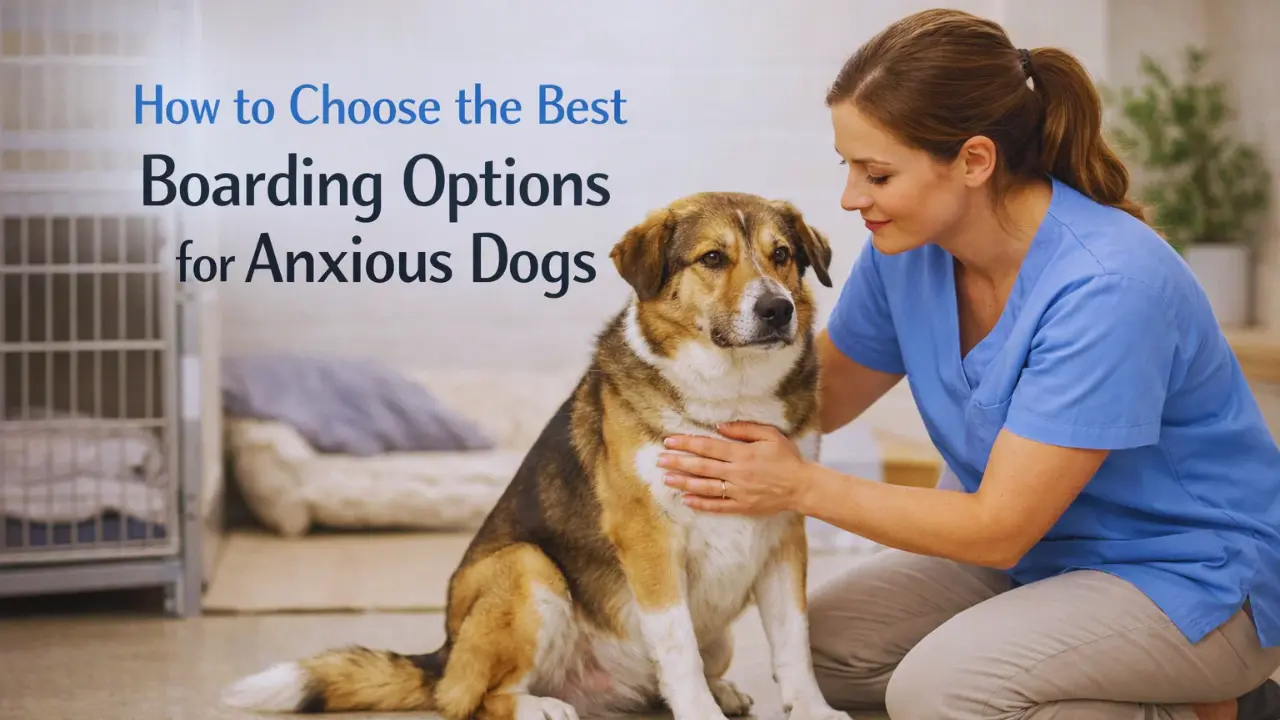
In this article, you will learn how to choose the best boarding options for anxious dogs by understanding how anxiety affects them in new environments, what types of facilities work best, and which setups may actually make stress worse. We will walk through the differences between in-home boarding and kennels, the key features of stress-free facilities, how staff should handle nervous dogs, and how routine and preparation can dramatically reduce anxiety. You will also learn practical steps to prepare your dog for boarding, along with questions to ask about facilities, so you can confidently choose a safe, calm, and supportive environment that protects your dog’s emotional well-being.
It is overwhelming to find the perfect boarding solution for an anxious dog. While confident dogs settle into new environments with ease, anxious dogs experience real distress during boarding. The good news is that suitable boarding for anxious dogs does exist when you know what to look for. The key is understanding that anxiety is not bad behavior or stubbornness. It is a genuine emotional response to unfamiliar surroundings, separation from their owner, and sudden changes in routine. When you recognize this difference, the search for the right boarding business option becomes less about convenience and more about creating emotional safety.
Many pet owners feel guilt or worry about leaving an anxious dog behind, especially if past experiences have not gone well. However, boarding need not be a traumatic event. With the proper preparation, the right environment, and caregivers who understand anxiety-aware handling, even sensitive dogs can adapt more smoothly than expected. Choosing wisely means focusing on calm routines, low-stimulation settings, and staff who respond with patience rather than pressure. When these elements come together, boarding becomes manageable, structured, and far less stressful for both you and your dog.
Understanding Dog Anxiety in a Boarding Environment
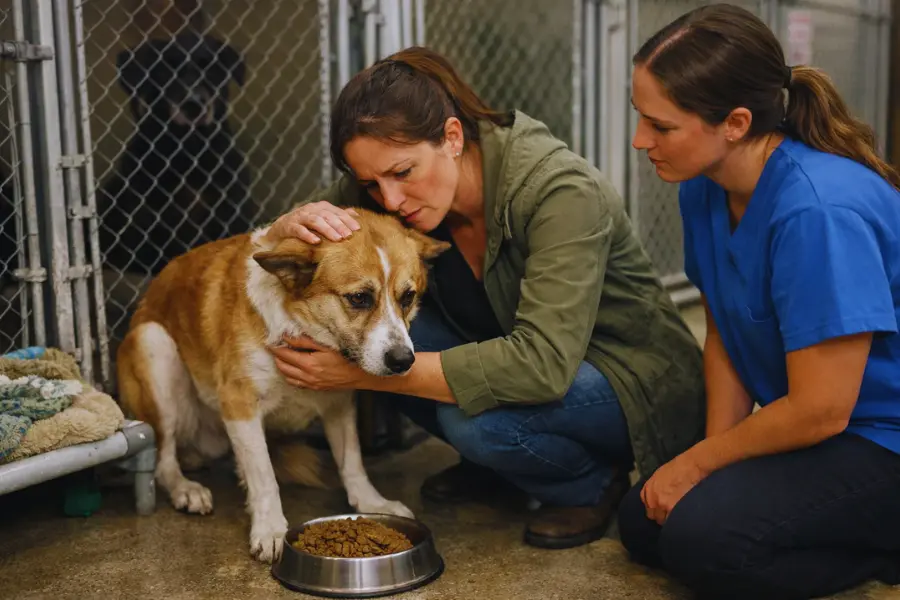
Dog anxiety isn’t laziness or stubbornness; it’s a real emotional response to unfamiliar settings, separation, or new people. Every day stress makes a brief appearance when dogs encounter something new. Your dog may whine for a few minutes or seem clingy, then settle.
Anxiety is ongoing. Your dog remains tense, refuses to eat, paces constantly, or shows fear even after days. Anxiety disrupts your dog’s ability to function or relax. In a boarding situation with an anxious dog, the difference matters enormously. Anxious dogs don’t simply “get over it” with time alone.
Why Anxious Dogs Need Specialized Boarding Care
Boarding nervous dogs process their environments differently from relaxed dogs. Their nervous systems remain activated longer, making typical boarding arrangements ineffective or even damaging.
Some key reasons why anxious dogs need specialized care:
- Emotional sensitivity: They are sensitive to subtle changes, such as changes in routine or tone, and to unfamiliar faces.
- Slower adjustment: While other dogs adapt in hours, anxious dogs may take days or weeks.
- Higher stress escalation: Small changes lead to much larger emotional reactions
- Trauma risk: Bad boarding experiences can have a deteriorating effect on anxiety in the long run.
Standard boarding environments, designed for confident dogs, often leave anxious dogs more overwhelmed. The noise, constant presence of people, and new routines make already-sensitive dogs even more distressed.
Common Boarding Challenges for Nervous and Anxious Dogs
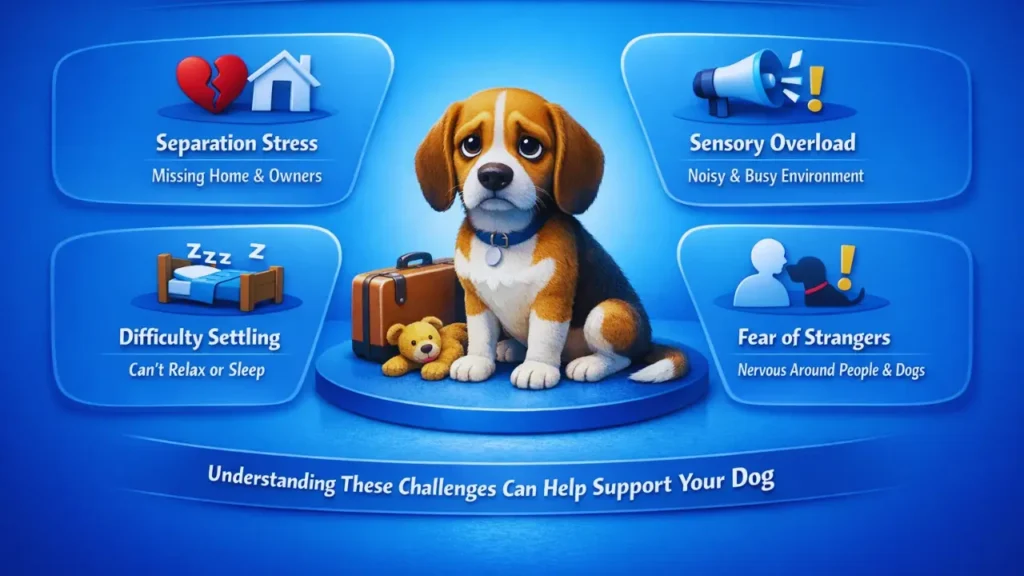
Knowing the sources of stress on your dog will help you find effective ways to address the problem.
Typical boarding challenges include:
- Separation stress: Stress caused when they are separated from their owner and their familiar environment
- Sensory overload: Barking dogs, strange smells, the presence of strangers, and activity levels
- Difficulty settling: Inability to sleep, eat, or relax despite feeling physically fatigued
- Fear of strange handlers or other dogs: Fear of new people or social situations they may not have experienced
These challenges and issues are not flaws. These indicate genuine emotional needs that dogs have, not a failure on your part.
Best Boarding Options for Anxious Dogs
Not all boarding is created equal. The best options emphasize peaceful environments and organized, predictable care.
- Low-stimulus boarding setups minimize noise, activity, and constant interaction. Your anxious dog gets quiet time, consistent handling, and no forced socialization.
- One-on-one care models pair your dog with one trained caregiver. This continuity reduces confusion and builds trust more quickly than rotating handlers.
- Smaller environments work better than extensive, warehouse-style facilities. Your dog isn’t competing for attention or navigating crowded spaces.
- Why structure matters more than space – A peaceful, organized small boarding facility will always have more value than a large facility with disorganized routines. Highly anxious dogs need predictability, not space.
In-Home Boarding vs Kennels: Which Is Better for Anxious Dogs?
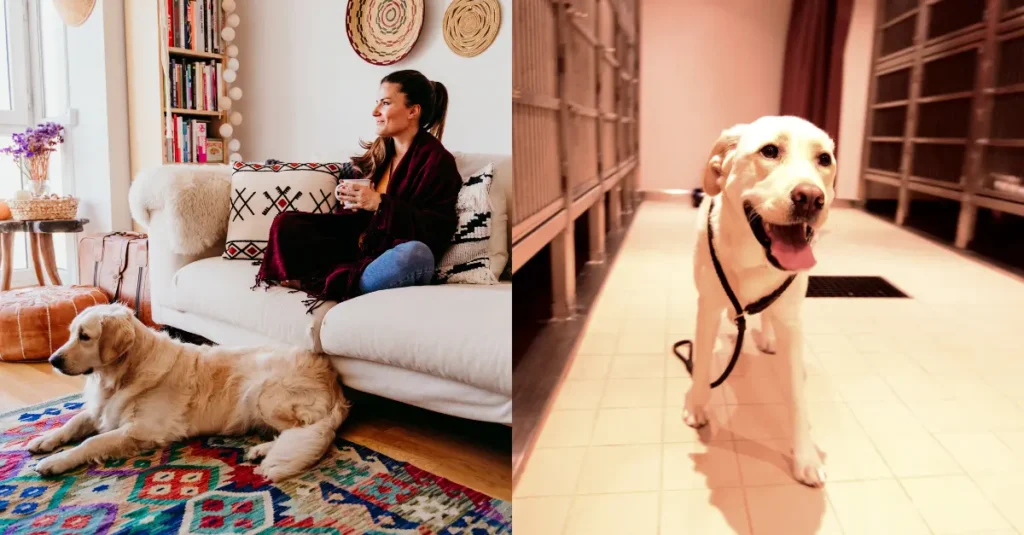
This comparison causes great confusion for most of the pet parents. Advantages and limitations are fundamental for both options.
In-home boarding advantages:
- In-home dog Boarding has a quiet and familiar environment
- Usually, there is one persistent caregiver
- Lower stimulation through the senses
- Adjustment periods are much easier
Risks of in-home boarding:
- Standards of care for anxious dogs are not guaranteed to be the same (not every in-home provider is trained)
- No oversight or backup support
- less structured routines compared to professional facilities
- The caregiver’s absence or emergency makes your dog unsupervised
When kennels are still an option:
Well-run kennel options for anxious dogs include behavioral boarding, dog training, quiet zones, and anxiety-aware staff, and they certainly work for some anxious dogs. It is the kennel’s culture and staff’s approach that matters more than the building type.
Balanced truth. No option is automatically “better” than the other. Your dog’s anxiety triggers determine the best fit.
Features of Stress-Free Dog Boarding Facilities
If you pick a Dog Boarding Center, find places that show awareness of dog anxiety.
Key aspects:
- Quiet zones – Different areas away from everyday noise and activity
- Regular daily routines – Eating, potty schedules, and sleeping periods are consistent
- Supervised interactions – The staff decides when and how dogs get to interact, and never compels group play
- Personnel trained in behavior awareness – They catch anxiety signals and respond calmly
Question the facilities directly: How do they take care of anxious dogs differently? Do they have places for them alone? What is their method for dog boarding of unsocialized dogs?
Boarding Options That May Worsen Dog Anxiety
Some boarding environments, no matter how well-intentioned, increase anxiety in sensitive dogs.
Avoid:
- High-volume kennels with constant activity and noise
- Mandatory or constant group play and dog-to-dog interaction
- Frequent handler changes (different staff each day)
- Overstimulating environments without rest periods
If a facility can’t describe how they manage anxious dogs separately, it’s likely not a good fit for your dog.
How to Prepare an Anxious Dog Before Boarding
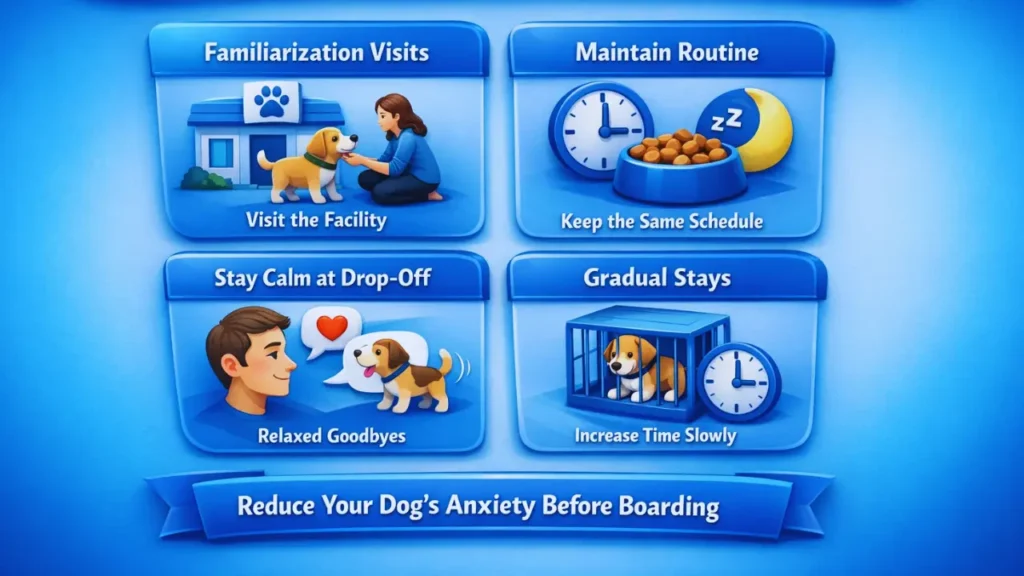
Being a well-prepared owner will significantly help you reduce your dog’s anxiety during boarding, which is usually unavoidable for sensitive dogs. Here are the main steps for preparation:
- Schedule familiarization visits: Visit the boarding location several times. Allow your dog to meet the personnel, smell the place, and feel the atmosphere without the stress of being left behind.
- Consistency in routine: In the days leading up to the boarding, continue with the exact feeding times, exercise, and sleeping patterns
- Observe your attitude before the drop-off: Dogs can sense their owners’ anxiety. Keep goodbyes calm, short, and to the point.
- Introduce gradual exposure: leave your dog for short periods first (30 minutes), then longer (a few hours), before full overnight boarding.
Dogs prepared this way experience measurably less anxiety than those left without an introduction.
How Boarding Staff Should Handle Anxious Dogs
Quality staff understand that anxious dogs need different handling than confident ones.
Staff should:
- Use calm, quiet tones and gentle movements
- Read stress signals (panting, tucked tail, freezing, avoiding eye contact) and respond by reducing demands
- Avoid forced interaction, petting, or play
- Maintain consistent routines so the anxious dog knows what to expect
If staff describe all dogs as “getting used to it” without mentioning anxiety-specific handling, that’s a red flag.
The Role of Routine and Environment in Anxiety-Free Boarding
Routine and environment form the foundation of anxiety-free boarding. They’re not luxuries; they’re necessities for anxious dogs.
Predictability reduces anxiety because your dog doesn’t waste mental energy worrying about what happens next. Feeding time, potty breaks, and rest periods happen at expected times. Just as with activity, rest periods are essential. Anxious dogs tire more quickly, both mentally and emotionally. They require some time in silence to recover.
Limited stimulation means fewer triggers, lower overall arousal, and better sleep. A calm, structured day allows your dog’s nervous system to settle. This method does not imply isolation or boredom; it is all about providing security.
How Technology Supports Better Care for Anxious Dogs During Boarding
With the Dog Boarding Software System, the boarding staff and pet owners can easily communicate about the anxious dog’s needs.
What role does technology:
- Care notes and behavior tracking – The staff note how the anxious dog acts, what soothes it, and what causes stress.
- Routine reminders – The systems ensure no one forgets your dog’s specific schedule.
- Owner communication updates – You receive calm, detailed updates on your dog’s adaptation and mood.
Technology is always there as a support system, but never as a substitute for attentive, human care. The most significant tool is a loving person who knows the dog well.
Final Checklist for Choosing the Right Boarding Option for an Anxious Dog
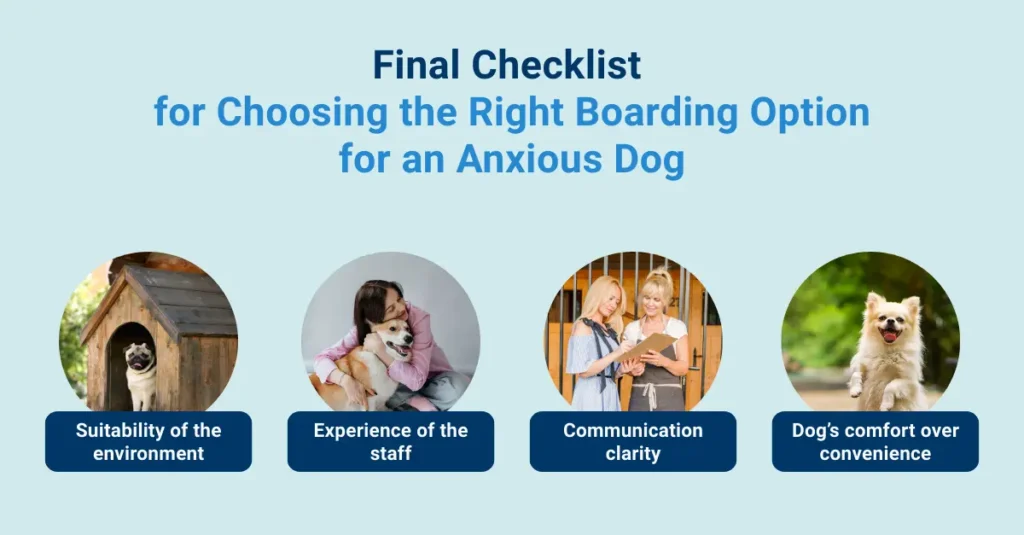
Before you decide on boarding, check these basics:
1. Suitability of the environment
The caregiver or facility must provide low-stimulation alternatives, including quiet areas or accessible isolated rooms. The noise level should be bearable for the sensitive dog and create a peaceful ambience rather than constant stimulation.
2. Experience of the staff
Choose the facilities that train employees specifically to handle nervous dogs and can describe in detail the practices of anxiety-aware handling. The staff will be trained to avoid forced contact and to understand when a dog needs space rather than being distracted.
3. Communication clarity
Before onboarding, the facility should discuss your dog’s specific anxiety triggers, give updates on your dog’s adjustments, and be open to accommodating your dog’s needs during their stay.
4. Dog’s comfort over convenience
The last checkpoint asks you to consider whether it is the best choice to prioritize your convenience over your dog’s emotional comfort, suggesting it is the right time to reconsider whether convenience is more important than their well-being.
FAQs About Boarding Anxious Dogs
How do I make boarding less stressful for my anxious dog?
Everything depends on preparation. Go to the location earlier, maintain routines, make drop-offs brief and calm, and select a facility that knows how to provide anxiety-free care.
Are kennels suitable for dogs with anxiety?
Yes, if they’re managed by staff trained in anxiety-aware care, offer quiet zones, and maintain predictable routines. The kennel itself doesn’t cause the problem; chaotic management does. Find one that treats anxious dogs differently.
What dog breed is most prone to anxiety?
Anxiety can affect any dog, across breeds, mixes, and sizes. Genetics contribute, but so do the environment, early socialization, and past experiences. Your individual dog’s temperament matters a whole lot more than breed stereotypes.
Can I board my dog if he doesn’t like other dogs?
Absolutely. Look for boarding facilities that do not require group play or interaction between dogs. Many places offer individual boarding, quiet areas, or even in-home care designed for unsocialized dogs. Your dog does not have to like other dogs to board successfully.
Does dog anxiety get worse with age?
Anxiety can intensify as dogs age if they’ve had negative experiences or developed stress over time. However, older anxious dogs also settle into familiar routines beautifully. Age alone doesn’t determine how an anxious dog handles boarding; their individual history and current setup do.
Final Thoughts
Choosing boarding for anxious dogs means being honest about your dog’s emotional needs and setting realistic expectations for what will truly help.
The best option isn’t the flashiest or most convenient for you; it’s the choice that keeps your anxious dog calm, settled, and safe. That may be in-home care, a small and quiet facility, or a kennel with staff who understand anxiety.
Preparation before boarding matters more than the location itself. Time invested in familiarization, routine consistency, and calm drop-offs reduces anxiety during dog anxiety management more effectively than any other factor.
Your anxious dog’s well-being always comes before convenience. With proper preparation and the right choice, boarding can become manageable for nervous dogs.