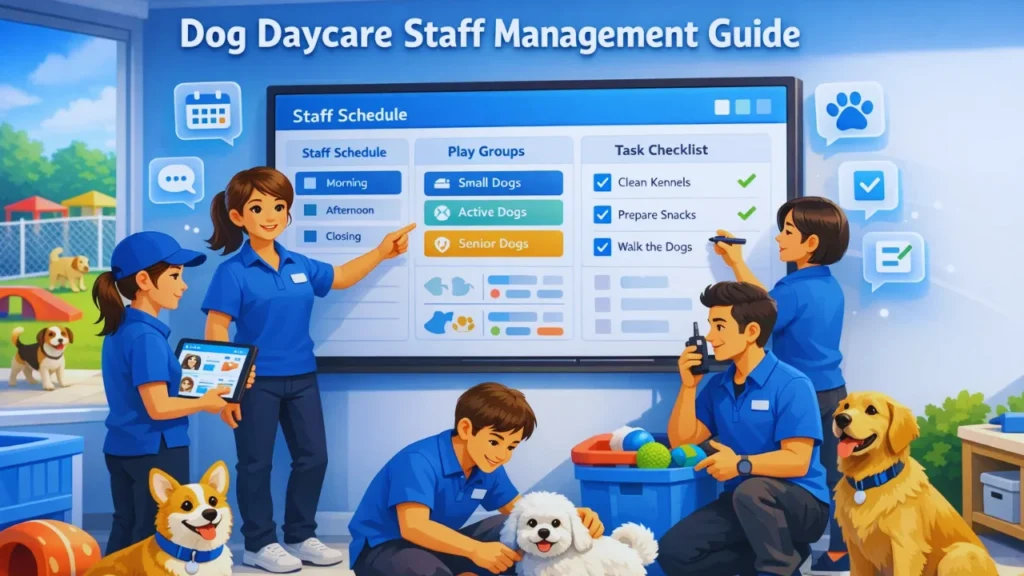
Dog daycare management is the daily system that keeps dogs safe, staff organized, and pet owners confident. It covers scheduling the correct number of dogs, supervising compatible playgroups, tracking feeding and medication schedules, assigning staff responsibilities, and communicating clearly with owners. When these tasks are handled with clear routines and proper records, daycare operations run smoothly rather than feel chaotic. Strong management reduces stress for dogs, prevents staff burnout, builds trust with owners, and allows the business to grow safely and profitably without losing control.
Running a dog daycare is rewarding but demanding. You juggle dozens of energetic dogs, coordinate staff schedules, track medications, and keep everyone safe. One missed medication or incompatible dogs together spirals into chaos. Many owners start organized, then grow, and suddenly feel as if they are drowning. The problem isn’t your commitment, but managing operations manually becomes impossible once you hit 20-30 dogs a day.
This guide walks you through what dog daycare management actually means in real life, covering daily operations, common problems, and how the right systems transform chaos into smooth, profitable operations. You will discover how combining proper procedures with Dog Daycare management software lays the foundation every successful daycare needs to protect dogs, support staff, and consistently satisfy owners.
What Is Dog Daycare Management?
Dog daycare management controls every piece of your operation, so nothing gets missed. It covers scheduling dogs into compatible groups, ensuring staff actively watch rather than get distracted, tracking health information and behavioral notes, pairing compatible temperaments while separating aggressive dogs, managing staff shifts, handling owner communication, and documenting everything that happens. When we talk about dog daycare management, we are orchestrating a small business with clear systems, accountability, and attention to detail.
The difference between chaos and smooth operations isn’t luck. It has methods for every recurring task, backup plans for when things go wrong, and tools that make tracking information easy rather than impossible.
Whether launching your first daycare or expanding from a grooming salon, the operational framework stays the same. Understanding how to start a successful dog daycare business helps you build the proper foundation as you grow.
Why Proper Dog Daycare Management Matters
When management breaks down, everything suffers. Without proper supervision, a sick or stressed dog goes unnoticed, leading to injury and reputation damage. Overcrowding causes stress-related aggression and fights, while poor management burns out staff because they don’t know their responsibilities or face constantly changing shifts. They leave, creating expensive turnover and instability. Owners lose confidence when pickup information is late, or you can’t explain their dog’s day, so they switch to other daycares quickly.
Proper management prevents this by keeping dogs safe through consistent health tracking, keeping staff engaged with clear roles, building owner confidence through reliable communication, and making your business financially stable and scalable without compromising safety or care quality.
Core Areas of Dog Daycare Operations
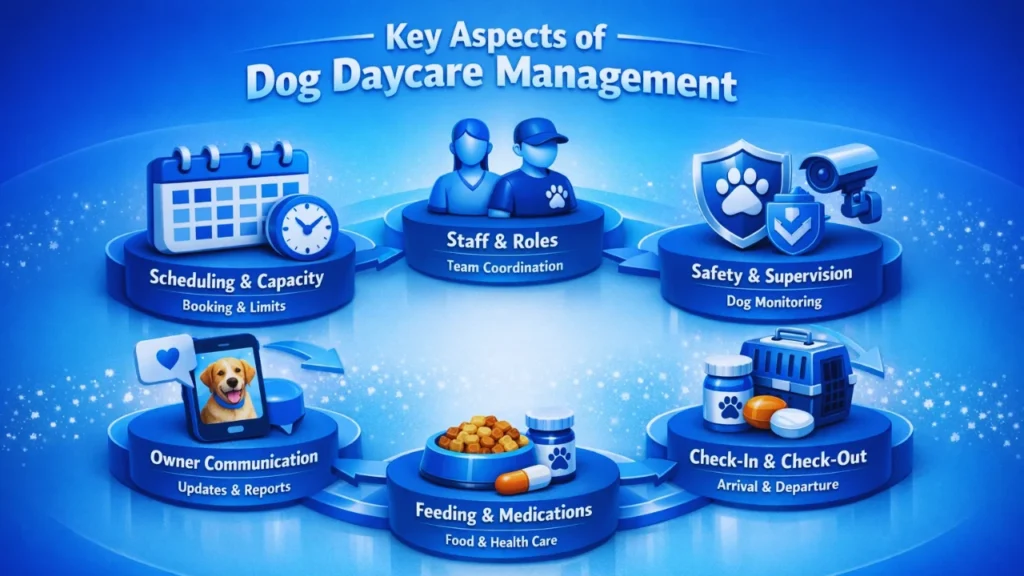
Dog daycare management can be broken into six main operational areas, and each affects the others. Understanding how these work together keeps your daycare running smoothly and safely.
1. Scheduling and Capacity Management
The moment you accept more dogs than you can safely supervise, you’ve lost control. Capacity management means knowing your limits and respecting them every single day, without exception. Most daycares operate in time blocks with a maximum number of dogs based on staff count and available space. Many owners squeeze in just one more dog, but one becomes two, becomes five, and suddenly you are understaffed.
Overbooking leads to rushed care, missed health checks, and stressed staff. Some daycares separate dogs into different playgroups based on size, age, or temperament. Managing these groups requires knowing which dogs fit where, tracking behavioral information, and being willing to move dogs around for everyone’s safety.
2. Staff Management and Roles
Your staff are your most important asset and your biggest operational challenge if you don’t manage them clearly. Every staff member needs to know their exact job, shift times, which dogs they are responsible for, and what standards they must meet. Dog daycare staff management includes setting precise staff-to-dog ratios. Most states recommend one adult for every 5-8 dogs during active supervision.
If you have 24 dogs and only two staff members, you are setting yourself up for serious problems. Staff need training in recognizing signs of stress or illness, appropriately breaking up play, and separating dogs before conflicts occur. Shift planning is complicated when done manually, but consistency helps dogs recognize their caregivers, while accountability shows which staff member was responsible for each dog.
3. Safety, Supervision, and Dog Compatibility
Dogs can’t tell you they are uncomfortable before snapping at another dog. Before a new dog starts, do a temperament assessment to understand if they handle playing with other dogs, show aggression, or get scared easily. You need to track these details and use them to build compatible playgroups that prevent conflict and injury.
Supervision means active watching, not just existing nearby. Staff should notice when play gets rough, when one dog gets bullied, or when a dog retreats to a corner. These are early warning signs. Over time, good notes help you understand which dogs can play together safely and which combinations create problems.
4. Check-In and Check-Out Procedures
A good check-in catches health issues before they become serious, while a good check-out keeps owners informed and builds trust. During check-in, staff observe the dog’s energy level, appetite, and overall health, and ask owners about overnight changes or concerns. You confirm special instructions, medications, dietary restrictions, behavioral notes, and understand any unusual situations from home. Check-out is your chance to report the dog’s day honestly through written notes or photos, so owners know their dog had fun, stayed safe, and didn’t cause problems. Transparency builds long-term loyalty.
5. Feeding, Rest, and Medication Tracking
Dogs can’t read schedules or remember to take pills, so you must handle this perfectly, or someone’s dog gets sick. Feeding schedules must be consistent with a system that prevents food mixing, especially when dogs have allergies or special diets. Rest periods are important because dogs get overstimulated without downtime. Most daycares have a quiet hour in the afternoon where dogs rest, get fed, and settle down.
This prevents stress and gives staff time to clean and document notes. Medication tracking is critical because missing one dose can be serious, depending on what it treats. Logging each medication properly, time, dose, and dog name is non-negotiable for your dogs’ health.
6. Communication With Pet Owners
Owners are naturally anxious about their dogs and want assurance that their pup is safe and happy. Regular updates build trust, whether that’s photos, text summaries, or daily report cards. Owners want to see their dog having fun, not just hear that everything was fine.
Being honest about minor problems builds more trust than pretending everything’s perfect. Clear expectations from the start prevent complaints later. Explain your pickup deadline, late fees, illness policies, and how you handle dog conflicts in writing. Regular communication means answering the owner’s questions quickly because this habit builds strong relationships and prevents misunderstandings.
Daily Dog Daycare Workflow (Step-by-Step Guide)
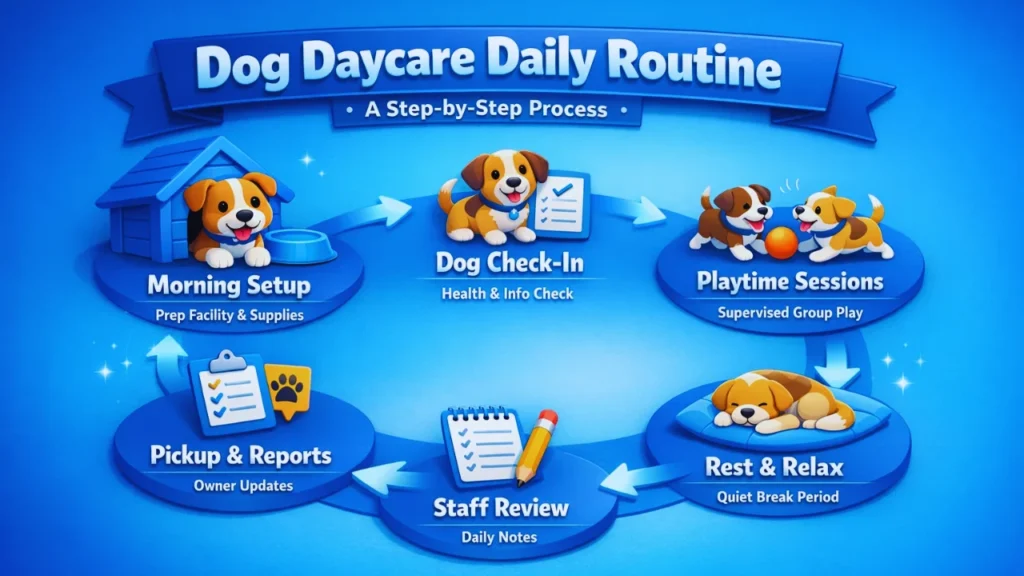
Understanding how your day flows helps you spot where things break down. Here’s how a typical daycare operates from opening to closing, so everything runs smoothly.
1. Opening and Morning Setup
Before the first dog arrives, your space needs to be ready in 30-45 minutes. Check that water bowls are full and clean, that the play area is safe with no hazards, and that any medications or exceptional food are properly organized. Review your dog list today to know how many are coming, which need special attention, and whether you are at capacity. Staff should be ready before dogs arrive, with assigned roles confirmed, who is greeting owners, who is supervising play, and who is handling medications. This clarity prevents confusion during the busy morning rush.
2. Dog Intake and Health Checks
As owners arrive, staff greet them and gather information by asking about the dog’s nighttime habits, eating and drinking habits, and any new symptoms. Observe the dog’s physical condition for signs of limping, unusual energy, or anxiety while confirming special instructions such as medications, feeding times, and dietary restrictions. Write down observations in the dog’s profile so all staff know what to expect and can keep the dog safe throughout their time with you.
3. Supervised Play Sessions
This is the main event that requires active play with constant supervision. Most daycares break the day into sessions: 90 minutes of the game, then rest, then another session. During play, staff watch for signs of stress or aggression by noticing which dogs get excluded or if one dog bullies others. Sometimes this means separating dogs into different groups or giving one dog a break. Staff should note behaviors in which dogs played well together and those that led to conflicts.
4. Rest and Quiet Periods
After active play, dogs need downtime during a typically quiet hour, when the environment is calm, to eat, drink, nap, or relax. Quiet music and dimmed lighting help dogs settle, while staff remain calm and patient, without loud voices or sudden movements. This is when you are watching dogs for any health changes, such as new limping, harder breathing, or different behavior patterns that might indicate illness or stress.
5. End-of-Day Wrap-Up
As owners arrive for pickup, staff give honest, specific reports on what the dog did today, any issues that occurred, and what the owner will appreciate. Check whether the dog has visible problems, such as an injury, excessive panting, or muddy paws that need cleaning, and answer any owner questions about medications or behavior. Make sure the owner is taking the right dog home by confirming the dog’s name.
6. Staff Review and Notes
After pickup, staff should spend 15-20 minutes documenting the day by writing what happened with each dog, any behavioral changes, health concerns, whether medications were given, and any issues to mention to the owner. These notes become your record of what happened, useful if owners ask questions later or if a dog shows repeated behavior patterns. Good notes also help the next staff member know what to expect from each dog.
Common Dog Daycare Management Problems (And Fixes)
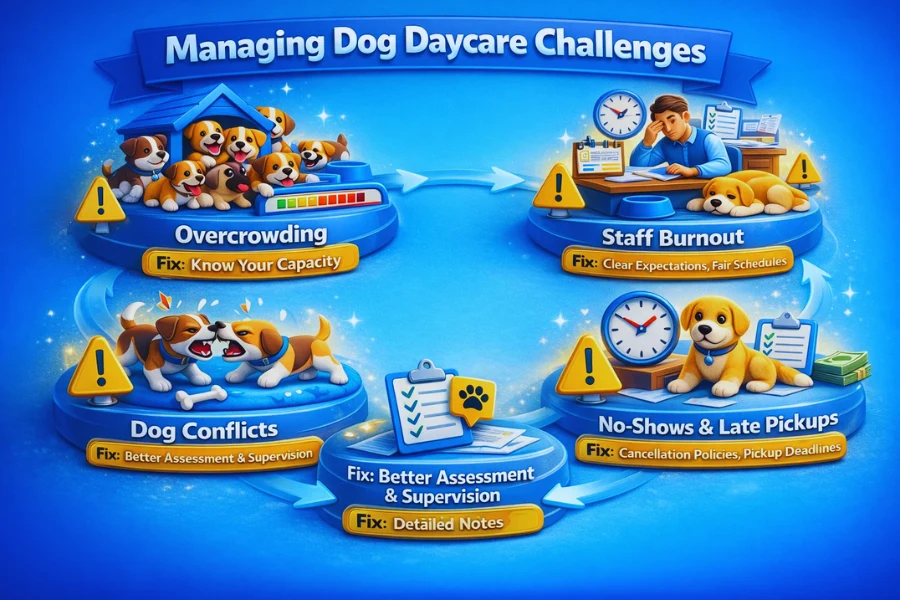
Overcrowding occurs when you accept too many dogs without clear capacity limits, leading staff to lose control and dogs to become stressed. The fix is knowing your capacity and enforcing it without exception. Staff burnout occurs when expectations are unclear, shifts are chaotic, or staff feel unsupported, leading to frustrated staff quitting. The fix starts with clarity, consistent scheduling, fair compensation, and actual breaks during shifts.
Dog conflicts usually mean you are mixing incompatible dogs without noticing the warning signs. Better assessment and supervision with detailed notes prevent this. No-shows and late pickups mess with your whole day, so include cancellation policies and pickup deadlines in your contract with fees that make people take it seriously. Poor communication leaves owners feeling left out, so share daily updates and be honest about problems, as owners appreciate transparency.
How Daycare Software Supports Dog Daycare Management
Managing daycare operations manually becomes impossible after 25-30 dogs, as you cannot reliably track medications in notebooks or manage staff schedules in spreadsheets without frequent errors. K9Sky and similar management platforms handle scheduling, so every dog’s reservation is in one place, where you see immediately if you are at capacity. They store digital pet profiles with health information, dietary needs, behavioral notes, and emergency contacts, rather than scattered papers.
This software system solves the problems mentioned earlier by preventing overcrowding through capacity alerts, reducing staff burnout by clarifying shift assignments, resolving dog conflicts through detailed behavioral tracking, managing no-shows with automated reminders, and improving owner communication through daily updates and photo sharing. Staff coordination becomes clear through shift assignments that show who is responsible for which dogs. Automated reminders are sent to owners about pickups and medications, while reporting features generate summaries without manual organizing.
The right Software eliminates paperwork and guesswork, letting staff spend more time caring for dogs and less time chasing information. Your owners get better updates, your business becomes more efficient, and profit margins improve because you are not wasting hours on tasks that could be automated.
Financial Benchmarks for Dog Daycare Owners

Understanding the numbers helps you price appropriately and know if your business is healthy. In the USA, full-day dog daycare typically ranges from $25 to $50 per dog per day, depending on your location and the quality of the facility. Half-day rates are usually 50-65% of the full-day rate, while most daycares operate at 60-75% capacity. Labor costs typically run 40-55% of total revenue in a healthy daycar, including staff wages and benefits.
If labor costs more than 60%, you are either understaffed or need to raise prices. Supplies, rent, and utilities usually run 10-15% of revenue, while profit margins for efficient daycares run 15-25% after all expenses, with seasonal demand affecting revenue differently.
Best Practices for Running a Successful Dog Daycare
Success comes down to consistency, standards, and customer experience. Consistency in routine matters because dogs do better when their day is predictable: the same schedule, the same staff, and exact expectations, which reduces stress while building trust with owners. Training your staff regularly helps your team understand dog behavior, recognize health issues, and handle conflicts properly, so one untrained person does not undermine everything. Cleanliness is non-negotiable because dogs play in dirt all day, so your facility needs to be cleaned multiple times daily between sessions to prevent the spread of illness.
Transparency in communication builds trust, while a focus on customer experience keeps clients loyal. Small things matter, like greeting dogs by name, remembering details owners mentioned, and noticing when dogs improve. These little habits create emotional connections that turn one-time customers into regular clients who recommend you to everyone. Being honest about what happened and sharing photos builds relationships that last years.
Frequently Asked Questions About Dog Daycare Management
How many dogs can one staff member supervise?
Most industry standards recommend one adult for every 5-8 dogs during active supervision. A calm group of eight smaller dogs is easier than five large, high-energy dogs, so always prioritize safety over capacity.
What should I do if two dogs fight?
Stop the fight immediately by redirecting one dog’s attention, then separate the dogs and assess injuries. Document what happened, inform both owners, and reevaluate whether these dogs can play together safely.
How often should I communicate with owners?
Daily updates are ideal, even brief ones. A quick photo or text summary takes five minutes and builds serious trust. Owners appreciate knowing their dog had a good day, ate well, and stayed safe.
Can I mix dogs of different ages?
Yes, but carefully because very young puppies can be accidentally injured by larger dogs. Generally, dogs within 10-15 pounds and similar energy levels play well together with proper supervision.
What health information should I collect?
Collect vaccination records, medication lists, dietary restrictions, allergy information, and behavioral issues. Understand emergency contact information and authorization to seek veterinary care if needed.
How do I handle a dog that doesn’t play well with others?
Some dogs aren’t daycare material, while others just need smaller groups or different playmates. Offer one-on-one care or structured play sessions while documenting the work being done so that you can be honest with owners about the fit.
Conclusion
Dog daycare management is complex but manageable when you understand the pieces. You are handling scheduling, staff supervision, dog safety, owner communication, and business operations simultaneously. The successful daycares that run smoothly are not relying on luck. They use systems that keep information organized, hold staff accountable, and maintain consistent operations. Start by documenting what you are doing, identifying where problems pop up, and building systems around those areas. Your dogs deserve proper supervision, your staff deserves clarity and support, your owners deserve transparency, and your business deserves systems that work. When you get all four of those right, everything else becomes possible.