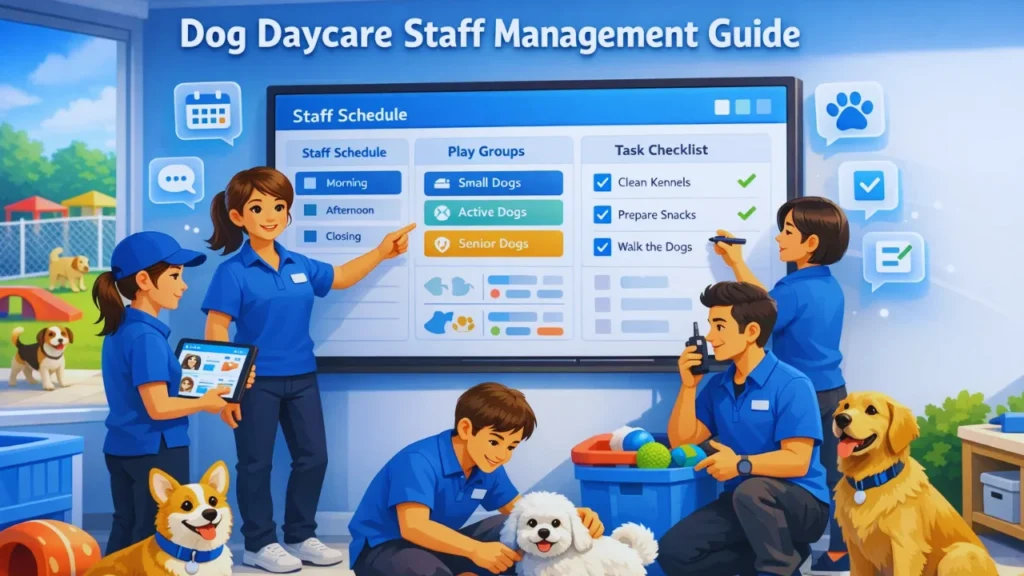

Starting a pet boarding business means creating a safe, organized place where pets can stay comfortably while their owners are away, and running it with clear routines and responsible care. The process involves checking local rules, determining how many pets you can handle, setting daily care standards, planning costs, obtaining the necessary licenses and insurance, and managing bookings and communication effectively. With realistic expectations, consistent routines, and a strong focus on pet safety and owner trust, a pet boarding business can grow steadily and become both reliable and profitable over time.

A pet boarding business provides temporary care for pets, primarily dogs, while their owners are away. This type of business is ideal for dog lovers who want hands-on work and are ready for a consistent, daily pet care routine.
In the USA, demand for pet boarding is growing because busy families, traveling professionals, and pet owners who need reliable care create a steady market. With proper planning, dedication, and organization, pet boarding can be both emotionally rewarding and financially viable.
What Is a Pet Boarding Business?
Pet boarding is a service in which animals stay at a facility or in a home while their owners are away. In contrast to pet sitting, which often takes place at the pet’s home, boarding provides a designated area for animals to eat, sleep, and play under supervision. Dogs are usually the primary concern, but most Dog boarding businesses also allow other pets. This comprehensive guide provides a detailed overview of the daily operations and standards of professional dog boarding businesses.
Is a Pet Boarding Business Right for You?
Owning and running a boarding business entails more than just a love for animals:
- Time commitment: The pets will require checking on several times in a day for feeding, cleaning, and exercise.
- Emotional responsibility: Dogs and other pets might get stressed or anxious, and that needs to be dealt with properly
- Daily workload: In addition to this work, there is cleaning, monitoring, and overseeing the pets’ health and behavior.
- Suitability: A small boarding operation can be run by a single owner, but in a large boarding facility, small groups perform much better.
Understanding your limits helps prevent burnout and ensures quality care for pets.
How to Start a Pet Boarding Business (Step-by-Step Guide)
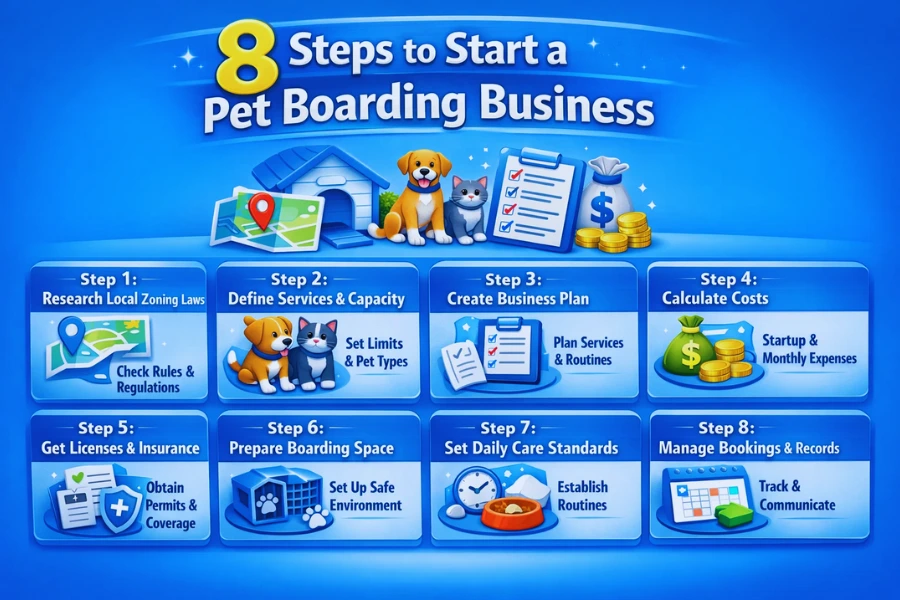
Starting a pet boarding business takes planning, compliance, and clear daily procedures. Below is a step-by-step guide to help you start correctly and avoid common mistakes.
Step 1 – Research Local Rules and Zoning Laws
One of the most widespread obstacles to new pet boarding businesses in the USA is the zoning laws.
- Home-based vs commercial zoning: Although several cities permit pet boarding in homes, they usually impose limitations on the size of pets to be boarded or the number of pets to be kept overnight. In most cases, commercial boarding needs special zoning.
- City and county limitations: Localities can impose restrictions on waste disposal, parking, and outdoor activity.
- The importance of zoning: Without approval, the company may be fined, denied licenses, or forced to close, and may incur financial losses.
Regulations must always be confirmed with your city or county zoning office before proceeding.
Step 2 – Define Your Services and Capacity
Clear service limits help protect animal welfare and prevent burnout.
- Dogs-only vs. multiple-pet boarding: Dogs are the most common boarding clients. Accepting other pets increases care complexity and requires separate routines.
- Overnight vs short-term boarding: Overnight boarding requires more supervision, emergency planning, and space.
- Capacity limits: Most small operations start with 3–10 dogs to maintain safe supervision.
Overbooking often results in stressed pets, higher injury risk, and declining care quality.
Step 3 – Create a Pet Boarding Business Plan
A basic business plan for pet boarding keeps operations consistent and manageable.
- Services offered: Clearly define what boarding includes and excludes.
- Daily routines: Feeding times, exercise periods, cleaning, and rest schedules.
- Staffing requirements: Most small boarding firms are run by owners at the beginning, and during peak demand, they hire helpers.
- Emergency measures: Documented protocols for cases of sickness, accident, veterinarian visits, or emergencies in the facility.
A clear plan helps maintain standards as bookings increase.
Step 4 – Understand Startup Costs and Ongoing Expenses
Costs vary by location and scale, but typical USA ranges include:
Startup Costs
- Home-based boarding: $2,000–$10,000
- Small commercial facility: $15,000–$50,000+
Monthly Operating Costs
- Home-based: $500–$2,000
- Commercial facility: $3,000–$10,000
Common Hidden Costs
- Permit renewals and inspections
- Insurance premiums and deductibles
- Cleaning and sanitation supplies
- Emergency veterinary care
- Maintenance and repairs
Most companies need months of operational capital to generate regular income. Starting and running a pet boarding business can vary depending on location, setup, and the number of animals, so it’s crucial to understand the expenses before you start.
Step 5 – Get Licenses, Permits, and Insurance
To operate legally, your pet boarding business must be appropriately registered and insured. Most state-registered pet boarding businesses are sole proprietorships or LLCs. Many U.S. towns and counties need a local business license and a pet boarding or animal care permit, which usually involves a safety inspection. Insurance is important. General liability insurance protects against injuries and property damage, while pet care and animal bailee insurance cover pets under your care. In the event of an accident or claim, insurance protects your company.
Step 6 – Prepare Your Space for Boarding Pets
Boarding spaces should support safety, hygiene, and calm behavior.
- Safety and hygiene: Easy-to-clean areas and regular sanitation routines reduce disease risk.
- Rest areas and separation: Separate spaces help manage stress and prevent conflicts.
- Noise control: Limiting stimulation reduces barking and anxiety.
- Comfort and supervision: Pets should be monitored regularly throughout the day.
The goal is a controlled, comfortable environment, not a complex kennel setup.
Step 7 – Set Daily Routines and Care Standards
Daily routines help pets feel safe and reduce stress during boarding. Feed your dogs at the same time every day for proper digestion and comfort. To keep your pets busy without becoming overstimulated, balance play with rest. Monitoring stress symptoms, such as pacing, loud barking, or pet withdrawal, can help identify problems early. Continuous behavior observation enables you to respond quickly to anxiety, anger, and health issues.
Step 8 – Organize Bookings, Records, and Communication
Safe and consistent treatment requires accurate records. Avoid mistakes by clearly documenting vaccines, feeding instructions, prescriptions, and emergency contacts. Proper coordination of bookings helps to avoid delays and provides adequate attention to each pet.
Regular client updates lessen pet-boarding issues and increase confidence. As daily pet boarding demand rises, many firms use Dog Boarding Business Software to handle schedules, care records, and owner contact, reducing mistakes.
Step-by-Step Breakdown Table for Launching a Pet Boarding Business
| Steps | Focus Area | Key Details |
|---|---|---|
| Step 1 | Local Rules and Zoning | Confirm home-based or commercial zoning, city and county restrictions, waste disposal rules, and outdoor activity limits. Approval is required to avoid fines or forced closure. |
| Step 2 | Services and Capacity Planning | Decide on dogs-only or multi-pet boarding, overnight or short-term stays, and set safe capacity limits (often 3–10 dogs) to prevent stress and burnout. |
| Step 3 | Business Planning Essentials | Clearly define services, daily care routines, staffing needs, and emergency protocols to maintain consistent standards as demand grows. |
| Step 4 | Cost and Expense Planning | Estimate startup costs ($2k–$10k home-based, $15k–$50k+ commercial), monthly expenses, and hidden costs like insurance, permits, cleaning, and emergency care. |
| Step 5 | Legal Setup and Insurance | Register the business, secure local licenses and animal care permits, and obtain liability and pet care insurance to protect the business and comply with regulations. |
| Step 6 | Facility Setup and Safety | Prepare clean, calm boarding spaces with proper sanitation, separation areas, noise control, and regular supervision to reduce stress and health risks. |
| Step 7 | Daily Care Standards | Maintain consistent feeding, exercise, and rest routines while monitoring behavior to catch stress or health issues early. |
| Step 8 | Booking and Client Communication | Keep accurate pet records, manage schedules carefully, and provide regular updates to pet owners to build trust and avoid mistakes. |
How Much Does a Pet Boarding Business Make?
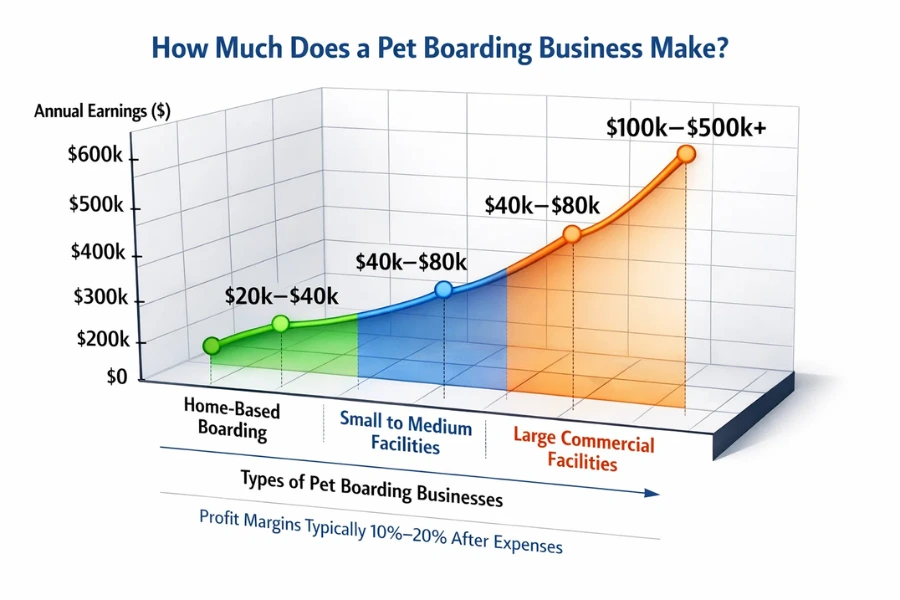
Revenue for a pet boarding business depends on location, capacity, and services offered. Typical daily rates in the U.S. range from $25 to $75 per dog.
- Home-based boarding: Usually earns $20,000–$40,000 per year.
- Small to medium commercial facilities: Often bring in $40,000–$80,000 annually.
- Larger commercial facilities with added services: Can earn $100,000–$500,000+ per year.
Profit margins typically fall in the 10–20% range after expenses such as labor, insurance, utilities, and supplies. Careful management of occupancy and services is key to maximizing earnings.
Challenges of Starting a Pet Boarding Business
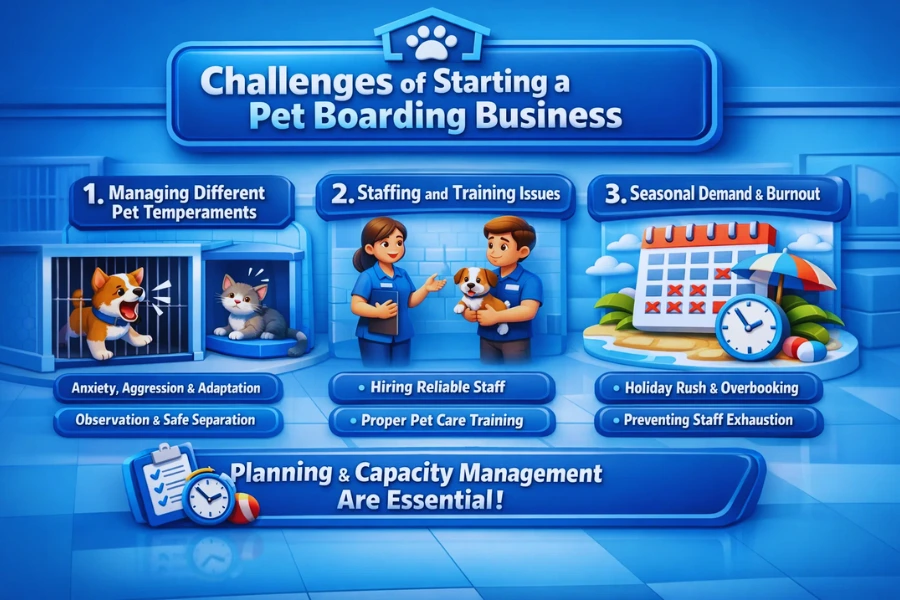
The pet boarding business also faces specific challenges unique to the industry, likely influencing both pets and their owners. The knowledge of these early ones prepares the way for the easier operations.
1. Managing Different Pet Temperaments
Pets respond differently when being boarded. Some will be anxious, others aggressive, and many will take time to adapt. Observation, safe separation, and routines are to be used properly to avoid stress and conflict.
2. Staffing and Training Issues
Small or emerging boarding businesses usually struggle to hire reliable staff. Regular care is very important, and employees should be trained to care for pets, monitor their health, and observe their daily routine. Mistakes and safety issues may take place without appropriate training.
3. Seasonal Demand and Burnout
Pet boarding demand typically increases during holiday seasons and summer months. If not properly planned, this situation could result in overbooking, leading to long and tiring workdays. Staff and owners alike may become worn out, which could, in turn, negatively impact the level of care. It is the proper scheduling and realistic capacity limits that allow us to maintain high standards even during peak seasons.
Tips for Long-Term Success in Pet Boarding

Consistency, communication, and trust are crucial to long-term success in a pet boarding business. Although day-to-day activities may be modified, it is still best to keep the standards very clear so that pets receive reliable care and owners feel confident that the animals will be safe in your care. The practices that follow help you stay stable and grow steadily over time.
1. Build Consistent Routines
Predictably occurring routines help pets feel secure in an unfamiliar environment. Regular schedules for feeding, resting, and activity make it less stressful and easier to manage behavior. Consistency also supports quality control, ensuring every pet receives the same level of care no matter how busy the day becomes.
2. Maintain Good Communication with Pet Owners
If owners can access timely updates that help maintain their pet’s well-being, even better. Being upfront about routines, behavior, or minor issues helps build trust and establish realistic expectations. Clear communication cultivates connections and drives repeat clients.
3. Focus on Reputation and Repeat Clients
Cleanliness, reliability, and dependable care are the factors that build an excellent reputation when pets are happy, and owners are confident. Additionally, positive experiences naturally lead to word-of-mouth referrals, which is one of the best ways to maintain a pet boarding business.
Final Thoughts on Starting a Pet Boarding Business
Starting a pet boarding business takes honesty in expectations and a long-term perspective. Success is about structured routines, consistent care, and attention to detail rather than quick profits; with patience and a strong focus on pet welfare, a pet boarding business can grow exponentially, maintaining trust and quality.
FAQs About Starting a Dog Boarding Business
1. Can I start a pet boarding business from my home in any state?
Not always. Rules vary by city and county, and some areas limit the number of pets or prohibit overnight boarding at home. It’s important to confirm zoning rules before accepting bookings.
2. How many dogs should a beginner board at one time?
Most beginners start with a small number, usually three to ten dogs, to ensure proper supervision and avoid stress for both pets and owners.
3. Do I need experience with animals to run a pet boarding business?
Formal experience is not always required, but understanding animal behavior, stress signals, and basic care is essential to keep pets safe and comfortable.
4. What happens if a pet gets sick or injured during boarding?
You should have written emergency procedures, access to a nearby veterinarian, and proper insurance to handle medical situations quickly and responsibly.
5. How far in advance should owners book pet boarding services?
During holidays and peak travel seasons, bookings often happen weeks or even months in advance. Slow periods usually allow more flexible scheduling.
6. Is pet boarding profitable without adding extra services?
Yes, but profits are usually higher when occupancy is managed well. Additional services can increase revenue, but consistent bookings and controlled expenses matter most.
7. How do owners build trust with new boarding clients?
Clear communication, regular updates, clean facilities, and consistent routines help owners feel confident leaving their pets in your care.