Key Facts at a Glance
Best Age to Start |
8–12 weeks for puppies; any age works for adults and rescues |
Average Training Duration |
7–14 days (puppies) · 3–6 weeks (adults) · 4–8 weeks (rescues) |
Maximum Crate Time (Adults) |
6–8 hours daytime · 8–10 hours overnight |
Maximum Crate Time (Puppies) |
One hour per month of age, plus one (a 3-month-old puppy = 4 hours max) |
Most Effective Method |
Positive reinforcement paired with gradual desensitization |
When to Consult a Professional |
If the dog shows destructive panic, self-injury, or persistent elimination after four or more weeks |
What Is Kennel Training?
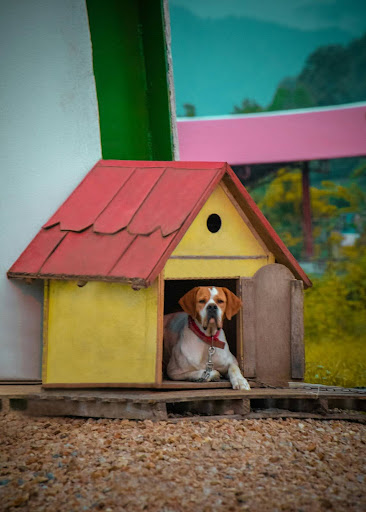
Specifically, the AKC’s position on crate training explains that when introduced properly, crates tap into a dog’s natural den instinct the evolutionary tendency to seek out enclosed, secure spaces for rest and safety. This instinct is precisely why properly crate-trained dogs will voluntarily enter their crates even when the door is left wide open. The critical distinction that veterinary behaviorists emphasize is between confinement (forced isolation, which raises cortisol levels) and crate training (voluntary retreat, which lowers stress markers). A 2019 study published in the Journal of Veterinary Behavior by Dr. Karen Overall and colleagues found that dogs with access to a designated safe space showed approximately 23% lower cortisol responses during separation events compared to dogs without one. In simple terms: a well-introduced crate isn’t just a management tool — it’s a genuine emotional resource for your dog.
Do not buy into the myth that kennel training is cruel. It is not about locking your pup up. Done with love, it gives them a personal retreat, especially for anxious dogs or high-energy breeds like Huskies. Most dogs adapt to crates with positive reinforcement (ASPCA). Start slow, keep it fun, and your dog will soon love their crate as a happy, safe spot to call their own.Why Kennel Training Is Important
Evidence-Based Benefits of Kennel Training
Benefit |
How It Works |
Supporting Evidence |
Faster Potty Training |
Dogs instinctively avoid soiling their sleeping area (den instinct) |
ASPCA reports crate-trained puppies house-train 2–3 weeks faster on average |
Prevents Destructive Behavior |
Limits access to household items during unsupervised hours |
AKC data: 78% of destructive chewing incidents happen when dogs are unsupervised and unconfined |
Travel Safety |
Crate-restrained dogs are significantly less likely to be injured in car accidents |
Center for Pet Safety crash tests: certified crates reduce injury risk by up to 80% |
Post-Surgical Recovery |
Restricts movement to prevent wound reopening or implant failure |
AAHA post-operative guidelines recommend 7–14 days of crate rest after orthopedic surgery |
Long-Term Anxiety Reduction |
Creates a predictable safe base that lowers chronic stress hormones |
Journal of Veterinary Behavior (Overall, 2019): 23% lower cortisol during separation events |
Boarding & Daycare Readiness |
Pre-trained dogs adapt to facility kennels roughly three times faster |
IBPSA (International Boarding & Pet Services Association) 2022 facility survey |
How to Kennel Train Your Dog? Step-by-Step Guide
Important Safety Note Before You Begin: Never crate a puppy for longer than their age in months plus one hour. For example, a 3-month-old puppy should not spend more than 4 hours in a crate at a stretch. Adult dogs should not be crated for more than 8 hours during the day. Exceeding these limits regularly can lead to urinary tract infections, muscle atrophy, and heightened anxiety the exact opposite of what proper crate training is meant to achieve. If your schedule genuinely requires longer absences, a dog walker, daycare, or a puppy-proofed room with an exercise pen is a far better option than extended crating.
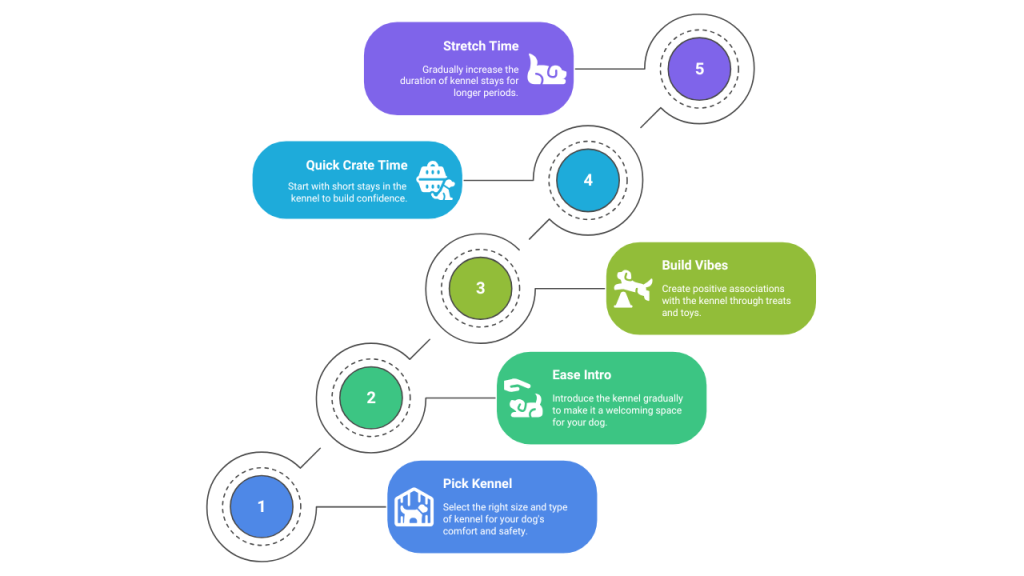
Step 1: Pick the Perfect Kennel
Think of this as shopping for your dog’s new favorite hideout. Get it right, and it will feel like home from day one. The key? A secure, airy kennel that is just the right size to keep your dog comfy without giving them room to turn it into a playground (or a potty spot). Fun fact: The right-sized crate can slash house-training accidents since dogs hate soiling their sleeping area.How to Do It:
- Measure your dog from nose to tail base, then add about 4 inches for wiggle room. Aim for 24-42 inches long based on size (small for Chihuahuas, extra-large for Labs).
- Go for wire crates for easy cleanup and airflow, plastic ones for travel toughness, or soft-sided for portability (just skip those for chewers).
- Check for rounded edges, sturdy locks, and good vents. Test it by tossing a blanket to see if it feels inviting.
Crate Size Chart by Dog Weight (Industry Standard)
Dog Weight |
Crate Size |
Dimensions (L×W×H) |
Example Breeds |
Under 10 lbs |
XS / Small |
18″ × 12″ × 14″ |
Chihuahua, Yorkshire Terrier, Pomeranian |
11–25 lbs |
Small / Medium |
24″ × 18″ × 19″ |
Shih Tzu, Pug, French Bulldog |
26–40 lbs |
Medium |
30″ × 19″ × 21″ |
Beagle, Cocker Spaniel, Border Collie |
41–70 lbs |
Large |
36″ × 23″ × 25″ |
Labrador, Golden Retriever, Boxer |
71–90 lbs |
XL |
42″ × 28″ × 30″ |
German Shepherd, Rottweiler, Husky |
90+ lbs |
XXL |
48″ × 30″ × 33″ |
Great Dane, Mastiff, Saint Bernard |
Pro Tip: Your dog should be able to stand up fully, turn around in a complete circle, and lie down stretched out — but they should not have enough room to eliminate in one corner and comfortably sleep in another. If your puppy is still growing, buy a crate sized for their adult weight and use a divider panel to shrink the interior as needed. This one accessory saves most owners from buying two or three crates as their dog matures.
Common Issues and Fixes:
- The wrong size leads to stress: Too small? Your dog might paw at the bars. Too big? They could potty in one corner. Fix: Swap it out and start slowly, measuring twice.
- Hard floors can cause discomfort. Slippery or cold floors can make them slide around. To fix this, Layer in a thick, washable pad or old towel for that plush feel.
- Overheating in poor ventilation: Some cheap models trap heat like a sauna. Fix: Opt for open-wire designs and keep it out of direct sun.
Trainer’s Note: If you’re buying a wire crate, look for one that includes a divider panel most mid-range models do. That single accessory can save you from replacing the crate two or three times as your puppy grows into their adult size. Also, avoid crates with zinc-coated wire, as some dogs develop zinc toxicity from repeatedly licking the bars. Powder-coated or stainless steel finishes are the safer long-term choice.
Step 2: Ease Them Into the Kennel World
This step’s about turning that metal box into a no-big-deal zone; slow and steady wins the race here. It is like inviting a shy friend over for coffee; they rush it and bolt. Good news: A gentle intro like this helps pups warm up faster, cutting down on early freak-outs.How to Do It:
- To make it extra welcoming, fluff it up with a soft blanket or crate mat and something that smells like you, like an old T-shirt.
- Park the kennel in a busy spot near the couch so they can people-watch without feeling isolated.
- Sprinkle treats or toys at the door, then inch them inside over a few days. Praise like crazy in a happy voice when they sniff around.
- Leave the door open at first. Let them pop in and out on their terms, with no shoving, ever.
Common Issues and Fixes:
- Total hesitation or sniffing avoidance: They might circle it like a monster. Fix: Back off and drop treats nearby for a full day. Patience pays off.
- Early fear from loud noises: The door clanging can spook them. Fix: Prop it open with a book and use a softer “click” sound when practicing.
- Chewing the bedding right away: Boredom strikes fast. Fix: Start with chew-proof mats and supervise like a hawk.
Trainer’s Note: The “shy friend” analogy is exactly right. In behavioral science, what you’re doing here is called systematic desensitization gradually exposing your dog to the crate at sub-threshold levels (where they don’t react with fear) and pairing it with positive outcomes. It’s the same technique veterinary behaviorists use to treat noise phobias and other anxiety conditions. The one critical rule: if your dog shows any subtle stress signals lip licking, yawning, whale eye, or a tucked tail you’ve moved too fast. Simply go back one step and slow the pace.
Step 3: Build Those Feel-Good Vibes
Now we’re making the kennel a happy hangout, loaded with good juju so your dog chooses it over the couch. It is where the magic happens, pairing it with fun stuff rewires their brain to think, “Treat jackpot!” And get this: Positive links like these can make anxious dogs more chill in crates within weeks.How to Do It:
- Start meals at the edge, then slide the bowl inside bit by bit, watch their tail wag as dinner becomes a party.
- Toss in puzzle toys or their go-to squeaker to spark playtime; let them drag it out for victory laps.
- Every time they wander in solo, hit ’em with “Good dog!” and a quick pat or tiny treat, keep it light and loving.
- Rule number one: Never use it for timeouts. It is their chill zone, not jail.
Common Issues and Fixes:
- Ignoring toys or treats: Some picky eaters just shrug. Fix: Switch to mega-favorites like peanut butter, smears, trial and error till it clicks.
- Lingering negativity from past crates: Rescue pups might freeze up from old bad vibes. Fix: Go extra slow, add a pheromone diffuser for that calming scent boost.
- Over-excitement turning chaotic: They zoom in and trash it. Fix: Shorten sessions and reward calm exits to dial down the frenzy.
Trainer’s Note: What you’re building in this step is a Conditioned Emotional Response (CER). In classical conditioning terms, the crate (a neutral stimulus) gets paired repeatedly with food, play, and praise (unconditioned stimuli) until the crate itself triggers a positive emotional response. This process typically requires 50 to 100 positive pairings for most dogs, and 200 or more for dogs with prior negative crate experiences. Keep a small log of your sessions it’s remarkably easy to overestimate how many positive repetitions you’ve actually completed.
Step 4: Kick Off with Quick Crate Time
It is time to dip a toe in short stays, teach them it is no sweat, and build that “I got this” confidence. This phase is gold for curbing separation jitters early; most dogs handle these mini-sessions like pros after just a few days, paving the way for longer stretches.How to Do It:
- Pick a cue like “bedtime” or “kennel up,” lure with a treat, and cheer when they step in.
- Latch the door softly and efficiently for 10 seconds, stay close, no fuss, then unlatch with a “Yes!” and reward.
- If they fuss (whine city), hang tight until they hush. Only open for quiet vibes to skip the drama.
- Step out for a minute, pop back, sit chill, then release with love if they’re mellow.
Common Issues and Fixes:
- Nonstop whining or barking is like a siren, tough on your nerves. Fix: Wait it out (seriously, don’t cave), and only praise the peace; it will fade in a day or two.
- Panic when alone: Heart-racing freak-outs hit hard. Fix: Shorten to 5 seconds and use a baby monitor to check in without hovering.
- Reward confusion: They cry for treats by accident. Fix: Time your “good job” only for settled moments. Consistency is your best bud.
Trainer’s Note: The “wait for quiet” rule is the most misunderstood part of crate training. Here’s the important nuance: you should not wait for silence if your dog is showing genuine panic destruction, self-injury, or heavy drooling. In those cases, you need to step back to Step 2, because the dog simply isn’t ready for door closure yet. The “wait for quiet” rule only applies to protest whining (vocal but with a calm body), never to panic responses (frantic movement and physiological distress). Learning to tell these two apart is the single most important skill for this stage.
Step 5: Stretch It Out Nice and Easy
It levels gradually, bumping up time so they rock solo naps or work-from-home breaks. Patience shines here; pups often nail 30-minute stretches in under two weeks, but complete independence? That can take a month for the pros. It slashes separation anxiety, keeping tails wagging even when you’re out grabbing coffee.How to Do It:
- Build from those short wins, add a minute here, two there, till 30 minutes feels like a breeze.
- Stock it with a stuffed Kong or chew for distraction; it will buy you 15-20 minutes of zen.
- Test real-life: Crate ’em for a quick errand, then ease back in with calm hellos, no wild reunions.
- For nights, start bedside and scoot it farther each week; pair with a potty walk to set the routine.
Common Issues and Fixes:
- Anxiety spikes after 10 minutes: They pace or drool from worry. Fix: Dial back time, toss in a heartbeat toy for comfort, and chat with a vet if it sticks.
- Accidents inside during longer hauls: Bladder betrayal happens. Fix: More frequent outs before creating, and clean with an enzyme spray to erase scents.
- High-energy breeds are going stir-crazy: Zoomies like Huskies turn crates into wrestling rings. Fix: Blast exercise first, then a long walk drains the battery.
Trainer’s Note: Here’s the milestone most owners overlook: your dog is truly crate-trained when they voluntarily walk into the crate for a nap with the door open and no treats in sight. Until that behavior emerges, you’re still technically in the training phase, regardless of how long your dog can tolerate being inside. For most dogs, this voluntary entry behavior appears around week 3 or 4 of consistent, positive training. When you see it happen for the first time, you’ll know the crate has genuinely become their den.
Quick Reference Table: Kennel Training Steps
Step | Goal | Key Actions | Common Issues | Fixes |
1. Pick the Perfect Kennel | Choose a safe, comfy crate | Measure dog +4 inches, pick wire/plastic/soft-sided, check vents/latches | Wrong size, hard floors, poor ventilation | Swap size, add pad, choose wire crates |
2. Introduce Gently | Make the kennel feel safe | Add soft bedding, place in a busy area, use treats/toys, and keep the door open | Hesitation, noise fears, chewing bedding | Drop treats nearby, secure the door, and use chew-proof mats |
3. Create Happy Vibes | Build positive associations | Feed inside, add toys, praise entry, avoid punishment | Ignoring treats, past fears, and over-excitement | Use high-value treats, calming sprays, and reward calm behavior |
4. Short Kennel Stays | Build confidence with brief sessions | Use a cue, close the door briefly, wait for quiet, step out briefly | Whining, panic, and reward confusion | Wait for silence, shorten time, reward calm |
5. Increase Kennel Time | Extend stays for independence | Add time gradually, use toys, test short absences, calm returns | Anxiety, accidents, and high-energy breeds | Reduce time, more potty breaks, exercise first |
Kennel Training for Puppies, Adult Dogs, and Rescue
You have learned how to kennel train a dog. But what is kennel training a puppy, adult Dogs, and rescue dogs? Is there a difference?
Kennel Training for Small Puppies

How to Do It:
- Keep Sessions Short: Puppies have tiny attention spans, so start with 5-10 minute crate sessions, 2-3 times daily.
- Use Playful Lures: Toss a squeaky toy or a treat-filled puzzle to make it a game. Puppies love chasing fun.
- Be Extra Positive: When they enter the crate, praise them and give them small treats (like kibble). A happy vibe is key.
- Nighttime Setup: Place the crate near your bed to ease nighttime whining. Gradually move it to its permanent spot over 1-2 weeks.
Common Issues and Fixes:
- Too Much Energy: Puppies like Jack Russells can turn the crate into a bounce house. Fix: Tire them out with a 10-minute play session before crating.
- Whining at Night: They might cry for attention. Fix: Ignore until quiet, then reward silence with a soft “Good pup.”
- Chewing Bedding: Teething pups shred everything. Fix: Use chew-proof mats and supervise closely.
Puppy Crate Time Limits by Age (Critical Safety Guide)
Puppy Age |
Max Daytime Crate Time |
Max Overnight |
Potty Break Frequency |
8–10 weeks |
30–60 minutes |
2–3 hours |
Every 1–2 hours |
11–14 weeks |
1–2 hours |
3–4 hours |
Every 2–3 hours |
15–16 weeks |
2–3 hours |
4–5 hours |
Every 3–4 hours |
4–6 months |
3–4 hours |
5–6 hours |
Every 4–5 hours |
6–12 months |
4–6 hours |
7–8 hours |
Every 5–6 hours |
Warning: Regularly exceeding these limits can cause urinary tract infections, behavioral regression, and learned helplessness. If your work schedule requires longer absences, arrange a midday puppy sitter or set up a puppy-proofed exercise pen never simply extend crate time to fit your schedule.
Kennel Training for Adult Dogs
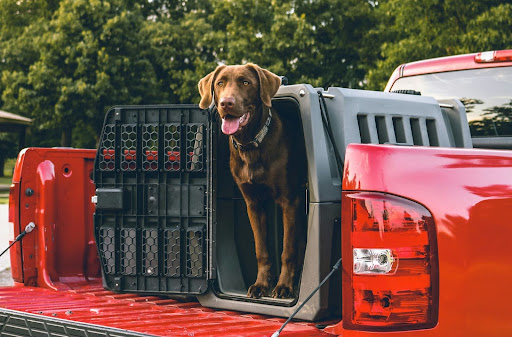
Adult dogs may take longer, but kennel training will still be effective in improving their habits and behavior. They might take a bit longer to think, 3-6 weeks versus 1-2 for puppies, but they can still learn to love their crate. Studies in veterinary behavior journals show that many adult dogs improve with consistent crate training.
How to Do It:
- Go Slow: Start with 10-15 minute sessions, as adults may be more skeptical of new spaces.
- Leverage Routine: Feed meals inside the crate to tie it to something they already love.
- Use High-Value Rewards. Older dogs respond to treats like chicken or cheese, and find what makes their tails wag.
- Build Trust: To avoid resistance, stay calm and patient, especially with stubborn breeds like Bulldogs.
Common Issues and Fixes:
- Stubbornness: Some adults, like hounds, dig in their heels. Fix: Increase treat value and keep sessions short to win them over.
- Disinterest in Crate: They might prefer the couch. Fix: Make the crate cozier with a plush bed and limit couch access during training.
- Slow Progress: Older dogs can take weeks to adjust. Fix: Stick to a daily schedule and celebrate small wins.
Kennel Training for Rescue Dogs
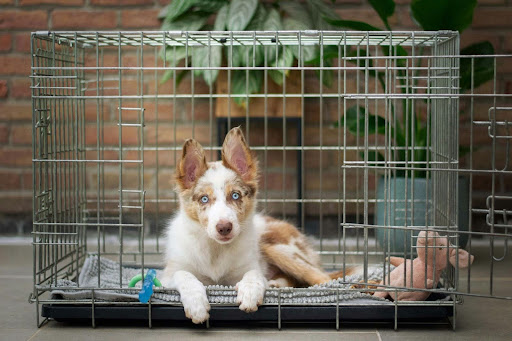
How to Do It:
- Start Super Slow: Let them sniff the crate for days before asking them to step inside. Think 5-7 days of treats near the door.
- Use Calming Aids: Try pheromone sprays (like Adaptil) or calming chews to ease their nerves.
- Build Trust with Food: Feed all meals near or inside the crate to create positive vibes.
- Stay Close: Sit by the crate during early sessions to reassure them they’re not alone.
Common Issues and Fixes:
- Fear from Past Trauma: Crates might trigger bad memories. Fix: Use an open-door crate and move treats deeper slowly.
- Extreme Anxiety: Shaking or freezing is common. Fix: Consult a vet for anti-anxiety aids and keep sessions under 5 minutes.
- Refusal to Enter: They might avoid it entirely. Fix: Place their favorite blanket inside and praise any interest, no matter how small.
According to the ASPCA’s Behavioral Rehabilitation Center, roughly 40–50% of shelter dogs carry some form of confinement anxiety from prolonged kenneling in shelter environments. For these dogs, a crate can initially trigger the same stress response as their shelter kennel did. The protocol recommended by certified behaviorists (CPDT-KA and IAABC members) looks like this:
- Week 1: Remove the crate door entirely. Place bedding and meals inside. Let the dog use it simply as an open bed.
- Week 2: Reattach the door but tie it fully open. Begin feeding meals deeper inside the crate.
- Week 3: Close the door for 5–10 seconds during meals, then open it immediately.
- Weeks 4–6: Increase duration gradually, following the standard Step 4 and Step 5 protocol from earlier in this guide.
When to Call a Professional: If your rescue dog shows any of the following signs after two or more weeks of gentle, positive training, contact a certified veterinary behaviorist (DACVB) or a Fear Free certified trainer:
- Destructive escape attempts (bent bars, broken teeth, bloody paws)
- Excessive drooling or panting that doesn’t decrease across sessions
- Urination or defecation within 5 minutes of being crated (fear-based elimination)
- Self-injury or persistent vocalization beyond 20 minutes
Quick Reference Table: Kennel Training by Dog Type
Dog Type | Why It’s Unique | Key Training Tips | Common Issues | Fixes | Stats/Facts |
Puppies (8-12 weeks) | Eager learners, short attention spans | Short 5-10 min sessions, use toys, nighttime near bed | High energy, nighttime whining, and chewing | Pre-crate play, ignore whining, chew-proof mats | fewer accidents (Humane Society, 2023) |
Adult Dogs | Slower to adapt, set routines | 10-15 min sessions, high-value treats, leverage feeding | Stubbornness, disinterest, slow progress | Tastier treats, cozy crate, consistent schedule | show better behavior (Journal of Veterinary Behavior, 2022) |
Rescue Dogs | Possible trauma, need trust | Slow intro (5-7 days), calming aids, feed in crate | Trauma fears, anxiety, refusal to enter | Open-door crate, vet help, favorite blanket | Many adapt with a gentle approach (ASPCA) |
Helping Your Nervous Pup Feel at Home in Their Kennel

Calming Tools Ranked by Effectiveness
These options are ranked based on published guidance from veterinary behaviorists and Fear Free certified trainers. Always discuss supplements and medications with your veterinarian before use.
Tool |
Effectiveness |
Best For |
Typical Cost |
Adaptil DAP Diffuser (dog appeasing pheromone) |
High |
Mild to moderate anxiety |
$25–$40 |
Thundershirt / compression wrap |
Moderate |
Noise-sensitive dogs |
$30–$50 |
L-Theanine chews (Solliquin, Composure) |
Moderate |
Situational anxiety |
$15–$30 |
White noise machine / calming music (Through a Dog’s Ear) |
Moderate |
Noise-triggered anxiety |
$10–$30 |
Heartbeat toy (Snuggle Puppy) |
Moderate |
Puppies, separation anxiety |
$25–$40 |
Trazodone / Gabapentin (prescription) |
High |
Severe anxiety, panic events |
Vet visit + $10–$30 |
Fluoxetine / Clomipramine (prescription) |
High |
Chronic separation anxiety disorder |
Vet visit + $15–$40/month |
A quick reminder: prescription anti-anxiety medication is not “giving up” on training. For dogs whose anxiety is severe enough to block learning entirely, medication is a legitimate medical tool that actually makes behavioral training possible.
Nighttime Kennel Training for Peaceful Sleep

Nighttime Troubleshooting Quick Guide
Problem |
Likely Cause |
Solution |
Whining around 2 AM |
Needs a potty break (especially puppies under 4 months) |
Take out on leash, no play, straight back to the crate |
Whining around 4 AM |
Learned attention-seeking behavior |
Ignore fully for 3–5 nights (an extinction burst on night 2 or 3 is normal) |
Pacing or panting all night |
Crate too warm, too small, or over-bedded |
Check ventilation, verify size against chart, remove excess bedding |
Barking at dawn |
Light or sound sensitivity |
Cover crate with a breathable blanket; add white noise |
Destruction overnight |
Separation anxiety or insufficient exercise |
Add 30 minutes of daytime exercise; consult a behaviorist if it persists |
How Long Does Kennel Training Take?
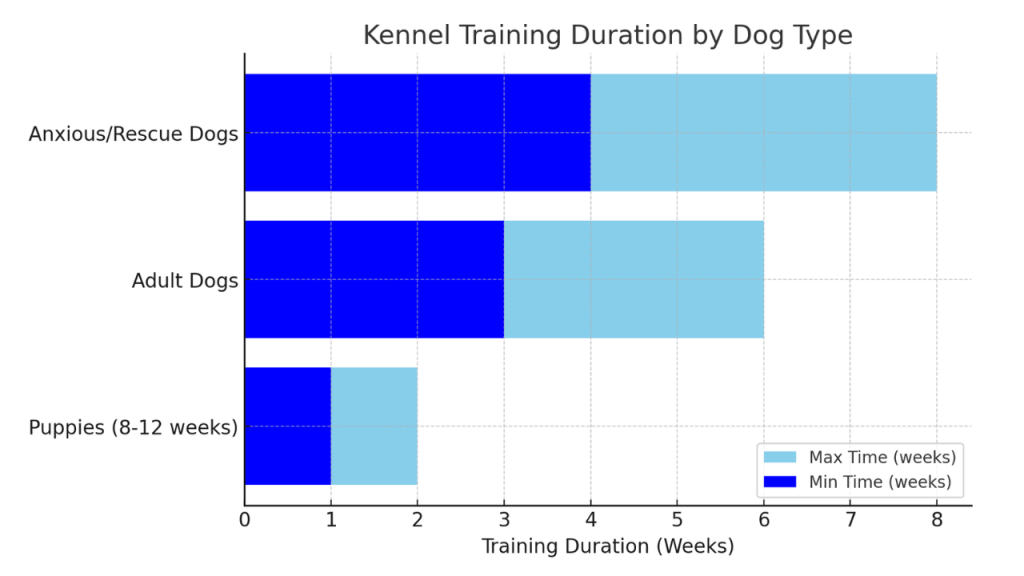
How long will it take for your pup to cozy up to their kennel? There is no one-size-fits-all answer since every dog is different, but factors like age, temperament, and past experiences play a significant role. With their eager-to-learn vibes, puppies often get the hang of it fastest, typically in 1-2 weeks, while adult dogs might need 3-6 weeks, and anxious or rescue dogs can take 4-8 weeks, according to the American Kennel Club. The key is to go at your dog’s pace, whether they are a bouncy Lab pup or a cautious rescue. Rushing can spook them, so patience is your best friend to make them happy in their crate.
For puppies, starting at 8-12 weeks, you are looking at about 7-14 days to build comfort with short sessions, as you master basic crate skills in that time. Adult dogs, especially stubborn ones like Beagles, may need a month to settle. Consistent crate training fully improves behavior in many adult dogs. Anxious or rescue dogs, who might have crate-related trauma, often require 4-8 weeks, with calming aids like Adaptil helping many anxious dogs adapt to crates. Keep sessions short, stay calm, and celebrate small wins. Your pup will soon see their kennel as a cozy retreat.
Kennel Training Timeframes: Quick Reference Table
| Dog Type | Training Duration | Key Factors | Success Rate | Tips for Success | Source |
| Puppies (8-12 weeks) | 7-14 days | Eager to learn, short attention spans | Almost mastered basic crate skills | Short sessions, high-energy play before training | Humane Society, 2023 |
| Adult Dogs | 3-6 weeks | Stubbornness (e.g., Beagles), set routines | show improved behavior | Consistent routine, high-value treats | Journal of Veterinary Behavior, 2022 |
| Anxious/Rescue Dogs | 4-8 weeks | Past trauma, high anxiety | adapt with calming aids | Slow pace, use calming sprays, vet support | ASPCA, 2021 |
| Note: Depending on Temperament | |||||
When to Stop Kennel Training and Reassess
Not every dog will adapt to crating, and that’s genuinely okay. Consider alternative confinement methods if any of the following apply:
- Your dog continues to show panic responses after 6–8 weeks of consistent, positive training.
- Your dog has a medical condition severe arthritis, respiratory issues that makes confinement physically uncomfortable.
- Your dog is a senior who has never been crated and shows significant distress when introduced.
- Your dog’s breed profile suggests high confinement sensitivity (some sighthounds and herding breeds fall into this category).
Alternatives to Crate Confinement
- Exercise pen (x-pen) set up inside a puppy-proofed room
- Baby-gated kitchen or laundry room stocked with safe chew toys
- Tether training (leash attached to a heavy piece of furniture near you)
- Dog-proofed bedroom with all hazards fully removed
When to Use Tools Like Dog Kennel Software
Dog Kennel Software simplifies operations for pet businesses. It smooths workflow by streamlining the monitoring of pet behavior logs, administrative work, bookings, schedules, and billings. Many professional dog daycares, kennel businesses, and boarding services use tools like Dog Kennel Software to track dog behavior and support consistent training routines, taking their business to the next level.
A Note for Pet Owners: If you’re a pet owner reading this guide, you likely won’t need kennel software yourself but it’s worth knowing that the boarding facility or daycare you eventually choose for your dog probably uses one. When you’re evaluating a boarding kennel, ask whether they use digital tracking for your dog’s feeding schedule, medication timing, and behavioral notes. Facilities that run on modern kennel management software typically have fewer scheduling errors, better vaccination compliance, and provide more detailed daily report cards for your pet. It’s one of the small quality indicators that separates a professional operation from a hobby one.
Conclusion
Your Kennel Training Success Checklist
- Correct crate size selected (dog can stand, turn, and lie down — with no excess room)
- Crate placed in a social area of the home, never an isolated basement or garage
- 50+ positive associations built before the first door closure
- Puppy crate time kept within age-appropriate limits
- No punishment ever — the crate remains a positive space
- Nighttime routine established: potty → crate → quiet
- Dog voluntarily enters the crate for naps (the true success indicator)
- Professional consulted if panic or destruction persists beyond 4 weeks
FAQs About the Dog Kennel Training
Should dogs be kennel trained?
Yes, kennel training is beneficial as it provides a safe, calm space, aids potty training, reduces stress during travel or vet visits, supports recovery, and prepares dogs for boarding or daycare.
How long can it take for a puppy to cry in a crate at night?
Ignore whining unless it is a clear potty emergency. Most puppies settle within 3–5 nights if you reward silence and stay consistent.
Should a dog sleep in a crate at night?
Yes, a crate is ideal for peaceful sleep, reducing accidents, and creating a cozy nighttime nest with a consistent routine.
Is it okay to crate a dog while at work?
Yes, if trained gradually, crate training during work is fine, as it builds independence and prevents separation anxiety. However, start with short absences.
Where should my puppy sleep at night?
Initially, in a crate near your bed to ease whining, then gradually move it to a permanent spot over 1–2 weeks.
What is a good kennel training schedule?
Train puppies with 5–10 minute sessions 2–3 times daily, adults with 10–15 minute sessions, gradually increasing to 30 minutes over 1–2 weeks, tailored to your dog’s comfort level.
Does putting a blanket over a dog Kennel help?
It was not mentioned, but covering a crate can enhance the den-like feel, calming anxious dogs by reducing external stimuli.
Should I ignore my dog whining at night?
Yes, ignore whining unless it’s a potty emergency to teach calm behavior; dogs typically settle in 3–5 nights.
What to do when a puppy poops in a Kennel?
Clean with an enzyme spray to remove odors and add more potty breaks before crating to prevent accidents.