K9SKY

How to Train a Dog? Sit, Stay, Come, and Obey Every Time

A dog is on a leash at a park chasing a squirrel. You call their name, and your heart starts to race. Will they come back? This everyday moment shows the bigger truth about how to train dogs. It’s not just about doing tricks; it’s also about talking, staying safe, and getting to know each other.

This article will cover more than just the basics of “Sit,” “Stay,” and “Come.” You will learn how to train your dog at home using proven methods and get smart, helpful advice that works in real life. This blog will help you train your dog to be happy and listen, whether you’re a first-time dog owner or run a business that loves dogs.

Ultimately, you’ll know how to train your dog and why some approaches perform better than others.

What Does It Mean to “Train a Dog”?

Part of training a dog is teaching them how to behave in a way that keeps them safe and works with your life. Teaching a dog is a means for people to talk to dogs in the most basic sense.

There are various ways to do things, but positive reinforcement (rewarding good behavior) has always been the best and kindest. The American Veterinary Society of Animal Behavior (AVSAB) and other groups have conducted research suggesting that training with rewards is superior to training with punishment because it builds trust and loyalty over time.

This lesson will teach you how to utilize positive reinforcement to teach your dog the “Big 3” commands: Sit, Stay, and Come. You can do this at home without needing to pay for a trainer.

Teaching Your Dog to Sit (Step-by-Step)

It may seem easy to teach your dog to sit, but it’s the first step in getting them to listen. You might wonder, “How do I teach my dog to sit?” if you just got a pet. “Sit” isn’t only a demand. It teaches your dog how to control urges and deal with bad habits like barking, jumping, or running. It is also the basis for more complicated commands like “Stay,” “Wait,” or “Heel.”

Most puppies can learn simple commands when they are 7 to 8 weeks old.  You can train a dog to sit by giving it a verbal order and a hand signal.

  • Step 1 – Get ready: Stand or kneel in front of your dog and allow them to focus on you and not on anything else. 
  • Step 2 – Give them a goodie treat: Slowly raise your hand with a goodie treat near their nose. This will make their heads tilt up, and their bottoms naturally drop.
  • Step 3 – Give the order: When your dog sits down, say “Sit” loudly and give them the treat right away. Timing is essential here; provide the incentive right after the good behavior.
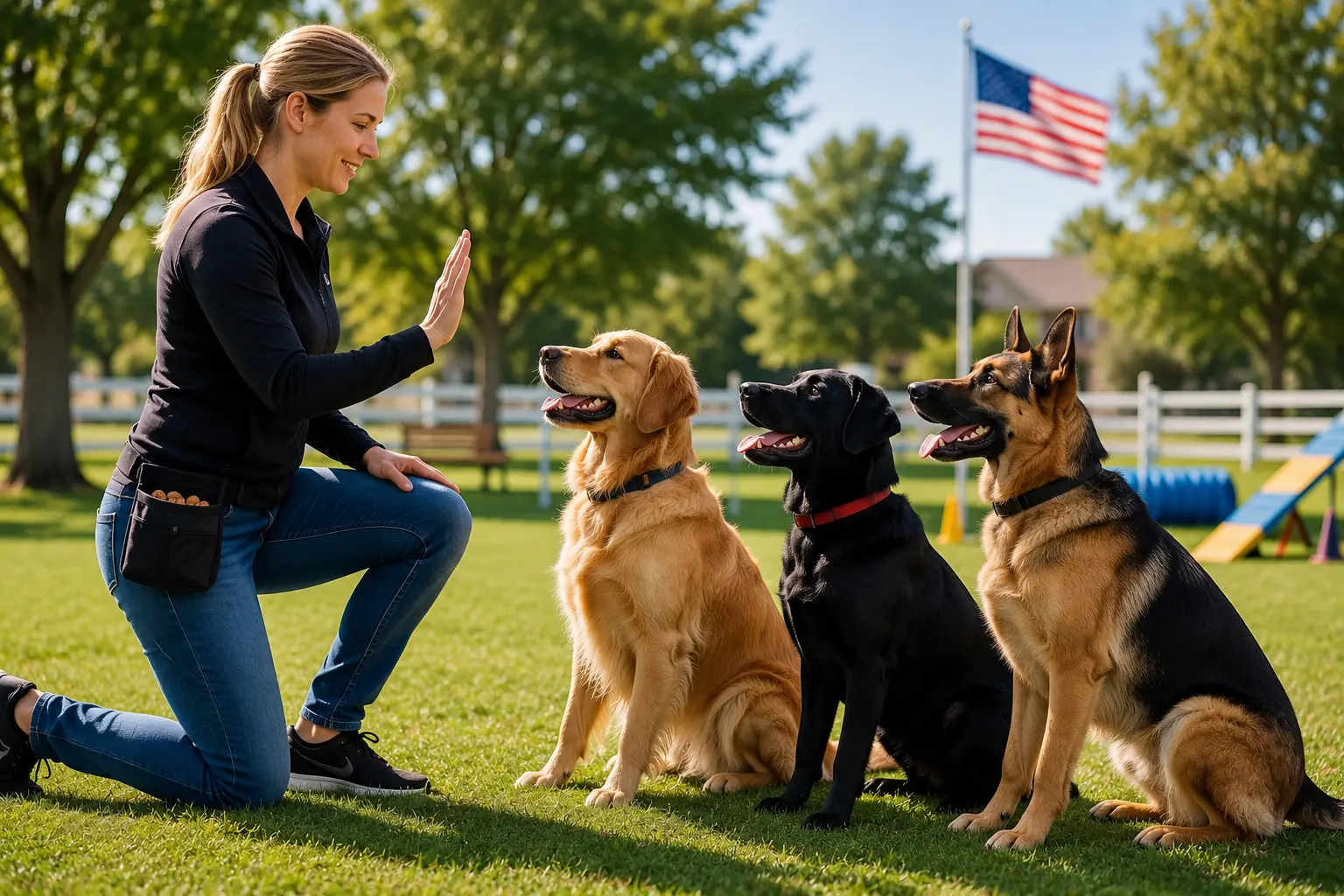
  • Step 4 – Use a hand gesture: As your dog starts to understand, add a hand gesture along with your spoken command. For example, carefully lift your hand and palm up in an arc over their head.
  • Step 5 – Do it again and make it stronger: Practice every session 5 to 10 times. Keep sessions to no more than five minutes and always end on a pleasant note. Do these two to three times a day.

The first step in teaching your dog to stay in one place or walk with you is usually the same: start with easy tasks and work your way up.

How to Train Your Dog to Stay (and Not Move!)

This is the step-by-step procedure that has been shown to work:

Step 1: Begin With the “Sit” Command

Have your dog sit down. If it still doesn’t know how to sit on demand, check out our article “How to Train a Dog to Sit.”

Step 2: Give the “Stay” Sign 

When your dog is sitting down, speak in a calm voice and say, “Stay.” Also, give your dog a clear hand signal, like an open palm facing them (like a “stop” sign). Stop for one to two seconds. If your dog stays where it is, give it a treat and praise immediately. Timing is key! 

Step 3: Introduce Distance and Time Gradually 

Now comes the hard part: teaching your dog to stay when you leave. 

  • Start by taking only one step back.
  • Come back quickly to earn a gift. 
  • Keep adding distance until you get it right. Start with two steps, then three, and keep going. 
  • After the complete stay, say a release word, like “Okay!” or “Free!” and give a reward.

Step 4: Learn to Release

Although not many people talk about it, the release is one of the most critical parts of training a dog to stay. You shouldn’t allow your dog to decide when to go. 

Instead, you could advise them to depart with a term they will remember, like “go.” Say it with a cheerful voice, and then let it go. Your dog will know the work is done now, and future commands will be more explicit.

Step 5: Add Real-Life Circumstances

The “Stay” command requires a lot of practice in various places to work in real life. Tip: Keep sessions short (5 to 10 minutes), interesting, and praiseful. It’s incredibly vital to do things over and over again.

How to Train Your Dog on Recall

“Come” doesn’t just imply following orders; it also means being safe and free. You should be just as careful when you teach a dog to come. Now, let’s discuss the specific things you need to do to teach a dog to come when called. 

1: Begin in a calm, controlled space.

Start inside or in a yard that is fenced in and not very busy. Make sure your dog is paying attention. Say their name and then “Come!” in a happy and excited voice. As soon as they arrive or get close to you, give them a toy or food that is really important to them.

2: Use a long leash to practice safely.

If your dog usually comes inside, start training him outside with a long leash (15–30 ft). Let your dog search for a while, and then say, “Come, Dog’s Name!” You should only offer them a prize if they come to you. 

3: Add challenges or make it progressive.

As time goes on, things get harder and farther away. To make the challenge harder as you progress, try these things:

Are you still trying to figure out how to teach your dog to come when you call it, even while other things are going on? That’s when the following phase comes in.

#4: Put tasks to do on the list.  

The greatest approach to testing your memory is slowly adding things that will keep you from thinking about them. This is a good method to get people to know you: 

  • Start with tiny things that will distract you, such as a toy in the background or another person. 
  • Reward them heavily when they do well. 
  • If your dog doesn’t show up, try again with fewer distractions.

#5: Always give praise after following a command.

Even when your dog learns how to come when you call, keep giving it treats. Intermittent reinforcement works best for dogs since it keeps them interested and motivated.

Don’t punish your dog after they come to you, even if they were slow. This is the Golden Rule of Recall. They won’t come to you again if you yell at them.

Helpful Tools That Support Dog Training

If you run a pet daycare, dog training business, or obedience school, using a Dog Training Software solution can help streamline daily operations. From managing appointments and tracking training progress to handling client communication and maintaining detailed pet records, the right software makes it easier to deliver a professional training experience while saving valuable time.

  • Keeping track of appointments
  • Training records
  • Even communicating with customers all in one spot

If you wish to train a dog at home, you might want to utilize clickers, reward pouches, and training leads to help you stay on track.

How Much Does It Cost to Train a Dog?

People often want to know, “How much does it cost to train a dog?” It all depends on how you look at it. For each session, private trainers charge between $50 and $150. It costs between $100 and $300 for group classes that last more than a week. But doing your training at home is cheap and just costs you a little bit of money. All you need are some basic tools, time, and patience.

Practice, Patience, and Praise: The Secret to Obedience

The tools and procedures you utilize don’t matter; your mindset does.

  • Be consistent, keep sessions short, between 5 and 10 minutes. 
  • Include training in your routine
  • Always reward, never punish

Over time, commands like “Sit,” “Stay,” and “Come” will become second nature, even while things are bustling in real life.

More than Command: Trust Communication and Happy Companion

Let’s go over everything we just spoke about: 

Start with sit, then stay, and finally, come. 

It won’t happen immediately, but if you do the right things, utilize the right tools, and have the right attitude, you’ll get closer to training your dog.

By following this method, you’ve taught your dog to sit, stay, and come and built a foundation for a lifelong bond. The commands in this guide are more than just tricks; they are a language you now share with your pet. By practicing with patience and consistency, you’ve shown your dog what you expect, and in return, you’ve earned their trust and attention.

Explore our guides and tools at K9sky and book a conversation with our experts to explore more about pet care. Your dog is continuously learning, and so are you.

Scroll to Top