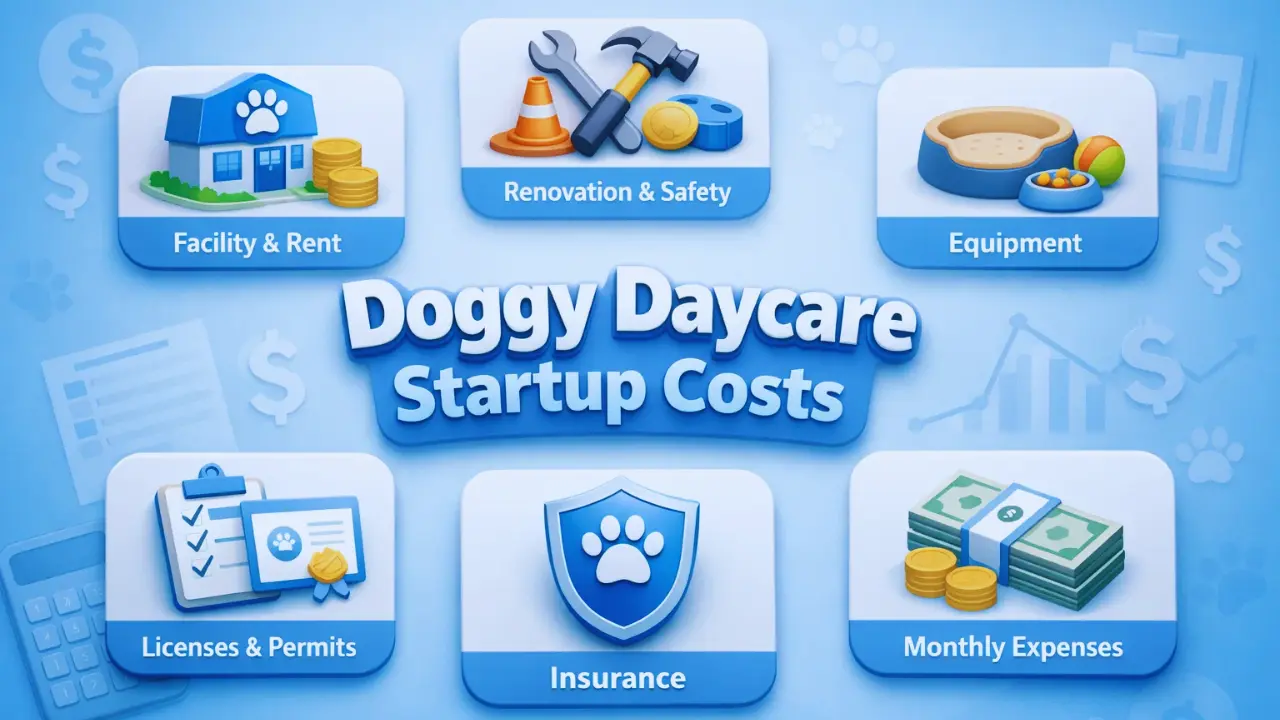
In this article, we break down exactly how much it costs to start a doggy daycare business, including one-time startup expenses, monthly operating costs, hidden fees, insurance requirements, facility setup, equipment, and staffing. We also explain why costs vary by location and size, what realistic total investment ranges look like in the USA, and whether the business can truly be profitable. By the end, you’ll clearly understand what you need to budget, where most of your money will go, and how to plan smartly before opening your doors.

Doggie daycares prioritize safety, exercise, and socialization while owners are at work or away. Dog daycares are highly regulated and require an approved facility, safety modifications, permits, insurance, and trained staff, so start-up costs are greater than expected.
A doggy daycare’s fee depends on its location and size. Rent, salary, and compliance costs vary by city and state, and more dogs require more space and supervision. Understanding these things helps build a realistic budget and control dog daycare business costs.
What Is a Doggy Daycare Business?
A doggy daycare business is a facility that cares for dogs during the day while their owners are away or at work. Dogs are taken on and returned on the same day, and are nurtured in a controlled, monitored environment.
Doggy daycare is not the same as a boarding business, which involves overnight stays, or pet sitting, which is typically performed at the owner’s home. A doggy daycare specializes in safe daycare services, supervised play, exercise, and sleep in a clean multi-dog facility.
Why Doggy Daycare Startup Costs Vary So Widely

The startup fees for doggy daycare can vary significantly depending on location, facility size, and the number of dogs. City centers tend to be more expensive, higher-paying, and subject to more rigid regulations than the suburbs, making it more costly to operate a dog daycare business there.
Staffing needs also influence the cost of the doggy daycare business, as local legislation and insurance policies set minimum staff-to-dog ratios. The expenses are increased by licensing, inspection, and compliance fees that vary by city and state.
Lastly, the service depends on the level of service, and simple arrangements are cheaper compared to advanced facilities with better safety, climate quality, or dedicated playgrounds.
One-Time Startup Costs for a Doggy Daycare Business
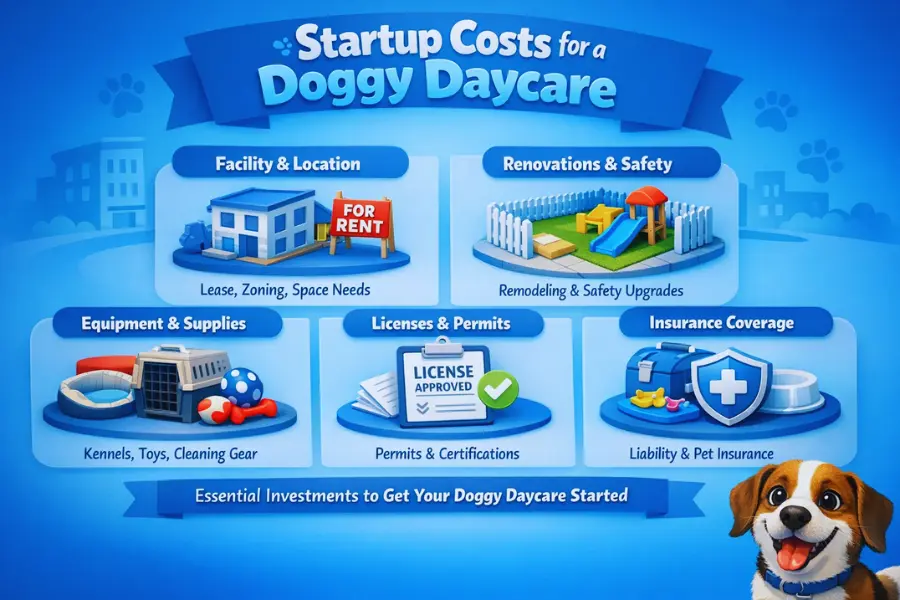
One-time startup costs are the expenses required to set up a doggy daycare open to the public. Before accepting the first dog, you will need to pay for these things, which are necessary to meet safety, legal, and operational requirements. They usually include obtaining the right equipment, securing approvals, and preparing the facilities. Most of these costs occur only once, but they are necessary for safe and legal daily operations.
1. Facility and Location Costs
Facility and location costs often account for the largest share of dog daycare startup costs. The choice between renting and buying directly affects upfront investment and long-term financial flexibility.
- Renting vs buying: Renting is more common for new daycare owners because it requires less capital and offers flexibility. Buying a property involves higher upfront costs and a long-term financial commitment.
- Lease deposits: Commercial leases usually require a security deposit in addition to the first month’s rent. These payments are due before opening and can significantly affect early cash flow.
- Square footage needs: The number of dogs you plan to care for determines the required space. Adequate square footage is necessary for safe supervision, separation, and movement.
- Zoning suitability: The facility must be located in an area zoned for animal care or commercial pet services. Zoning restrictions can limit available locations and increase rental costs.
- Why location affects insurance and staffing: Insurance premiums are often higher in dense or high-traffic areas. Location also influences wage levels and the ease of hiring qualified staff.
2. Renovation and Safety Setup Costs
Very few commercial spaces are ready for dog care without modification. Renovation costs exist to protect dogs, employees, and the property itself. Flooring must be durable and easy to sanitize, drainage must support frequent cleaning, and fencing or barriers are needed to safely separate dogs.
Ventilation and temperature control are important because dogs are sensitive to heat and poor air quality. Noise control is also often required to meet local regulations. These safety-focused renovations typically cost between $10,000 and $40,000.
3. Equipment and Setup Supplies
Equipment costs cover the items dogs use every day. This includes gates, rest areas, crates or quiet zones, toys, and cleaning stations. While these purchases are made before opening, many items wear out quickly and must be replaced regularly.
Initial equipment and supply costs usually range from $5,000 to $25,000, depending on capacity and quality.
4. Licensing, Permits, and Compliance Fees
Dog daycare startup costs include licensing, permits, and compliance fees to operate legally and meet health and safety standards. A doggy daycare business would need a general business license, as well as local licenses, including kennel or animal care licenses, depending on the location and state. There are also health department inspections, compliance with zoning requirements, and other fees associated with inspections, which are usually mandatory and must be fulfilled before accepting dogs.
5. Insurance Costs for Doggy Daycare Businesses
One of the main components of the dog daycare business’s costs is insurance that protects the facility, staff, and dogs. The majority of doggy daycare companies need general liability coverage in case of accidents, dog injury coverage to cover medical expenses, and workers’ compensation coverage in case of employment-related injuries.
The premiums for doggy day care depend on capacity, since additional capacity increases risk and, consequently, premiums. Proper planning for startup costs requires knowledge of dog daycare insurance requirements.
Monthly Operating Costs of Running a Doggy Daycare
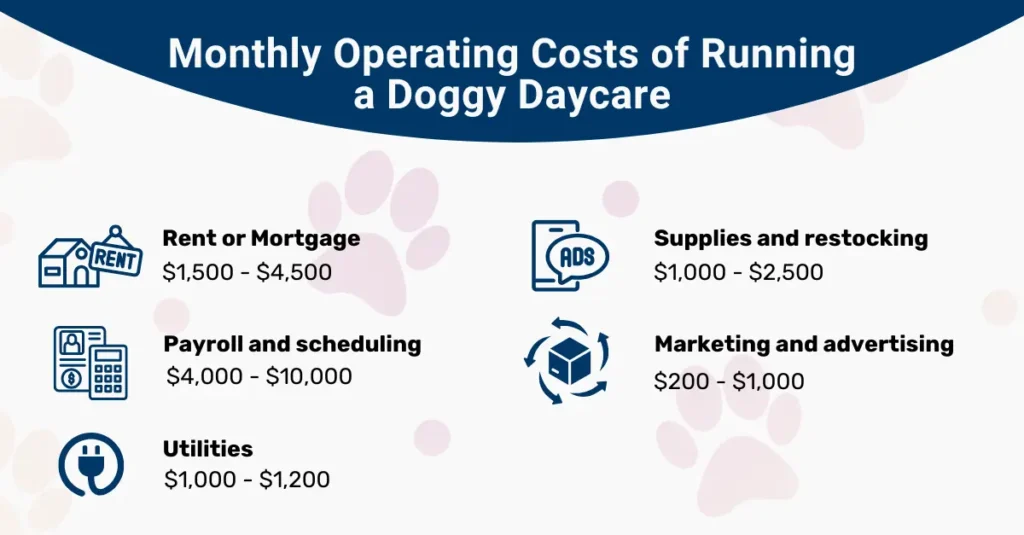
Running a doggy daycare comes with ongoing monthly expenses beyond startup costs. For a small to mid-size facility in the USA, monthly operating costs typically range from $7,800 to $19,500.
- Rent or mortgage: $1,500–$4,500, depending on location and space.
- Payroll and scheduling: $4,000–$10,000, usually the most significant expense for staff supervision.
- Utilities: $1,000–$1,200 for electricity, water, and climate control.
- Supplies and restocking: $1,000–$2,500 for cleaning products, toys, bedding, and treats.
- Marketing and advertising: $200–$1,000 to maintain visibility and attract clients.
These costs exist because doggy daycare requires a licensed facility, constant staff supervision, and daily cleaning to operate safely. Ongoing expenses support space use, employee care, dog health, and consistent customer demand.
Hidden and Often Overlooked Doggy Daycare Costs
Some costs do not appear in the initial budget but affect long-term stability. Animal care jobs have a high staff turnover, and training is more expensive. Dog damage causes constant repairs to walls, floors, and plumbing.
Unforeseen vet bills or insurance deductibles may result from emergency pet incidents. During a holiday or slow season, clients tend to decline, and income will not cover fixed costs. The permits and insurance policies should also be renewed regularly, which introduces additional ongoing expenses that many business owners often do not plan for.
How Much Does Daycare Software Cost?
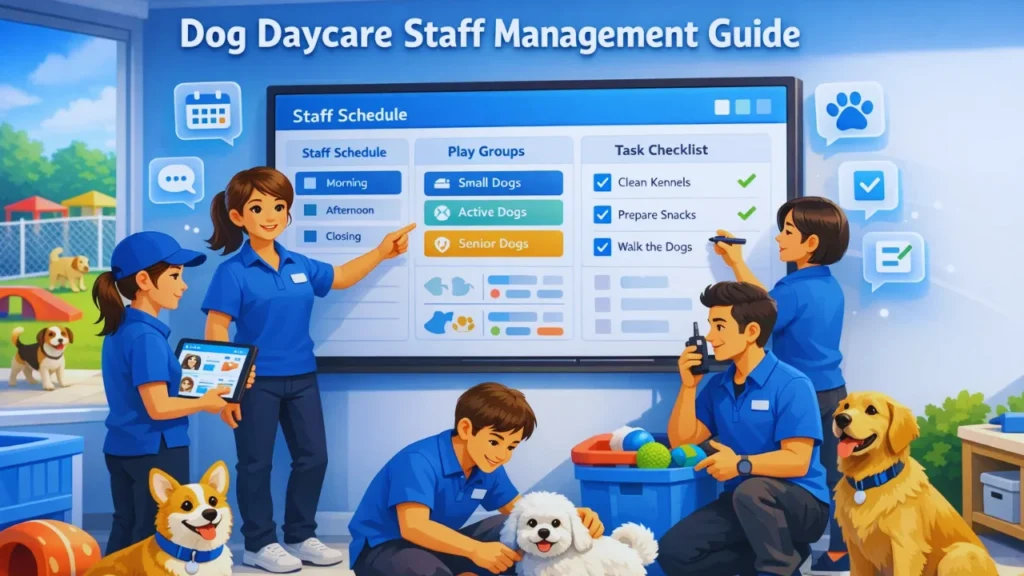
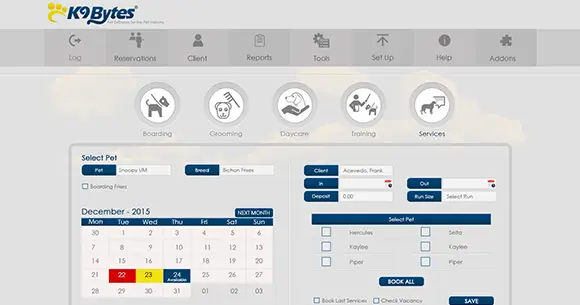
With increased operations, it is hard to schedule, keep records, and communicate manually. Many owners use advanced software to remain organized and minimize administrative errors.
The majority of systems are billed monthly. General plans tend to cost 40 dollars per month, whereas middle-range plans cost 78.93 to 115.70 dollars per month. Big facilities are likely to pay higher. According to general estimates from K9sky dog daycare software programs, small daycare enterprises usually fall within the lower price ranges.
As the number of dogs increases, many daycare operators rely on basic digital tools to organize bookings, maintain pet records, and communicate with owners more efficiently.
Total Estimated Cost to Start a Doggy Daycare Business (USA)
The amount of money needed to start a doggy daycare business depends on the size and location. Very small or home-based daycare business, where legal, can begin at about $20,000 to $40,000. Small businesses are between 40,000 and 75,000. Mid-size facilities and those that have increased capacity and staffing requirements can cost more than $150,000.
Increased capacity usually entails higher insurance, payroll, and renovation costs.
Is Starting a Doggy Daycare Business Profitable?

The pricing and the number of visits per day are very important for making money in a doggie daycare service. Realistic margins are not excessive because much of the income is spent on rent, labor, and other costs. Most facilities pay for themselves in 6 to 18 months, depending on their size and location. Careful cost control is often more important than maximizing volume, as it ensures sustainable operations and long-term profitability.
Common Budgeting Mistakes New Doggy Daycare Owners Make
New doggy daycare owners often underestimate staffing needs, leading to overworked employees and safety risks. Failing to obtain insurance or underestimating its cost leaves the business exposed to liability. Overspending on decor rather than safety and functionality can unnecessarily strain the budget. Accepting too many dogs too early, or overbooking, can create operational challenges and reduce the quality of care.
Practical Tips to Reduce Doggy Daycare Startup Costs
Starting with a small capacity helps keep risks under control. Gradually adding more services lets revenue support expansion. At first, hiring part-time workers can help with payroll, and focusing on local, low-cost marketing can help keep costs down.
Final Thoughts on Doggy Daycare Startup Costs
Opening a doggy daycare business requires honest financial planning to account for initial and ongoing costs. Examine the facility thoroughly to ensure it does not go overboard when a lease is signed. By focusing on long-term sustainability rather than rapid development, it is possible to preserve safe, high-quality care and a stable business.
FAQs About Doggy Daycare Business Startup Cost
1. How many dogs do I need per day to break even?
It depends on your rent and payroll, but most small daycares need steady daily attendance to cover fixed monthly costs.
2. Do I need special certifications to open a doggy daycare?
Not always, but knowledge of dog behavior, first aid, and local animal care regulations is strongly recommended.
3. Can I start a doggy daycare from home to reduce costs?
In some areas, yes, but zoning laws and insurance rules may limit the number of dogs you can legally care for.
4. How do I set the right price for daycare services?
Research local competitors, calculate your monthly expenses, and price your services high enough to cover costs and make a profit.
5. What is the biggest financial risk in the first year?
Low enrollment in the early months can strain cash flow, especially when rent and payroll remain fixed.
6. Should I offer additional services to increase revenue?
Yes, add-ons like grooming, training, or retail products can improve profit without dramatically increasing overhead.