
Before trimming your cat’s nails, it is vital to know that the procedure is necessary for indoor cats every two to four weeks to prevent painful curling and infection. The most important skill is locating and avoiding the pink quick (the nerve and blood supply) by clipping only the precise, curved tip. Always use sharp, cat-specific clippers and maintain a calm environment, as handling nervous or wiggly cats often requires the gentle, secure restraint of the “burrito” towel method.
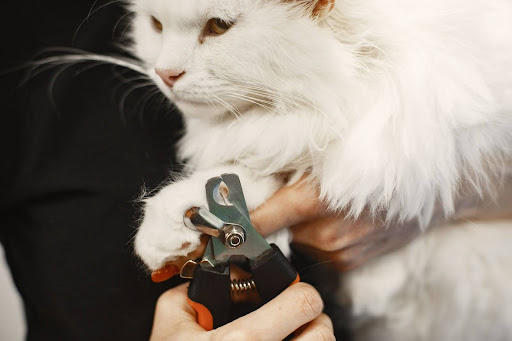
Cat nails may seem tiny, but they have a big job. They help your cat feel safe, move comfortably, and stay healthy. Knowing how to trim a cat’s nails is helpful for both pet parents and professional groomers. At first, it might seem a little tricky, but with the right tools, a calm touch, and some simple steps, you’ll get the hang of it in no time.
In this guide, you will learn why trimming cat nails is essential, how often to do it, and how to trim a cat’s nails safely and simply. Whether you have one curious kitten or care for many cats at your grooming salon, this easy guide will help you trim cat nails with care and confidence.
Why Do Cats Need Their Nails Trimmed?
Do cats need to get their nails trimmed? Yes, especially indoor cats, who don’t wear their nails down naturally. Outdoor cats wear down their nails by climbing and walking on hard surfaces. Indoor cats do not move the same way, so their nails can grow too long if not trimmed.
When nails grow too long, they may curl and press against the paw, causing pain and potentially leading to limping or infection. Claws can also get stuck on rugs, blankets, or furniture and might tear. Sharp nails can accidentally cause scratches during play or cuddles in homes with small kids or older adults.
Some cats scratch more when their nails start to bother them. Trimming helps ease the irritation and lets your cat move more comfortably. It also helps keep your furniture safe and your home free from scratches.
Groomers and vets find it easier to handle cats with short nails. Trimmed claws reduce the chance of scratches and help keep cats calm during visits. Giving your cat a quick trim every few weeks is a simple way to support their health and make daily life safer and more comfortable for both you and your cat.
Can You Trim a Cat's Nails at Home or Professionally?
If you’re wondering whether you can trim a cat’s nails at home or if it requires a professional groomer, the answer is yes, but only if your cat is comfortable with being handled and you feel confident enough to do so. With the groomer’s patience and by giving the cats a few treats, many cats can learn to stay calm during nail trims.
Let’s be honest, not all cats enjoy nail trims. Some might squirm, hiss, or try to run away when you touch their paws. If that sounds like your pet, it might be better to call a groomer. Groomers are trained to trim your cat’s nails safely while keeping them calm and relaxed. They know how to hold your cat gently and use the right tools to get the job done without stress or injury.
So, should you trim your cat’s nails yourself? Go for it if you feel ready and your cat is relaxed. However, if you are unsure or your cat is wiggly, it’s best to seek help from a professional. Groomers also help pet parents understand when their cat needs a trim, especially for older cats or those with thick nails.
How to Trim a Cat’s Nails Step-by-Step
Many pet owners wonder how to trim a cat’s nails without causing stress or injury. The process starts with being prepared. You will need the following:
- Pet nail clippers
- A soft towel
- Styptic powder (in case of a small cut)
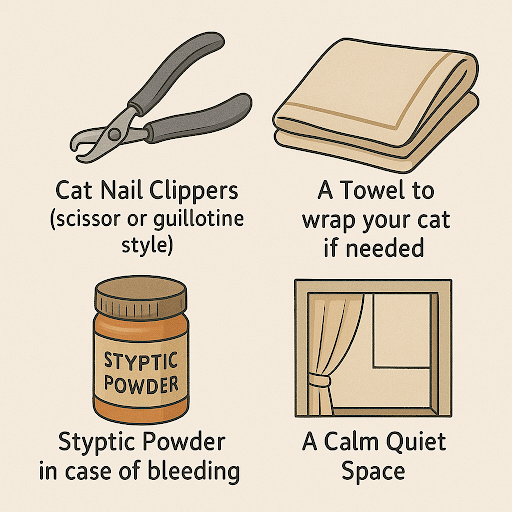
Follow these tips:
- Once your cat is ready, find a quiet spot where they feel comfortable.
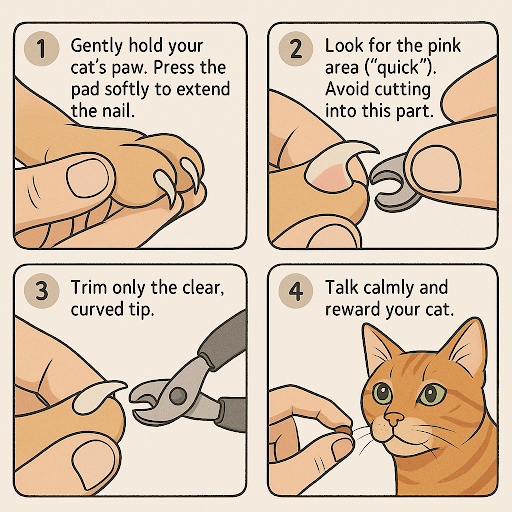
- Hold one of your cat’s paws and press the pad so the nail comes out.
- Look closely for the pink part inside the nail, called the quick. It has nerves and blood, so you don’t want to cut it.
How far to trim cat nails? Just clip the precise, curved nail tip and stop before you reach the pink area. Refer to the illustration below.
You don’t need to do all the nails at once. If your cat gets fidgety, take a break. Give your pet a treat, speak gently, and try again later. With time, most cats will learn to sit still for short trims. Be calm, go slowly, and praise your cat for doing a fantastic job.
Why Cats Fret and What to Do
Cats have an instinctual aversion to having their paws restrained, as it makes them feel vulnerable, which is why they sometimes act out during grooming. Additionally, the sound and pressure of the clippers can be startling. If your cat resists every attempt, refrain from forcing it. Instead, focus on building positive associations. Start by letting your cat simply smell the clippers and then immediately give a treat. Gently touch their paws often without clipping anything. If resistance persists, it may be time to consult a professional groomer or veterinarian. A pro can trim the nails quickly and safely, preserving your positive relationship with your pet and reducing household stress.
Best Way to Trim a Cat's Nails Without Causing Stress
Trimming cat nails doesn’t have to be a struggle. The best time to cut is when your cat is calm, maybe after a nap or a meal. Talk to your cat in a soothing voice and move gently. Playing soft music can also help relax your pet.
If your cat feels nervous, you can wrap it in a towel like a little burrito. Leave one paw out and trim the nails first. This procedure helps your cat feel safe and keeps it from jumping or scratching.
If you start trimming when your cat is young, the process will be more straightforward as they grow up. However, even adult cats can become accustomed to nail trims with a bit of patience. Afterwards, give your cat treats or toys so they associate the experience with something positive.
Restraining and Calming a Nervous Cat
When dealing with a truly wiggly cat, safe and gentle restraint is key to preventing injury to both of you. The famous “Cat Burrito” method is highly effective: snugly wrap your cat in a soft towel, leaving only the head and one paw exposed. This makes them feel secure and prevents them from scratching or trying to escape. Alternatively, try trimming while the cat is resting on your lap under a soft blanket or during a quiet time, like immediately after a meal. Always use a gentle, firm grip, and never scold or yell. Your calm and steady demeanor is often the most effective tool for keeping a nervous cat settled during the few minutes the trim requires.
How Often Should You Trim Cat Nails?
So, how often should you trim a cat’s nails? Most indoor cats benefit from having their nails trimmed every two to four weeks. This helps prevent the nails from growing too long or sharp. If you start hearing tapping sounds when your cat walks on hard floors, it’s probably time for a trim.
Older cats or those that don’t move around much may require trims more frequently. Outdoor cats might not need trims as often since they naturally wear their claws down outside.
Still unsure how often to trim a young cat’s nails? Try trimming every three weeks to start. Then adjust the timing based on your cat’s behavior. Groomers can also help by tracking your cat’s visits and reminding you when it’s time for the next trim.
Business Tips: Efficient Cat Nail Trimming Services
If you run a grooming business, nail trims are one of the most common services. But do you have to trim a cat’s nails during every visit? Not always. Still, offering trims regularly is a smart move. It keeps pets healthy and helps clients feel they’re getting excellent service.
Discuss with your clients the importance of trimming their nails. Explain how long nails can cause pain, scratching, and behavior changes. When pet owners understand the risks, they’re more likely to book regular trims, which benefits your business.
Many grooming shops now utilize grooming scheduling software to stay organized. This tool helps you track which cats need trims, when they last came in, and even sends reminders to clients. It saves time for your team and keeps your customers happy.
Do you need to trim the cat’s nails regularly? Yes, especially for cats that stay indoors or don’t use scratching posts much.
Common Mistakes to Avoid When Trimming Cat Nails
Even with care, mistakes can happen.
- One of the most common is cutting the nail too short. If you cut into the quick, it can bleed and hurt your cat. That’s why having styptic powder nearby is a brilliant idea. It helps stop the bleeding fast and keeps your cat safe.
- Another mistake is using the wrong clippers. Human nail clippers, not designed for cat claws, have the potential to crush or split them. Always use pet clippers that are sharp and clean. Here are the 10 types of clippers for pet grooming. Read this article and choose the clipper that is related to your Cats.
Some wonder if they should trim their cat’s nails or leave them as they are. Skipping nail trims can lead to pain, behavior problems, and even vet visits. A routine keeps things simple and helps your cat feel their best.
Final Thoughts: Happy Cats, Safe Homes
Trimming cat nails may sound small, but it makes a big difference. It keeps your cat comfortable, reduces accidents, and helps avoid costly injuries. Plus, it protects your furniture, skin, and peace of mind.
Whether you are a pet parent learning how to trim a cat’s nails for the first time or a groomer looking to enhance your services, remember to use the right tools, proceed slowly, and be gentle. Practice makes perfect.
Now that you know how to trim cat nails and how often to do it, you’re ready to make nail care a simple part of your routine. If you follow the correct steps and maintain a calm mindset, you’ll quickly become an expert in nail trimming.
Still, should you trim a cat’s nails at home or take it to a groomer? The choice is yours, but your cat will thank you either way.
FAQs About Trimming Cat Nails
1. Is it better to grind or clip cat nails?
Both work. Clipping is quicker, but grinding is smoother and less likely to cause splits. Some cats prefer one over the other.
2. Can I use human nail clippers on my cat?
You can, in a pinch, but pet nail clippers are safer. Humans can crush or split a cat’s claw if not used carefully.
3. How to keep a cat’s nails short without clipping?
Scratching posts and pads help wear down nails naturally, but don’t fully replace the need for trimming. You can also try nail caps or regular walking on rough surfaces.
4. How much does getting a cat’s nails trimmed cost?
Groomers typically charge $10 to $25 for a nail trim. Prices may vary depending on location and service.
5. What should I do if I cut the quick?
Stay calm! Immediately use styptic powder or cornstarch to stop the bleeding. Comfort your cat and take a break before continuing the trim.