
In this article, we will cover everything you need to know about running a dog boarding business from home, including what it actually means, how to follow local zoning laws, set limits on the dogs you accept, prepare and dog-proof your house, get the right insurance, create daily routines, and manage paperwork. We will also break down startup costs, legal considerations, income potential, common challenges, and practical tips to help you build a safe, professional, and profitable home-based boarding business.
So, you are thinking about turning your love for dogs into a dog boarding business from home? It is a dream for many to trade the office for a living room full of wagging tails. In the U.S., more and more pet parents are skipping the big commercial kennels. They want a home-away-from-home where their pup has a real sofa to nap on and someone to actually talk to. But while it sounds like all belly rubs and playtime, running a professional operation out of your house takes some serious prep work. Let’s walk through how to do it right.
What Exactly Is a Home Dog Boarding Business?

At its simplest, a home dog boarding business is when you welcome other people’s pups into your own home for overnight stays. It is the middle ground between a Professional Dog Boarding business and a pet sitter who visits the client’s house. Here, the dogs come to you. You are not just providing a cage, but you are providing a lifestyle. The goal is to keep their routine as normal as possible while their owners are away, making sure they feel safe, loved, and supervised in a real domestic environment.
Step-by-Step Guide to Start a Boarding Business from Home
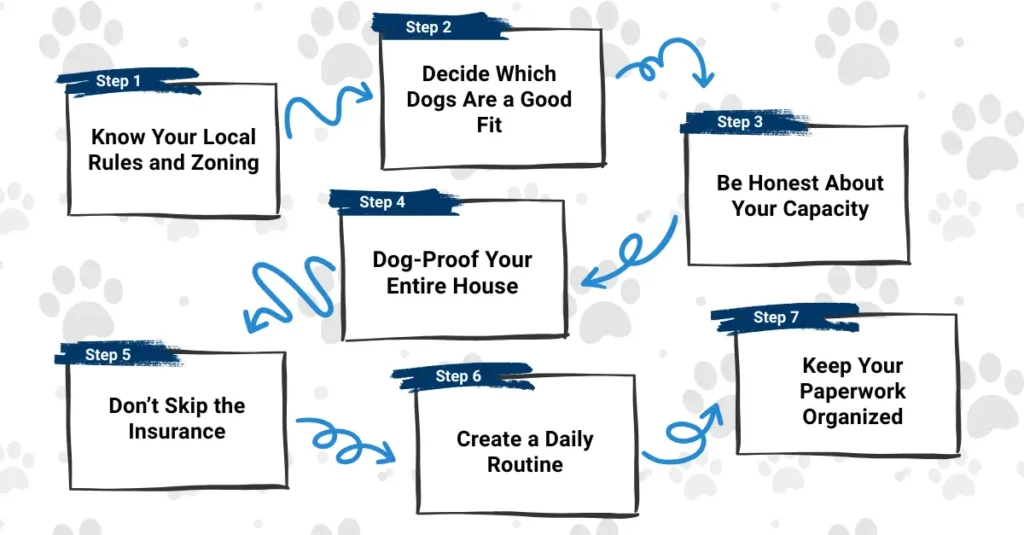
Starting a home-based dog boarding business is exciting, but it requires a solid game plan. You are balancing your personal life with the safety of someone else’s fur baby. Before you open your doors, you need to set up a structure that keeps things professional, safe, and most important, legal.
Step 1 – Know Your Local Rules and Zoning
The very first thing you need to do is make sure you aren’t breaking any laws. Every city in the USA has its own rules about home-based business permissions. Some places are totally fine with it, while others have strict limits on how many dogs you can have or rules about noise. If you are renting, check your lease. If you have an HOA, check their bylaws. It is much better to find out now than to face a massive fine or a shutdown notice later because a neighbor complained about barking.
Step 2 – Decide Which Dogs Are a Good Fit
You can’t be the right fit for every single dog, and that’s okay. When you are starting your dog boarding business start-up, you need to decide on your ideal guest. Do you have the space for a Great Dane, or is your home better suited for small breeds? Will you take puppies who aren’t house-trained? What about dogs that don’t get along with others? Setting these boundaries early helps prevent stress, property damage, and potential fights.
Step 3 – Be Honest About Your Capacity
It is tempting to say yes to every booking, but overpacking your home is a recipe for disaster. Decide on a hard limit for how many dogs you can realistically handle at once. You have to consider your own energy levels, too. Walking four high-energy dogs a day is a lot of work! Keeping your numbers small ensures every dog gets the attention they deserve and keeps your home from feeling like a chaotic zoo.
Step 4 – Dog-Proof Your Entire House
Your home needs to meet certain dog boarding requirements before the first guest arrives. Think of it like baby-proofing. Tuck away electrical cords, move the chocolate off the coffee table, and lock up the cleaning supplies. Hygiene is a big one, too; you’ll want floors that are easy to scrub. If you have a yard, check your fence for gaps. Even a good dog might try to find a way out if they is feeling a little homesick.
Step 5 – Don’t Skip the Insurance
Most importantly, you need insurance for home dog boarding. Your regular homeowners’ insurance almost certainly won’t cover a business incident. If a dog gets hurt or bites someone, you need to be protected. Having professional liability insurance also shows your clients that you take their pet’s safety seriously. It is a small monthly cost for considerable peace of mind.
Step 6 – Create a Daily Routine
Dogs love a schedule. They want to know when they are eating, walking, and when it is time to settle down. Having a set routine helps lower their anxiety in a new place. You should also have handling standards, like using baby gates to prevent dogs from bolting out the front door when you get a delivery. The more predictable you are, the calmer the dogs will be.
Step 7 – Keep Your Paperwork Organized
As you get busier, you won’t be able to remember every detail for every dog. You need a way to track vaccination records, emergency contacts, and special diet needs. As things pick up, many boarders find that using Boarding Software for Home Boarding Business helps them stay on top of schedules and care notes without losing their minds. This enables you to stay professional and ensures you are always ready to give the owner a detailed update on their pupil’s progress.
What Does It Actually Cost to Start?

Starting from home is way cheaper than building a kennel, but it isn’t free. In the USA, you are looking at some initial and ongoing costs:
- The Startup ($500 – $2,000): This covers your business license, your first insurance premium, and gear like extra bowls, gates, and crates.
- The Monthly Basics ($100 – $400): Think poop bags, pet-safe cleaners, treats, and maybe a little bit of marketing.
- The Hidden Costs: Don’t forget that your water and electric bills will go up with all that extra laundry and AC. Plus, you will occasionally need to repair a scratched door or replace a rug.
Is It Legally Okay to Do This?
The legal part is where many people get tripped up. Most residential areas are meant for living, not loud businesses. If you want to stay in business long-term, you have to play by the rules. Call your local zoning office and ask about home-based business permissions. Being transparent with your neighbors also helps. If they know you are a professional and not just a crazy dog person with 10 barking dogs, they’re much less likely to call code enforcement.
Is This Lifestyle Really for You?
Be honest with yourself: are you okay with a dog barking at 2:00 AM? Is your family okay with sharing the couch with a stranger’s Labrador? This isn’t a 9-to-5, but it’s a 24/7 commitment. You have to be physically active, incredibly patient, and comfortable with a little bit of mess. If you value a spotless, quiet house, this might not be the right path for you. But if you don’t mind a few muddy paw prints in exchange for constant companionship, it is a great gig.
Can You Actually Make Money?

Yes, you really can! In the U.S., home boarders often charge between $35 and $75 per night. Suppose you are consistently hosting two or three dogs, that adds up to a solid income. The secret to staying profitable is keeping your expenses low and your reputation high. People will happily pay more for someone they trust, so focusing on quality over quantity is the best way to grow your business.
The Hard Parts Nobody Tells You About
- Dog Stress: Some dogs will have accidents or howl because they miss their owners. You really need to know how to handle separation anxiety.
- No Off Switch: It is hard to relax when your workplace is also your bedroom. You will need to set firm drop-off hours, so your life doesn’t get completely taken over.
- The Neighbors: One grumpy neighbor can cause a lot of trouble. Keep the yard clean and the barking to a minimum to keep the peace.
My Best Tips for Long-Term Success

If you want this to be more than just a hobby, you have to treat it like a career.
1. Keep the Routine Consistent
Dogs find comfort in the “same-old, same-old.” When you keep their feeding and walk times the same, they stay much calmer, which makes your job a whole lot easier.
2. Over-Communicate with Owners
Pet parents are nervous! Send them a photo of their dog napping or playing once a day. That simple text builds more trust than any fancy website or business card ever could.
3. Guard Your Reputation
In the home-based dog boarding world, word-of-mouth is your superpower. Since you are inviting people into your personal space, trust is the only currency that matters. If you are reliable, keep a clean house, and genuinely treat every dog as if it were your own, your clients will do the heavy lifting for you. They will tell their friends at the dog park and post about you on social media, essentially becoming your best marketing team. A good reputation takes time to build but only a second to lose, so always lead with heart and honesty.
Final Thoughts
Running a dog boarding business from home is a massive responsibility, but it is easily one of the most rewarding ways to make a living. It takes a lot of heart, a fair amount of deep cleaning, and a real commitment to playing by the rules. If you can provide a safe, structured, and genuinely loving space for these pups, you will find that the dogs and their owners will keep coming back to you for years. There is nothing quite like the feeling of a returning guest wagging their tail the moment they pull into your driveway.
FAQs about Starting a Home Boarding Business
1. Do I need special training to run a dog boarding business from home?
Formal certification isn’t always required, but knowledge of dog behavior, first aid, and basic training makes you safer and more professional.
2. Should I require a meet-and-greet before accepting a new dog?
Yes. A brief meet-and-greet helps you see how the dog behaves in your home and helps prevent future issues.
3. What vaccinations should I require from boarding dogs?
Most home boarders require proof of rabies, distemper, and bordetella vaccinations before accepting a booking.
4. How do I handle emergency situations with a boarded dog?
Have a nearby vet’s contact information ready, keep owner details on file, and always get written permission for emergency treatment.
5. Can I run a home boarding business part-time?
Yes, but you still need clear schedules, boundaries, and proper planning to avoid burnout.
6. How do I set my prices competitively?
Research local boarding rates, consider your experience and services offered, and price fairly while covering your costs.