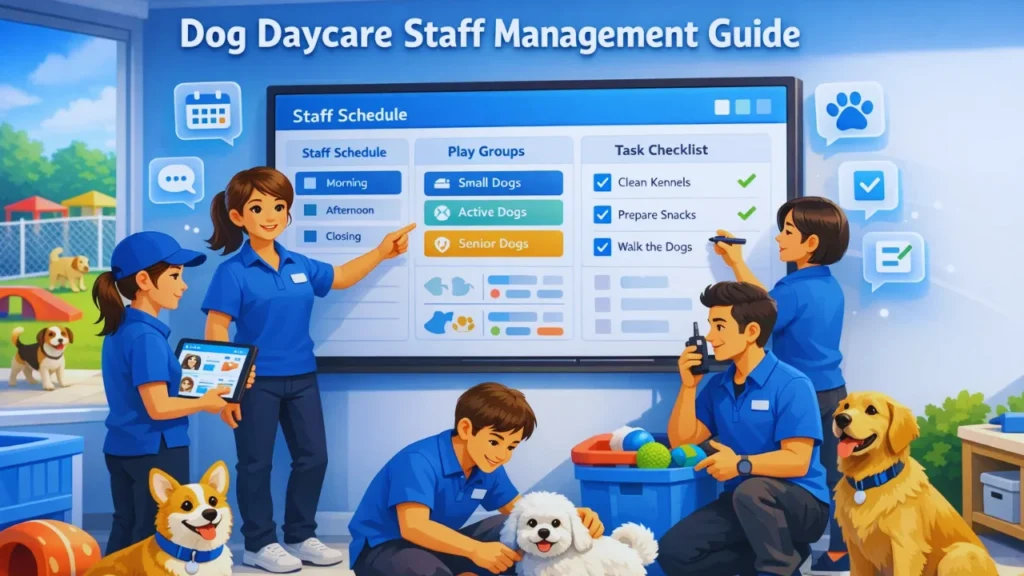
Training your pet business staff properly is important. It ensures safe animal care and builds client trust. Key training covers handling pets, grooming, customer service, and emergencies. Well-trained staff are confident, reduce risks, and stay longer. To start, set clear goals, use various methods, and track progress. This investment strengthens and enhances the reliability of your pet business.

To run a pet-care business, you need more than just good services. You also need trained staff who really understand animals and their owners. Proper training directly makes your facility safer by reducing the risk of accidents and controlling diseases. It also makes customers happier, turning pet owners into loyal supporters, and it makes your team more productive every day.
Empowered Staff Deliver Exceptional Care
Offering training programs to your employees boosts their self-esteem and equips them to deal with emergencies professionally and safely. Correctly interpreting animal behavior keeps the pets calm and safe during their care. Your business will not only be able to manage all situations but will also be able to attract customers due to this unique plan.
Building a Professional Pet-Care Team
This guide will help you assemble and manage a team of well-trained, animal-friendly professionals committed to delivering exceptional customer service. You will learn how to support your staff in developing their communication skills, preparing for emergencies, and engaging in ongoing professional development activities.
What Is Pet Business Staff Training?
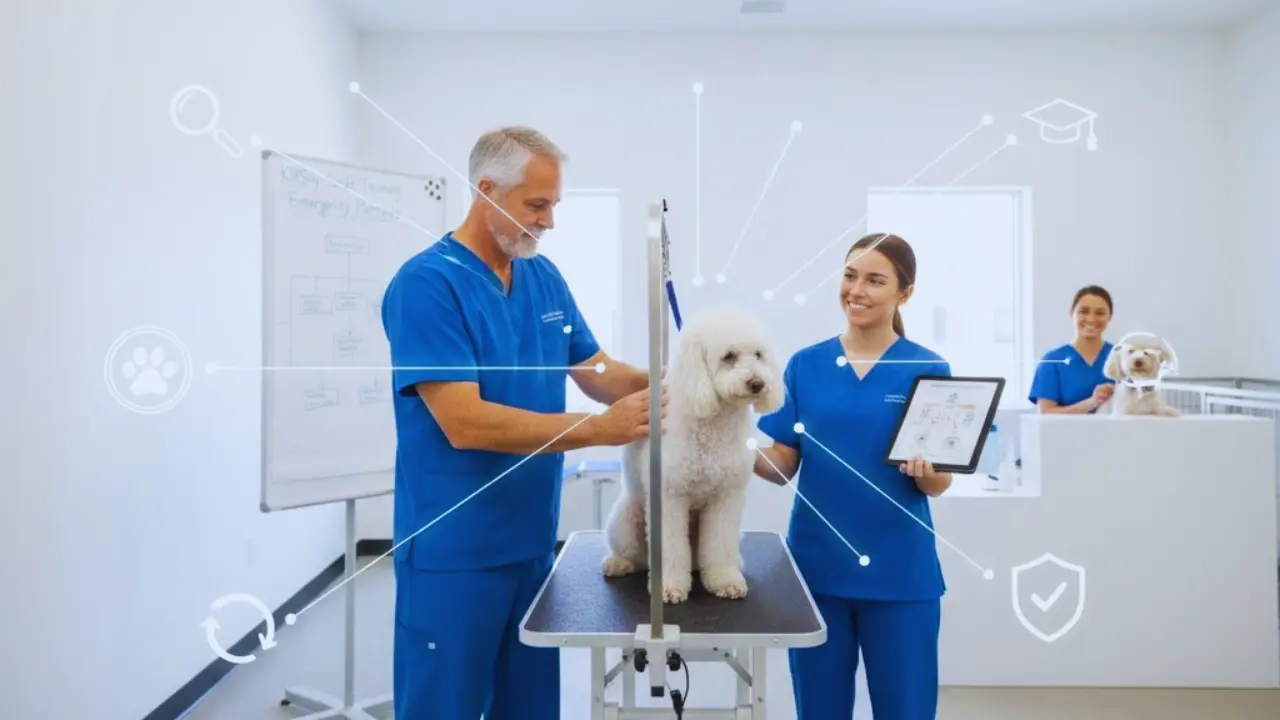
Training staff at a pet business means teaching them how to care for animals and customers safely and confidently. It includes learning how to groom animals, understand their behavior, and handle them safely. Training also includes learning how to communicate effectively with customers and establishing strong relationships with them.
Training as an Ongoing Process
Employees, if appropriately trained, are less likely to leave the company because they will feel recognized and valued in a supportive environment. Additionally, it will result in significant savings for the company, as there will be no injuries or claims due to preventable mistakes that would otherwise lead to costly errors.
Why Staff Training Matters for Pet Businesses

The well-trained personnel look after animals more securely by noticing tension or sickness beforehand and by treating pets correctly at all times. Such watchfulness from the Kennel Manager and the Whole Staff not only prevents mishaps but also allows pets to have a pleasant time, comforting their owners. Happy pets lead to loyal clients and positive reviews that help grow your business.
A. Smoother Workflow and Employee Confidence
Training is not only a means of learning the tasks of employees but also provides them with the necessary assurance that makes everyday activities less monotonous. An appropriately trained group can resolve problems almost immediately and without any frustration or pause. Productivity improves service and, at the same time, alleviates pressure on employees.
B. Reduced Turnover and Risk Management
Proper training reduces team member turnover by fostering a supportive environment where staff feel valued and empowered. It can stop costly mistakes that risk injuries or insurance claims, saving your business money.
Core Areas of Pet Business Staff Training
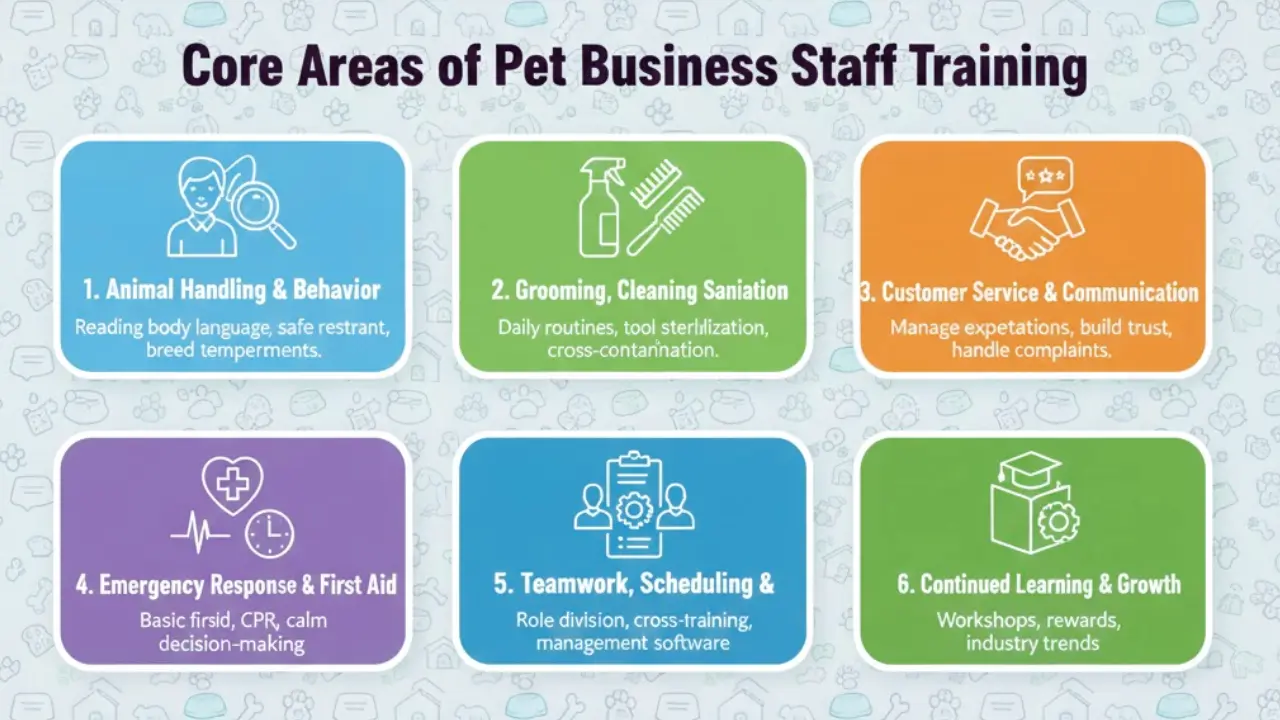
To build a truly exceptional pet care team, training must cover several critical areas. From understanding animal behavior and maintaining top-tier sanitation to mastering client communication and emergency responses, each aspect is vital. Let’s delve into the essential skills your staff needs to master for safety, efficiency, and customer satisfaction.
1. Animal Handling and Behavior Training
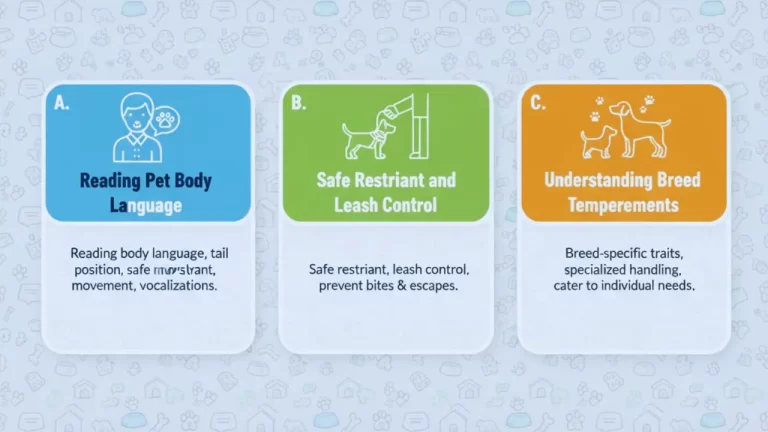
A. Reading Pet Body Language
Animal handling and behavior are the first things you learn in any pet business training program. Staff need to learn how to read tail position, ear movement, and vocalizations to accurately judge how pets are feeling. This skill helps keep all animals safe by preventing misunderstandings that could make pets uncomfortable or aggressive.
B. Safe Restraint and Leash Control
Safe restraint ensures the safety of both pets and staff during their care process. Workers have to apply leash control and moderate restraint to prevent animals from being accidentally hurt or frightened. The skillfulness in handling the animals reduces the incidences of escapes, bites, and accidents, which in turn boosts the confidence of the workers.
C. Understanding Breed Temperaments
Each breed has unique qualities that demand specialized handling. Staff training should encompass not only temperament but also breed-specific habits. Awareness of these disparities will enable the staff to cater to the needs of each animal.
2. Grooming, Cleaning, and Sanitation Practices
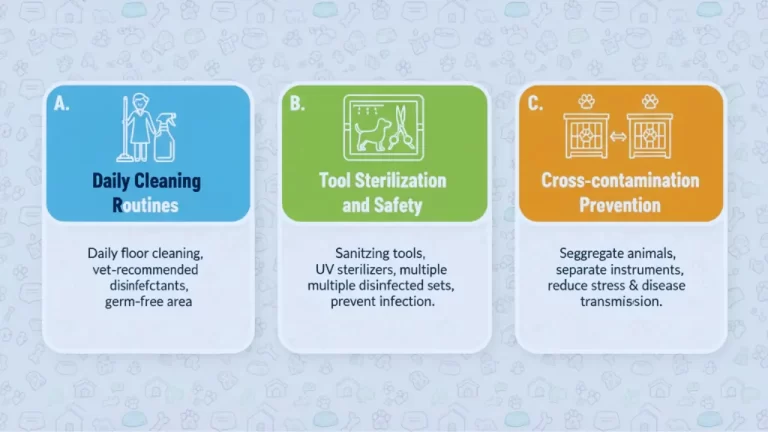
A. Daily Cleaning Routines
Professional pet care requires a grooming area that is clean and germ-free daily. Daily floor cleaning must use disinfectants recommended by veterinarians, which are safe for the animals. This way, you will be able to persuade pet owners that you are very much concerned with their pets’ health and cleanliness.
B. Tool Sterilization and Safety
Sanitizing grooming tools after every use is essential to break the chain of infection. Use high-quality UV sterilizers or appropriate disinfectants that are effective against diseases such as parvovirus and distemper. Keep multiple sets of pre-disinfected instruments ready to ensure zero downtime between clients.
C. Cross-contamination Prevention
Preventing cross-contamination is not just about cleaning your tools; it’s also about maintaining a clean environment. Staff must keep animals from different households apart. To reduce the stress and the risk of disease, implement the use of various instruments and keep the animals segregated.
3. Customer Service and Communication
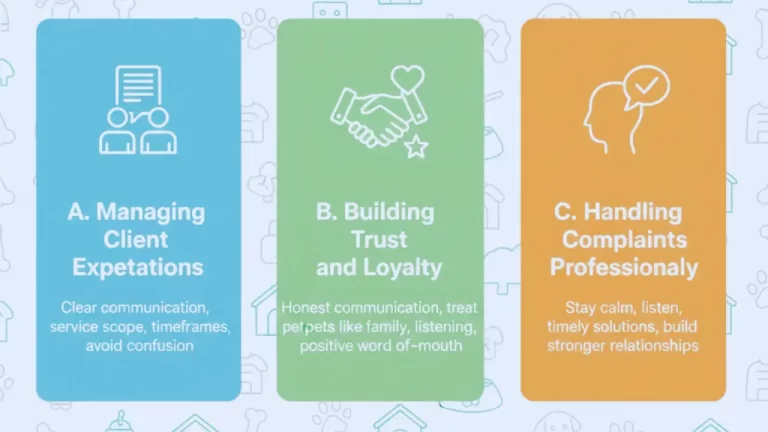
A. Managing Client Expectations
An open and honest approach translates to reasonable customer expectations from the very first time of contact. The staff must be very clear about what they can provide, the timeframe, and the potential for any difficulties to avoid confusion. Informed clients are more likely to set realistic expectations and begin to trust the business.
B. Building Trust and Loyalty
A strong and solid trust involves constant, honest, and sincere communication that conveys to clients that their pets are treated like family by the company. At the same time, staff members should also verbally acknowledge a listening attitude and use their creativity to cater to the needs of everyone. This relational approach increases client loyalty and encourages positive word-of-mouth.
C. Handling Complaints Professionally
Treating complaints with a professional attitude makes it possible to turn problems into opportunities to showcase one’s interest and skill. A well-crafted training program will enable employees to react calmly, listen to complaints, and provide suitable solutions in a timely manner. This method not only resolves issues but, in most cases, contributes to building stronger client relationships.
4. Emergency Response and First Aid Preparedness
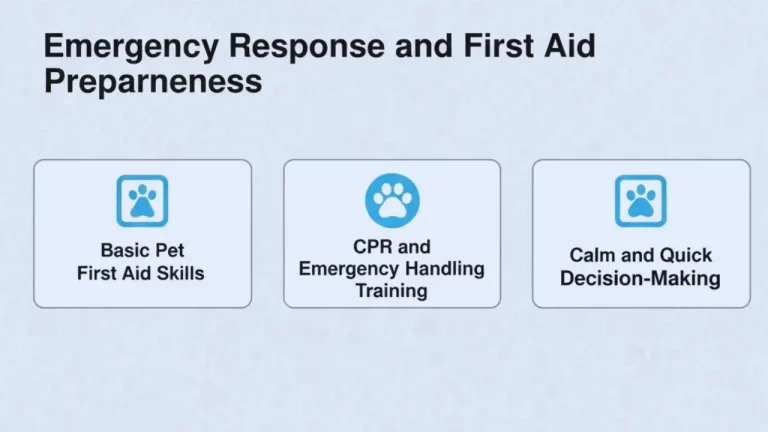
A. Basic Pet First Aid Skills
Every pet-care business should ensure that all its employees are familiar with basic first aid. If you know how to treat minor cuts and scrapes quickly, you can avoid serious problems. This foundation gives teams the confidence to act when something goes wrong.
B. CPR and Emergency Handling Training
Learning CPR and how to handle emergencies can save lives and keep pets from getting hurt in dangerous situations. Staff know how to work with different animals in ways that work best for them. Regular practice with your hands helps you improve at tasks and remain calm in stressful situations.
C. Calm and Quick Decision-Making
In emergencies, it’s crucial to remain calm and make decisions promptly to ensure pets’ safety and provide reassurance to clients. Leaders should create an environment where employees feel secure in making quick and decisive decisions. This level of awareness can change everything.
5. Teamwork, Scheduling, and Accountability
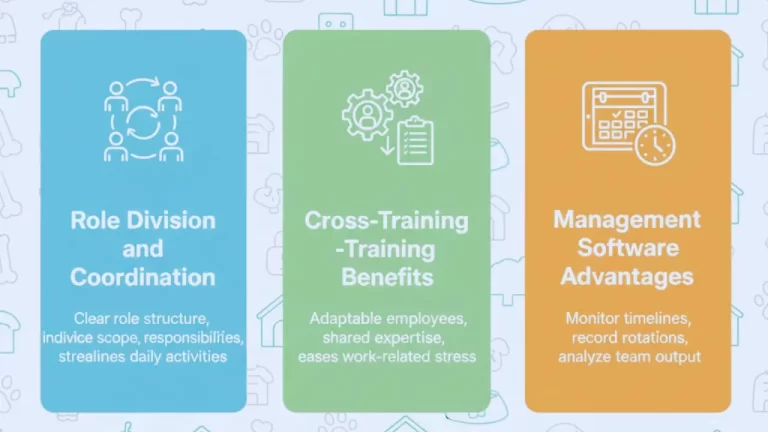
A. Role Division and Coordination
A clear role structure strengthens the pet care team. Individual responsibilities prevent misunderstandings and ensure compliance. This understanding fosters trust and streamlines daily activities.
B. Cross-Training Benefits
Through training in various job positions, employees become more adaptable, which in turn reinforces the team. By taking on more than one role and exchanging their expertise, workers get an ego boost. This way, they can step in when someone is out sick and help ease the work-related stress burden.
C. Management Software Advantages
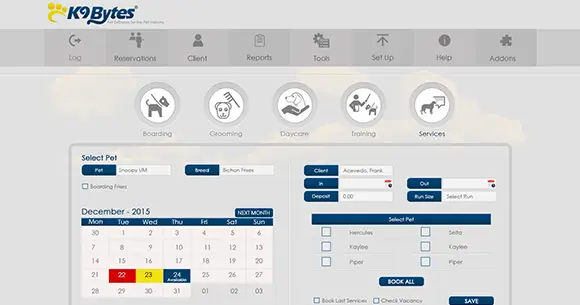
Utilizing Kennel Business Management Software enables easy monitoring of timelines and duties. For all team members, digital instruments accurately record rotations, tasks, and output without any issues. This technology allows managers to focus on future growth.
6. Continued Learning and Growth
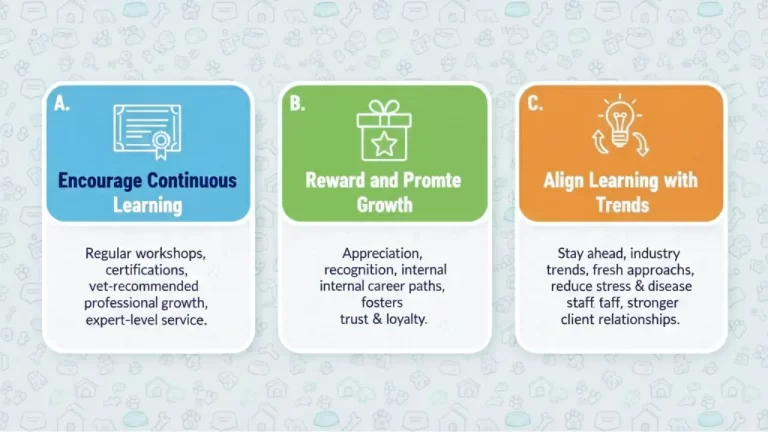
A. Encourage Continuous Learning
Regular workshops and certifications will keep your team sharp and confident. It signifies that you care about their professional growth. This commitment sets your business apart by offering expert-level service.
B. Reward and Promote Growth
Rewards and promotions from within the company are effective ways to express appreciation for employees’ growth and development. Team member recognition fosters trust and loyalty among team members. Building internal career paths allows you to hire committed staff. The internal career tracks help you onboard those who are passionate and devoted.
C. Align Learning with Trends
Stay ahead by ensuring that staff training aligns with the latest trends in your field. Sharing what you learn keeps the team creative and ahead of the game. Employees who are motivated give better service and build stronger relationships with clients.
How to Make a Plan to Execute These Strategies
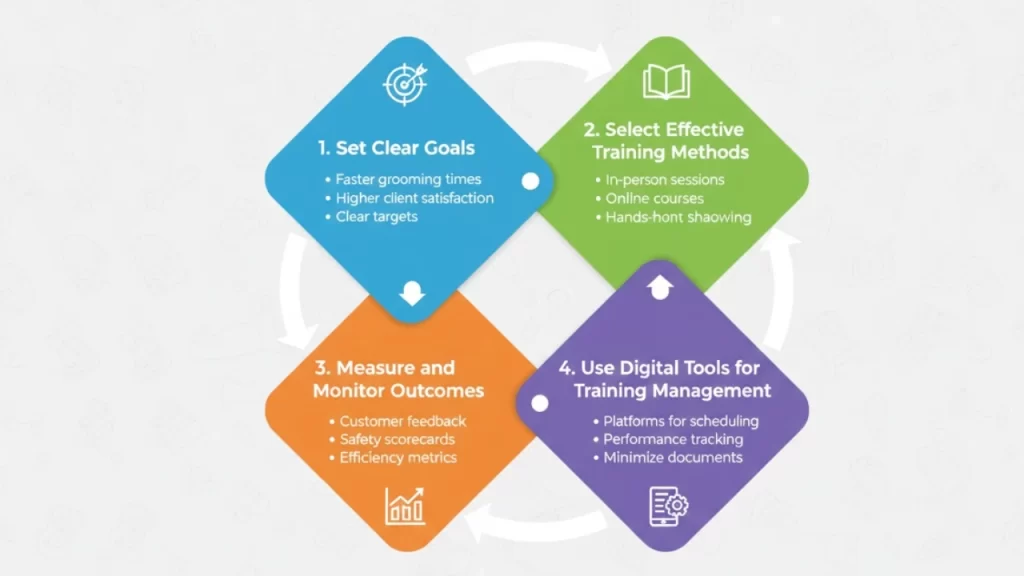
Start your training plan by setting clear, achievable goals. Define what success looks like, like faster grooming times or higher client satisfaction. Clear targets help everyone stay focused and motivated.
1. Select Effective Training Methods
Select a range of training methods, including in-person sessions, online courses, and hands-on shadowing. Mixing approaches keeps learning dynamic and practical. This variety suits different learning styles and job needs.
2. Measure and Monitor Outcomes
Keep an eye on your progress through measurable outcomes, utilize customer feedback, safety scorecards, and grooming efficiency metrics to track your progress. Regular assessments highlight areas for improvement and showcase your successes. Data-driven monitoring ensures that your strategy is on the right track.
3. Use Digital Tools for Training Management
Technology enables organizations to select the most effective training programs and monitor team performance through online means. Technology minimizes documents and keeps the management updated. Personnel can access training schemes from any location due to digitalization.
Tips for Effective Pet Business Staff Training
1. Short and Practical Sessions
Keep seminars brief to maintain audience engagement. Activities can be more effective than lectures. Humans learn and get confidence from animals.
2. Combine Theory with Practice
Combine theory with pet behavior for complete instruction. This blend keeps ideas grounded in reality. It also helps staff understand how to care for and interact with animals.
3. Promote Mentorship Culture
To encourage mentoring, pair new hires with experienced workers. Senior team members advise and mentor junior team members, fostering an environment where staff members enhance their skills through collaboration.
4. Provide Ongoing Training and Feedback
To maintain your skills at a high level, you need to take periodic and refresher courses, as well as receive constructive criticism. Learning new things not only hones the skills but also uplifts the spirit. Effective communication among coworkers fosters trust and promotes personal growth.
5. Celebrate and Reward Success
Public recognition encourages and reinforces excellence in top performers. Rewards help keep employees and improve the workplace culture. Thanking people makes them loyal and proud.
Things to Avoid During Staff Training
1. Not Setting Clear Expectations
Avoid starting training without clearly defined goals and expected outcomes. Staff need direction to understand their roles. Clarity prevents confusion and improves performance.
2. Prioritizing Speed Above Safety
Pet safety should always be the primary concern, and rushing the training process should be avoided at all costs. Treatment and prevention require a significant amount of time, full concentration, and care. Overlooking minor details becomes hazardous for both animals and staff.
3. Not Maintaining Good Communication
Communicate openly and often with your team throughout training. Silence breeds misunderstandings and disengagement. Strong communication builds trust and teamwork.
4. Use Outdated Techniques
Avoid using obsolete techniques or tools that do not align with current standards. Emerging practices imply the need for fresh approaches. Sticking to old ways can hinder the delivery of quality care.
5. Not Updating Training Content
Update staff regularly on trends and discoveries in pet care. The non-acceptance of change will leave your company behind.
Final Thoughts
Strong staff training empowers your team to deliver exceptional pet care with confidence and empathy. Excellent service results in unforgettable experiences that not only please the pet owners but also lead to free advertisements through word of mouth. If your staff is outstanding, your brand name will be associated with trust and quality in the pet care sector. A well-trained team can manage issues with relative ease, which reduces tension and fosters a more productive atmosphere. Their expertise is an excellent asset for your business as it leads to fewer errors and less staff rotation.
If you have talented and enthusiastic workers, then digital platforms are an ideal setting for building a company that will last for many years. Investing in people is not just smart, but it changes lives. K9Sky’s easy-to-use tools simplify training, scheduling, and communication. Put your team first, and your pet business will grow stronger, more trusted, and truly unstoppable.
FAQs About Kennel Staff Training
Q: How often should our pet business staff training be updated or repeated?
A: Training should be ongoing. Regular refresher courses, monthly reviews of processes, and updates aligned with new industry trends are crucial for maintaining sharp skills and current knowledge.
Q: What's the best way to get busy staff members engaged in new training programs?
A: Make sessions short, practical, and hands-on. Combine theory with practice, encourage mentorship, and celebrate successes. Demonstrate how new skills will streamline their tasks and improve pet care.
Q: Are there any good external resources or certifications for advanced pet staff training?
A: Yes, look for certifications in pet first aid and CPR, professional grooming associations, or animal behavior courses from recognized bodies. These add specialized skills and boost team confidence.
Q: How can I measure if our staff training is actually making a difference?
A: Track measurable outcomes like improved grooming times, higher client satisfaction scores, fewer safety incidents, and reduced team member turnover. Customer feedback and safety scorecards are also great tools.
Q: What's the ideal team size to implement practical cross-training benefits?
A: Cross-training is beneficial for any-sized team. Even a small team of 2-3 can see huge advantages in adaptability and covering absences. The goal is to achieve shared expertise and reduced stress, regardless of the exact numbers.