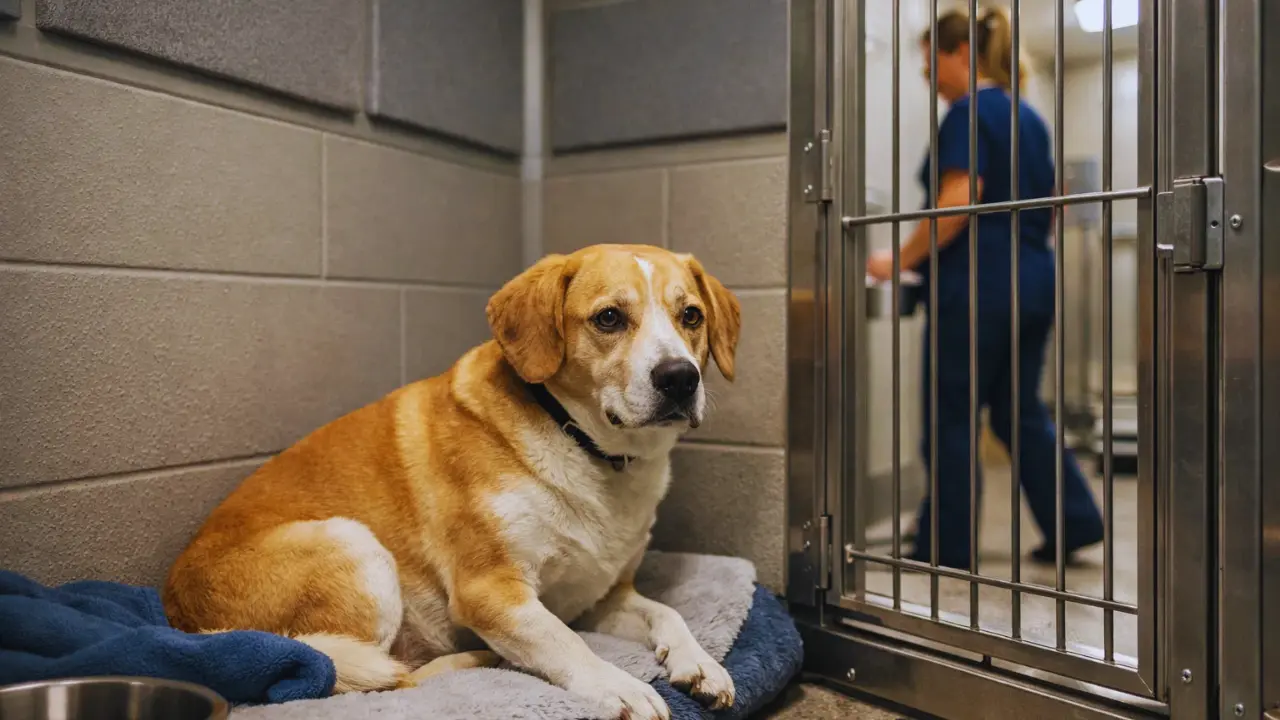
Dog kennel stress is a physical and emotional “fight or flight” reaction that occurs when a dog feels overwhelmed by the unfamiliar sights, loud noises, and loss of routine in a boarding environment. Triggered primarily by separation anxiety and sensory overload, this stress manifests through signs like persistent pacing, panting without exercise, a loss of appetite, or subtle gestures like excessive lip-licking. To prevent kennel stress, you should introduce your pet to the facility through trial daycare stays, provide familiar-smelling items from home, and choose a boarding center that uses structured schedules and quiet zones to maintain a sense of security and calm.
As dedicated pet parents, we understand that leaving your dog behind when you travel, whether for a brief getaway or an essential business trip, can be a challenging decision. It is invariably one of the most complex parts of the journey. Choosing a boarding facility for them is more than a logistical task. It is an act of entrusting a beloved family member to the care of external professionals.
The natural questions that arise are profound: Will my dog be safe? Will they feel abandoned?
These concerns are all valid since the change in routing and environment of an animal can often precipitate a condition known as kennel stress. It is not simply a matter of a dog feeling homesick. It represents a genuine emotional and physiological reaction to a significant alteration in their life and security.
The following topics will help you understand the stress that kennels can’t express, but as a loving pet owner, you should consider that.
Explore what kennel stress is and what it entails for a canine companion.
What Is Dog Kennel Stress?
Kennel Stress: Missing You Becomes Their Anxiety
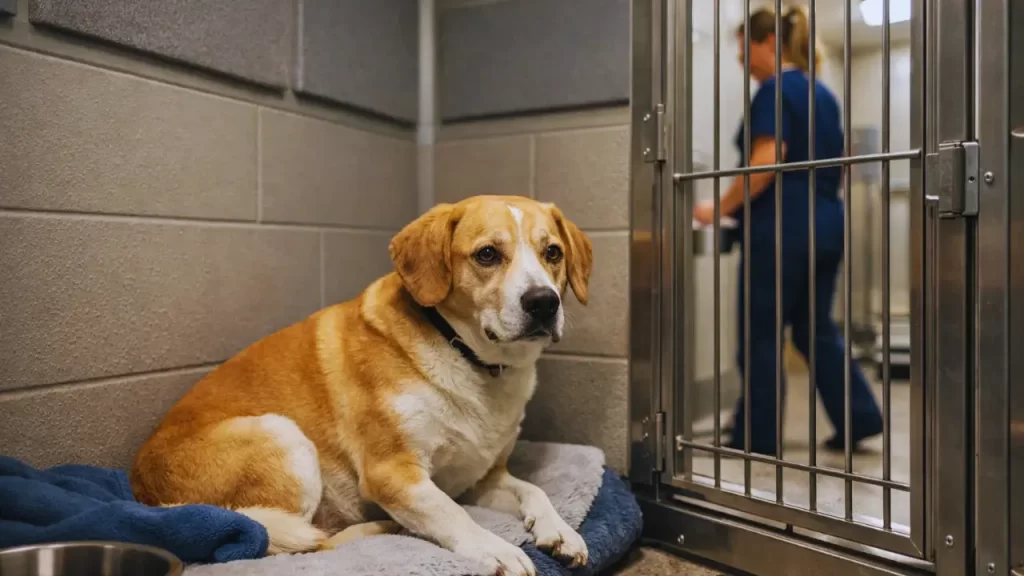
Kennel stress, often referred to emotionally as boarding kennel anxiety, is the intense feeling of stress associated with boarding in dogs. It is the distress your dog feels when a new, loud, and unfamiliar environment suddenly replaces their familiar and safe world. It is the uncertainty that washes over them when their beloved owner is gone, and their predictable daily routine suddenly vanishes.
As K9Sky aims to support owners, we would also like to understand your dog’s emotional journey by helping you take the fear out of boarding. Recognizing the causes and symptoms of this, you can choose a facility that treats not just the dogs but also the family, because we want to make you feel secure until you are finally reunited.
A Feeling of Being Overwhelmed
Have you ever imagined being dropped off in a foreign place where you don’t speak the language, surrounded by strangers, and an unseen force dictates the schedule you have to follow? That’s essentially how dog kennel stress feels to your dog.
Physiologically, the dogs’ “fight or flight” system kicks in whenever they feel scared or overwhelmed. Stress hormones, such as cortisol, flood the body in this situation. Take note that even though nervousness is normal, if the kennel environment is constantly overwhelming, their cortisol levels would stay high. This state of having chronic stress could be exhausting and lower the dogs’ immune defense, making them even more susceptible to having digestive upset or illness.
How can the Boarding Environment Feel Stressful?
- The Loss of their Routine: It is important to take note that dogs rely on predictability. When their mealtime, cuddle time, and walk time are not followed, they will feel confused and unsafe.
- Having Sensory Overload: The world inside the mind of a kennel is noisy, filled with the scents of many dogs, strong cleaners, and unfamiliar hands. This high-volume input is challenging for them to filter out, which can lead to exhaustion and irritability.
3. The Absence of their Person: The most significant stressor a dog can experience is being separated from its owner, as it views and treats them as its primary source of security and love.
Major Causes of Dog Kennel Stress
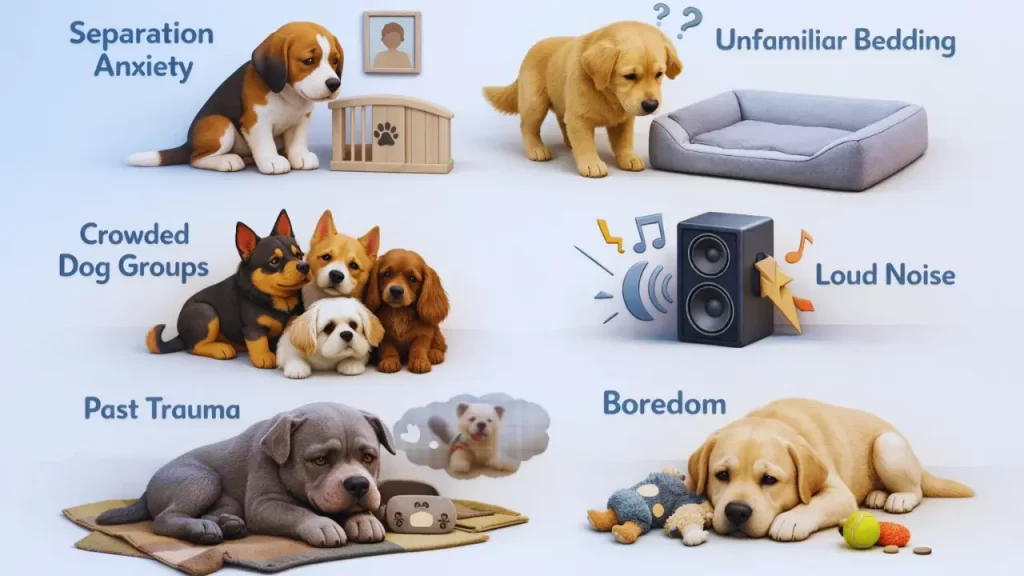
Upon choosing a facility for your dog, remember that you are selecting an environment that actively counteracts these common triggers.
The Emotional Triggers for Kennels
- Separation Anxiety and Loneliness: This is the kind of pain that dogs feel upon being apart, especially for dogs with high attachments. The feeling could be devastating for them, leading them to frantic attempts to find you.
- The Crowd Factor: We all know that some dogs could enjoy being in a playgroup, but let’s consider that others find forced proximity to strange dogs highly intimidating. Also, a massive source of anxiety in dogs is the fear or defensiveness around their unfamiliar peers.
- The Disruption of Comfort: Also consider that if your home has familiar smells, soft sounds, and designated safe spaces. A cold kennel floor, unfamiliar bedding, and the constant sound of keys jangling can feel very hostile for dogs.
The Environmental Overload
- The Noise Factor: Have you ever tried sleeping with constant alarms going off? It is also true of the sounds of persistent barking, which keep your dog’s nervous system on high alert, making rest impossible.
- Boredom and Frustration: A kind of confined space without enough mental or physical stimulation is like a prison for a dog’s natural energy. This kind of frustration can lead to stress and destructive behaviors.
- The Echoes of their Past: Notice that if your dog has a history of trauma before, like a rough shelter stay or previous bad boarding experience, their new kennel environment can still trigger their painful memories and heighten their fear response.
Signs & Symptoms of Kennel Stress

As a pet parent, the power we can achieve for our pet is knowing the body language our dog uses to indicate when they are not comfortable. These kennel stress symptoms are as simple as their subtle body gestures, silently asking for help.
Subtle Whispers of Anxiety
The trained staff can easily know that dogs rarely go from zero to one hundred instantly. They always give their little warnings first.
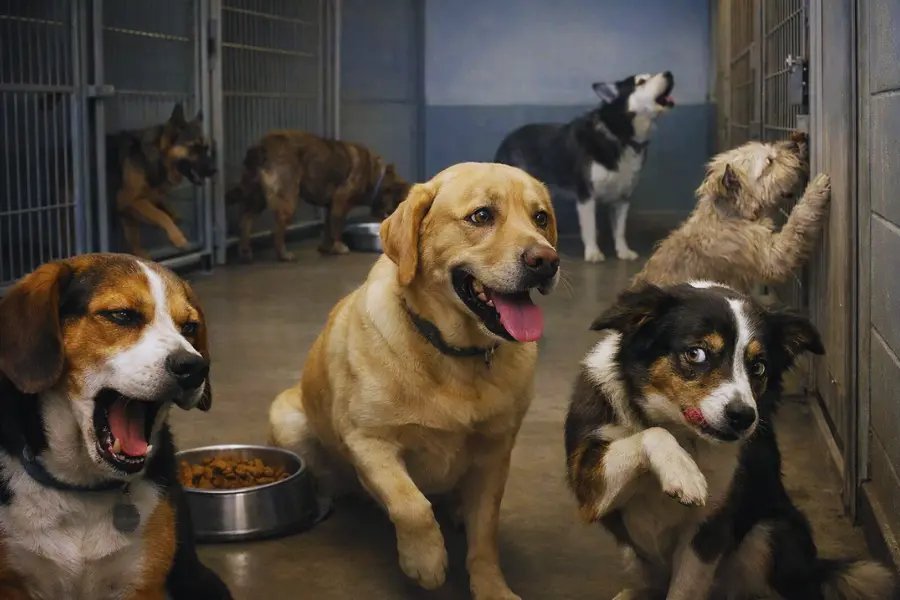
- Calming Signals: You should watch for their frequent yawning, even when they are not tired, excessive lip licking, or turning their head away from interaction. These are their self-soothing attempts.
- The Worried Eye: This is like the whale eye, where you can see the whites of their eyes as they look sidelong at something that worries them. It’s a sign that your dog is feeling vulnerable.
- Panting When Cool: Also, if they are panting or drooling heavily without having just exercised. It could be a sign of emotional distress, rather than heat.
- Lifting a Paw: You should observe when they are standing with one front paw slightly bent and lifted, as this is a clear signal of uncertainty and mild stress.
Obvious Cries for Help
These behaviors indicate the dog is struggling significantly.
- Pacing and Restlessness: The inability to stop moving, walking back and forth incessantly, because the dog cannot settle their mind or body.
- Loss of Appetite: When a dog refuses to eat even their favorite treats, it is intensely stressful. Their body is prioritizing survival over digestion.
- Bathroom Accidents: When stress directly impacts their gut health, it causes diarrhea or vomiting, or it could cause a perfectly house-trained dog to soil their kennel.
- Excessive Vocalization: Constant and desperate whining, howling, or barking that only stops when they are physically exhausted.
- The Great Escape: Destructive chewing, scratching at the door, or digging at the floor are desperate attempts to get back to the safety of their home.
Best Ways to Reduce Kennel Stress
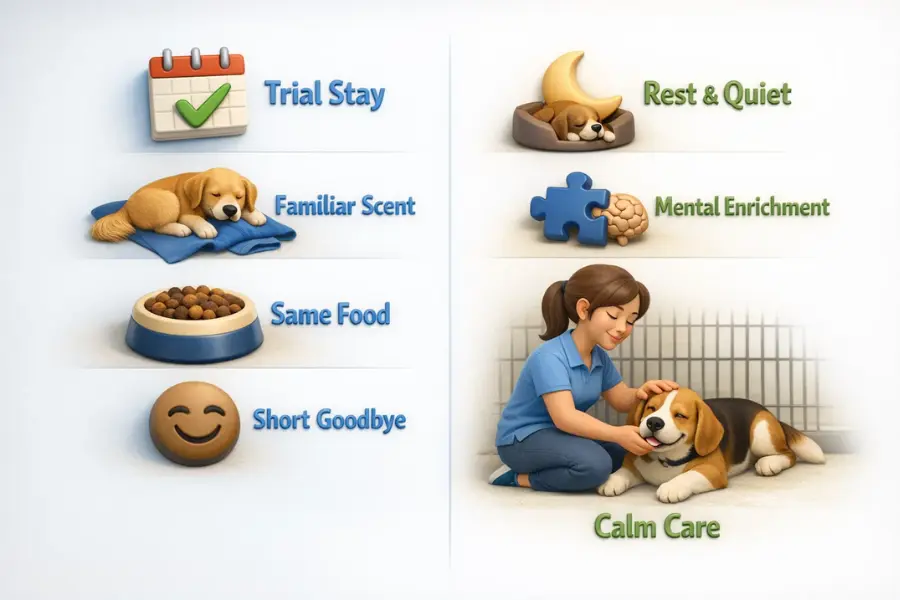
As a pet owner, you can work with your chosen boarding facility to keep you at ease and keep your dog in a blanket of familiarity and comfort.
Your Role in Preparing for a Smooth Transition
- The Trial Run: You should take your dog for a test, which means a day of daycare or a short overnight stay. It actually establishes the routine where you can leave and always come back.
- The Scent of Home: You must prepare to pack your blanket, a favorite bed, or an old t-shirt you have recently worn. Your scent is powerful and reassuring to your dog, acting as their security blanket.
- Don’t Change the Food: By providing their regular food, it eliminates one huge potential stressor, which is stomach upset, and maintains a piece of their home routine.
- Keep Drop-Off Sweet and Short: When you are worried, your anxiety travels down the leash. Having a long and emotional goodbye only fuels your pet’s worry. Instead, be cheerful with your dog, give them a quick hug, and leave with confidence.
The Facility’s Role in Creating a Haven
- Prioritize Rest: Ensure that the kennel mandates quiet times and utilizes sound-dampening materials. Proper rest is crucial for recovery from stress.
- Mental Play over Physical Frenzy: They should look for brain games, such as puzzle feeders, scent work, and brief and structured training sessions for dogs. Mental stimulation tires a stressed dog more effectively than having an endless run.
- Consistent, Calm Interaction: Trained and dedicated staff are the most vital resource because they understand calming signals. They can soothe an anxious dog by gently petting and maintaining a quiet presence.
How to Choose a Boarding Facility for Anxious Dogs
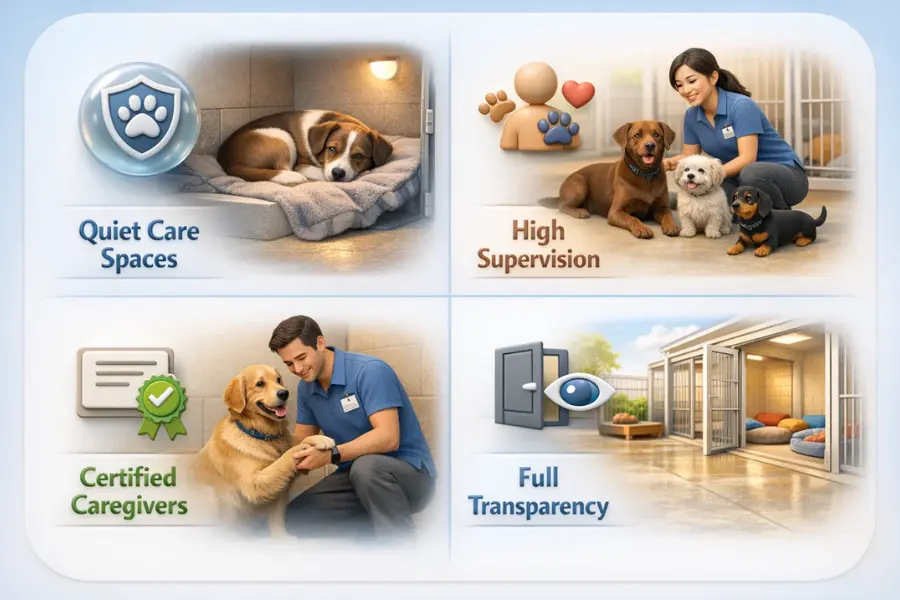
When your dog is naturally anxious, the process of selecting a boarding facility is about finding a facility that truly gets dogs.
Finding the Right Fit for Your Worried Pup
- Ask About Specialized Care: Always check if the facility offers a quiet wing or designated low-traffic kennels for shy or senior dogs. Personalized care plans are essential for it.
- Staff-to-Dog Ratio: You should demand a low ratio. When there are too few staff, the tendency is that stressed dogs are inevitably overlooked. You should ask for high engagement and supervision.
- Proof of Training: Verify and inquire about the staff’s certification in canine behavior and first aid. Highly skilled staff can identify and prevent a stress reaction from escalating.
- Transparency and Open Doors: A good kennel should be proud to show you where your dog will sleep and play. Always consider cleanliness, comfortable bedding, and natural light. If they hide the sleeping area from you, be wary of it.
How Kennels Can Reduce Stress Using Technology

In terms of reducing stress, the human element is always primary. However, the best modern facilities utilize technology as a supportive tool to deliver high-quality, individualized care for dogs.
Tech That Delivers Peace of Mind
- Customized Care Profiles: Advanced pet kennel software enables staff to instantly access your dog’s detailed profile, including all anxieties, triggers, and their favorite toys. This consistency in care reduces confusion and stress even from the moment they check in.
- Automated Routine Tracking: Technology helps keep staff on schedule. By automating reminders for feeding, medication, and specific activities, Kennel Automation ensures that your dog’s established routine with you is maintained flawlessly, which is a key stress reducer for them. The automation of kennel business processes like this reduces errors and allows staff to focus on personalized care.
- Bridging the Distance with Communication: The most humanizing technology is the one that connects you to your dog. Modern software allows staff to capture moments of joy, relaxation, and activity quickly. K9Sky helps streamline this process, allowing the facility to send you personalized daily report cards, photos, and videos. Seeing a picture of your dog napping peacefully or playing happily provides incredible relief and lessens your travel stress, too, which in turn benefits your dog when you finally reconnect.
- Data for Proactive Intervention: By logging behavioral observations digitally, staff can easily identify negative patterns before they escalate into severe stress episodes. This data allows for immediate, intelligent adjustments, such as moving the dog to a quieter space or requesting an extra walk, which turns a potential crisis into a minor hiccup. Busywork automation software, such as K9Sky, enables staff to prioritize meaningful and stress-reducing interactions with the dogs.
FAQs About Dog Kennel Stress
How long does kennel stress last?
It’s like recovering from jet lag. Most dogs take 24 to 48 hours to adjust to a great facility. If the stress persists beyond the first few days, it may indicate that the environment is too challenging for your dog, and intervention is needed.
How to tell if a dog is stressed?
Look for “displacement behaviors” such as excessive yawning, lip-licking, panting, or freezing in place. More urgently, watch for pacing, hiding, refusing food, or destructive chewing.
What is the 3-3-3 rule for dog anxiety?
This rule, originally for rescue dogs, is helpful for any major transition:
- 3 Days: It takes this long for your dog to feel safe enough to lower their initial guard.
- 3 Weeks: They will start to feel comfortable and settle into the boarding routine.
- 3 Months: They would be fully adjusted and consider it “normal” (less relevant for short boarding, but this shows how long it takes to develop deep trust).
What does kennel stress look like?
It actually looks like a dog that cannot find relaxation. They may be pacing relentlessly, glued to the kennel gate, refusing to lie down, or exhibiting nervous behaviors like tail tucking or chronic barking.
What is kennel neurosis?
It is a kind of severe psychological trauma that is much worse than temporary boarding stress. It develops deep-seated, compulsive behaviors due to long-term and high-stress confinement, often seen in environments with severe neglect.