To legally start a grooming business, you generally need a basic Dog grooming business license and a local animal care permit. The process involves registering your business name, setting up a facility that meets safety and hygiene standards, and paying a licensing fee, which usually costs between $50 and $400. Beyond just following the law, obtaining a license builds immediate trust with pet owners, helps you secure better insurance, and ensures you are operating within your city’s zoning and animal welfare regulations.
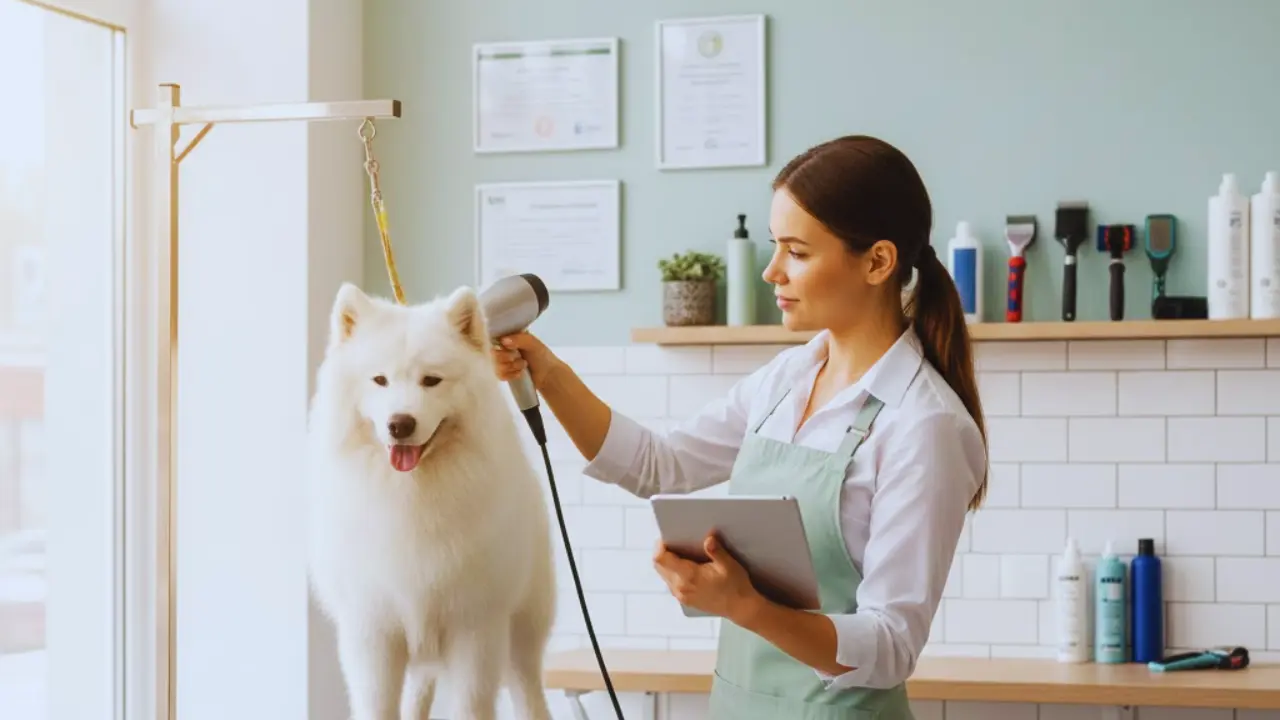
Opening a grooming salon or working from home with your own setup can be thrilling because you finally get to turn your passion for dogs into a source of income. However, before you plug in the dryers and book your first client, you need to ensure your grooming business is legitimate and duly licensed.
A dog grooming business license is a key part of that process, and it is something you should understand before you open your doors. In this guide, we will walk through what a grooming license for pets is, why it matters, what it costs, and how to get one from start to finish.
The goal is that by the time you reach the end of this article, you will know exactly which steps to take next to start your grooming salon with confidence and stay on the right side of the law.
What Is a Dog Grooming Business License?
In simple terms, a dog grooming business license is a paper or digital document from your city, county, or state that says, “Yes, this grooming business is allowed to operate here.” It is a basic approval from the local government that shows your company is registered and recognized as a real business.
It is crucial to understand that this is not always the same as a pet grooming license or a dog grooming permit. The business license generally authorizes you to operate a business. In contrast, special animal care permits, grooming salon licenses, or home business permits focus on how you manage pets, utilize your property, and maintain safety.
In terms of rules, each area can be different; therefore, you always need to check with your local office to see exactly what licenses are required to start a dog grooming business where you live.
Why Licensing Matters in Dog Grooming
Some new groomers see a dog grooming business license as just one more form to fill in, but it is much more important than that. Getting licensed shows that you respect the legal requirements for dog grooming. Additionally, it demonstrates that you prioritize safety and aim to run a long-term business, rather than merely “trying it out” without any structure. Clients can usually feel that difference, and they tend to trust groomers who have taken the time to do things properly.
In many cases, a licensed grooming salon can also get better insurance options, rent specific spaces, or join pet business directories and partnerships that unlicensed groomers cannot access as easily. When you are starting a licensed pet grooming business, every bit of extra trust helps.
How to Get a Dog Grooming Business License
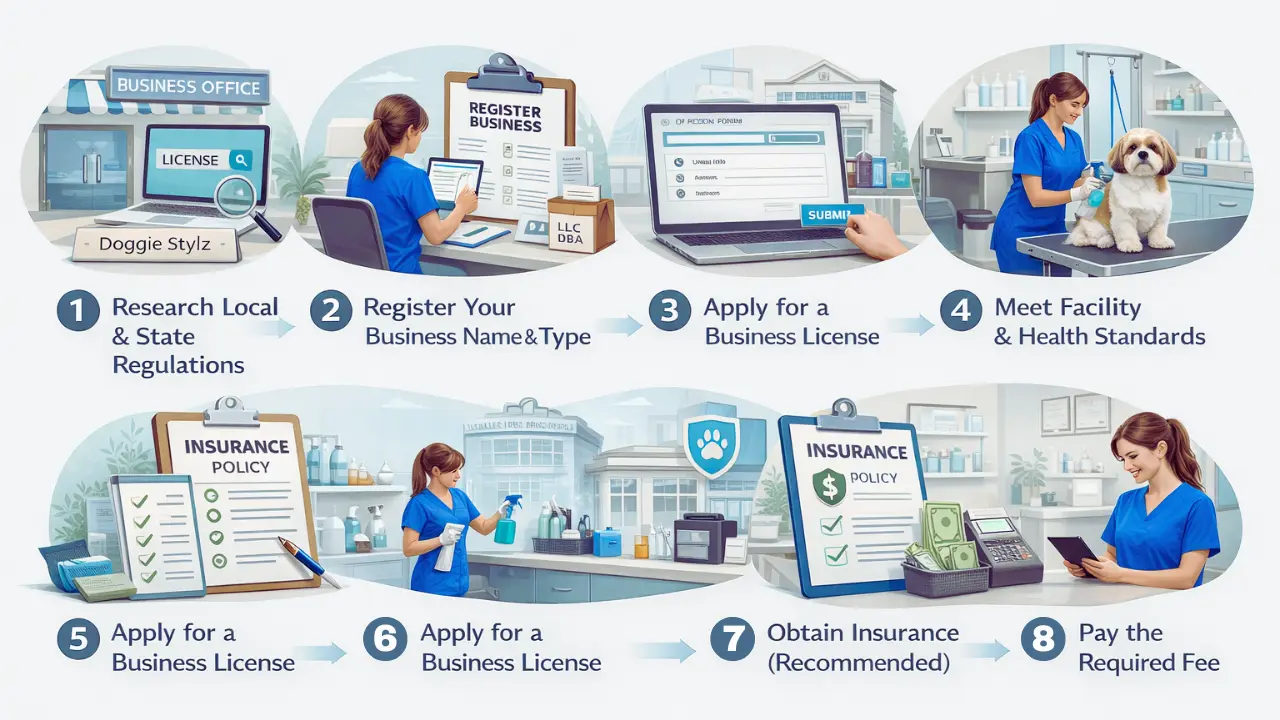
Now, let us walk through how to get a dog grooming business license from start to finish. The exact steps can change from one city to another; however, the general flow is usually quite similar, and once you understand it, the process feels much less scary.
1. Research local and state regulations
Every city or county can have its own list of dog grooming business license requirements, and some may ask for extra permits if you work from home or handle many dogs at once. A good place to start is by visiting your city or county website and searching for the section related to small businesses or licensing. You can also call or visit a local business office and ask them what licenses are needed to start a dog grooming business where you live.
2. Register your business name and type
Before you apply for your dog grooming business license, it helps to decide if you will work as a sole proprietor, set up an LLC, or choose another structure. You also need to choose a business name that is unique within your state. After that, you can register the name and structure with the right agency, which is often the state business registry or a similar office.
3. Apply for a business license
In many places, you can complete this process online by filling out a simple form with your business details, address, owner information, and the type of grooming services you offer. But some offices still allow or require in-person applications. Processing times can vary; however, it often takes around one to four weeks for your license to be approved, so it is smart not to wait until the last minute.
4. Meet Facility and health standards
While you are applying, you also need to think about the space where you will groom. In terms of standards, most areas want grooming salons to be clean, safe, well-ventilated, and set up in a way that protects both pets and people. Floors should be easy to clean, equipment for grooming pets should be safe, and animals should not be at risk of injury due to poor layout. These basic facilities and health standards are often required by law for dog grooming.
5. Obtain insurance (recommended)
It is also advisable to consider insurance at this stage. Even if it is not a strict rule in your area, having liability insurance for your grooming salon or mobile setup can protect you if something goes wrong. Therefore, many owners view it as part of the real cost of obtaining a dog grooming business license, as it supports the business as a whole, not just the forms.
6. Pay the required fee
Finally, pay the license fee, which can vary widely but is typically between $50 and $400 for a small grooming shop, depending on location and size.
Types of Licenses and Permits You May Need
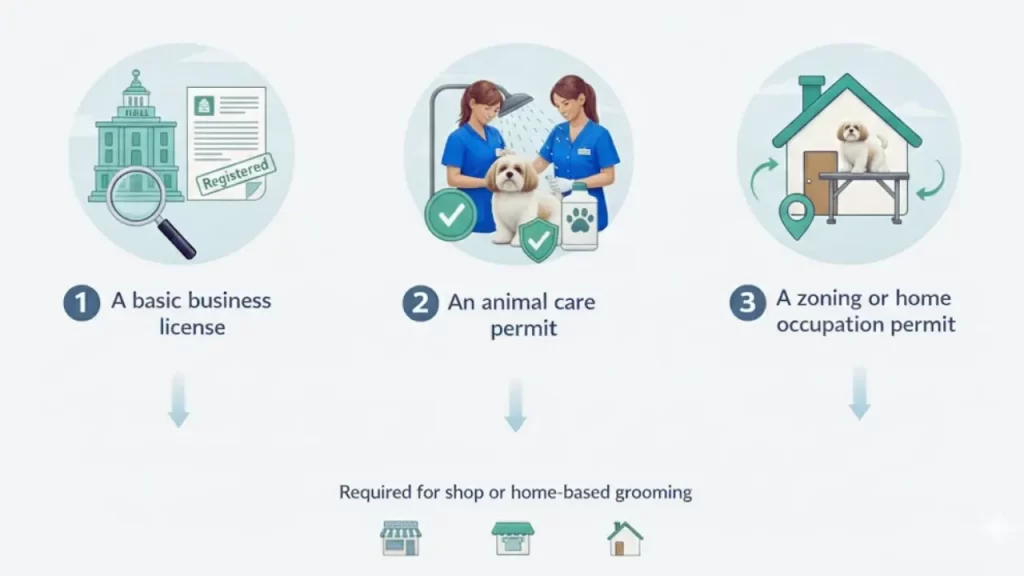
When you start a dog grooming business, you will usually hear about these main types of licenses and permits:
- A basic business license: This is the general license that allows you to operate a business in your city or county. It is not specific to grooming, but it is required for your business to be legally registered.
- An animal care permit or pet service permit: This permit focuses on the services you provide to pets. It often covers animal safety, cleanliness, and how you handle dogs while they are in your care.
- A zoning or home occupation permit (for home-based grooming): If you plan to groom dogs at home, your city may require this permit to confirm that running a grooming business is allowed in your neighbourhood or residential area.
Most dog groomers only need one or two of these, though, depending on local rules. The exact mix depends on your city or county, and whether you’re working from a shop or from home.
Dog Grooming Business License Requirements
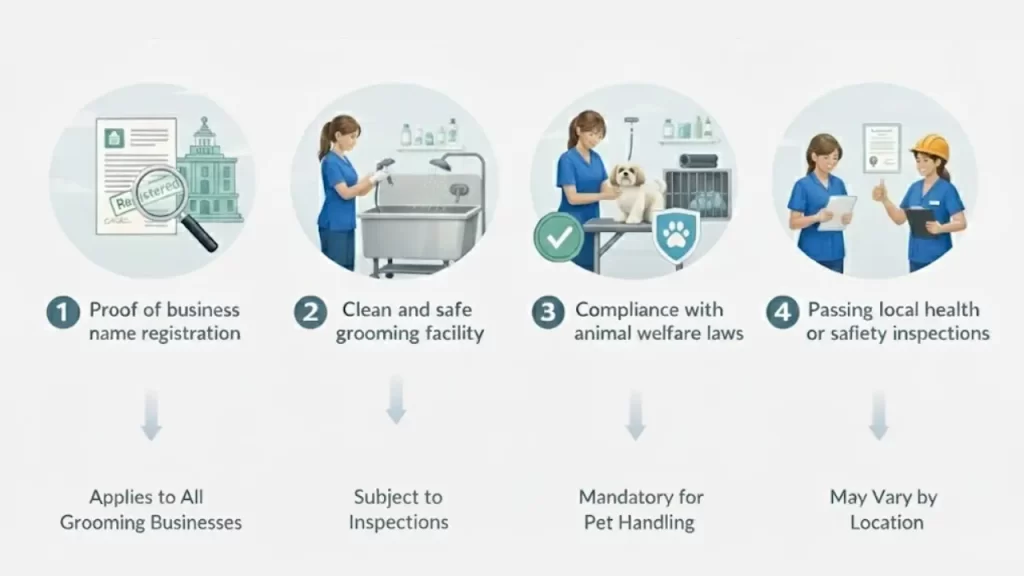
When you apply for a dog grooming business license, you will often be asked to meet a few standard requirements:
- Proof of business name registration: You will usually need to show that your business name is officially registered. This allows the city to record the correct legal name on your license and in their records.
- Clean and safe grooming facility: Your grooming area should be tidy, well-lit, and safe for both pets and people. This often means having running water, proper waste disposal, safe electrical outlets, and secure storage for shampoos, tools, and cleaning products.
- Compliance with animal welfare laws: You must follow local rules that protect animals. These can include how long dogs can stay in crates, how they are restrained during grooming, and how closely you supervise them while they are in your care.
- Passing local health or safety inspections: Some cities or states will inspect your grooming space before giving you a license, while others may visit after you open. They check that you meet basic health, cleanliness, and safety standards.
In addition, some states may require you to hold a professional dog grooming certification, but many do not, so it is essential to check the specific rules where you plan to work.
How Much Does It Cost to Get a Dog Grooming License?
Many new owners ask, “How much does a business license cost for dog grooming?”, and the honest answer is that it really depends on where you live, plus how big your business will be. Still, for most small salons or home-based setups, the fee for a dog grooming business license usually sits somewhere between 50 and 400 dollars. This may cover one year of operation, or sometimes more, depending on the system your city uses.
In some states, the cost is relatively low for small grooming shops, while larger salons or mobile units may incur higher costs due to their higher volume. For instance, in Florida, local cities set their own business taxes or license fees, so one town may charge near the lower end, while another could charge at the higher end. The best way to determine your exact cost is to check your local government website or directly contact the business office rather than relying on averages.
How to Manage Your License and Stay Compliant
Obtaining your dog grooming business license is a significant step, but maintaining its active status is equally important. In many places, licenses must be renewed annually or every few years, and if you forget, you may face late fees or even a suspension of your operating rights. That said, it’s smart to set reminders for renewal dates and keep your paperwork together in one place, whether that is a folder, a binder, or a digital file.
You should also update your license details whenever your business undergoes a change. If you relocate your grooming salon, bring in a new owner, or change your business structure, your city or county will typically require updated information. And keeping up with all that can feel like a lot on top of actually grooming dogs.
That’s why it’s valuable to have a solid pet business platform. A great dog grooming business software can track client details, store important documents, and remind you of renewal dates. This will help you avoid constantly chasing paperwork, allowing you to stay focused on the dogs in front of you.
Final Thoughts
Starting a grooming salon or mobile grooming van can feel like a huge step. However, obtaining a dog grooming business license is a crucial step in transforming your idea into a legitimate and trustworthy business. When you take the time to understand the rules, fill out the correct forms, and keep your license current, you’re basically telling clients, “You can trust me with your pet and with your money.”
Over time, a legitimate, well-organized grooming business usually grows faster, attracts more committed clients, and experiences fewer stressful moments. If you’re ready to keep going, you can use this licensing guide and start building a plan that covers both your legal setup and your day-to-day operations.
With clear steps, the right tools, and a genuine effort to do things properly, you will be much closer to running the kind of grooming salon pet owners feel good about and happily recommend to their friends.
FAQs about Pet Grooming Business License
1. Do I need a separate license if I run a mobile grooming van?
Yes, most cities require a specific mobile business permit in addition to your basic business license. Since you are operating on the move, you may also need to check local parking laws and waste disposal regulations for your vehicle.
2. Can I use the same license if I decide to offer boarding or daycare later?
Usually, no. A grooming license covers service-based visits, but overnight stays or group play typically require a specific animal care permit. If you expand, consider specialized pet boarding software to help manage the stricter record-keeping and safety requirements associated with these services.
3. Do I need to be a certified groomer to get a business license?
In most states, a professional certification isn’t required to get a business license. The government is primarily concerned with your tax registration and facility safety. However, having a certification is highly recommended to build trust with clients and lower your insurance rates.
4. What happens if I move my business to a new house or shop?
Business licenses are typically associated with a specific address. If you move, you must notify your local licensing office and apply for a transfer or a new license to ensure your new location meets zoning and safety codes.