
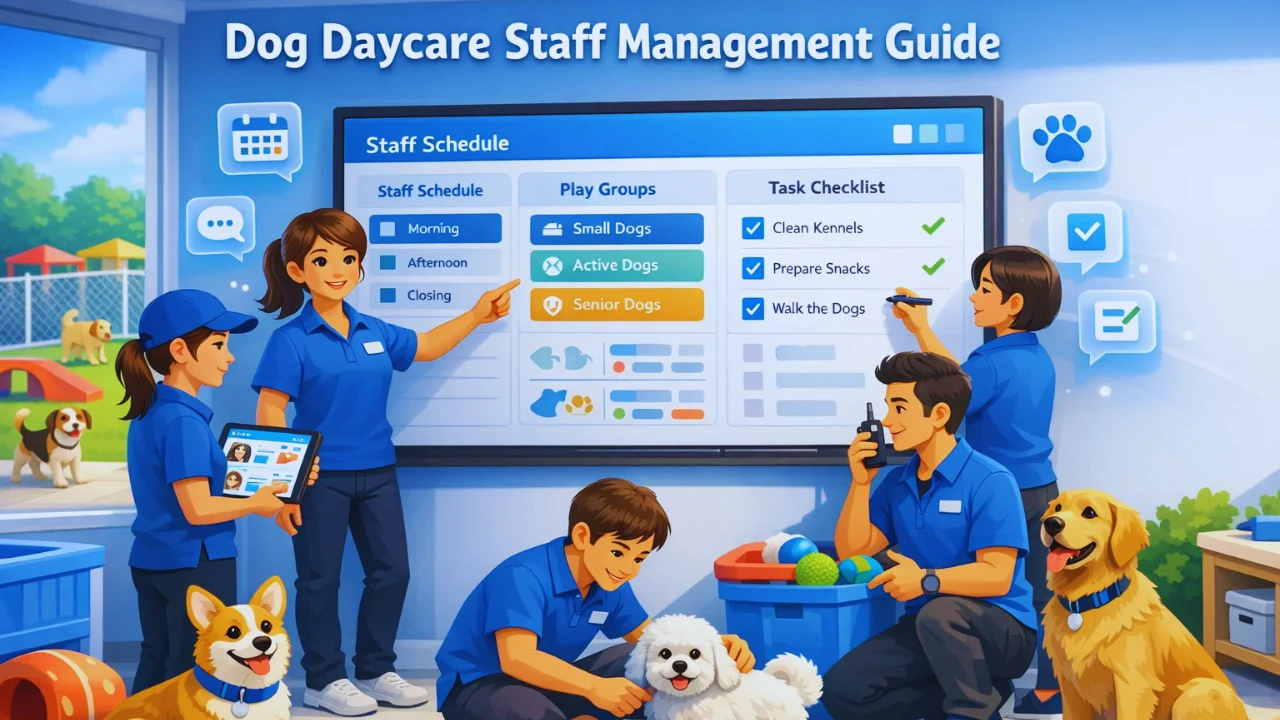
This guide explains how daycare owners can manage staff more effectively. You will learn about common challenges that most daycare businesses face. Understanding these challenges helps you avoid similar problems in your facility. Solutions for staff management will be explained in clear, simple terms. This guide covers scheduling, communication, and strategies for managing staff responsibilities. Modern technology tools can help organize your team and improve operations. Software systems make staff management much easier and less stressful. Better organization leads to happier employees and safer, healthier pets.
Dog Daycare businesses depend heavily on well-organized staff members. Your employees are responsible for keeping pets safe every single day. They supervise playtime and make sure dogs don’t get hurt. Staff members handle feeding, cleaning, and caring for pets throughout their shifts. Without good organization, your daycare cannot run smoothly or safely. Well-trained employees create positive experiences for every pet in your facility. The reputation of the pet daycare business depends on how well your team performs daily tasks. Strong staff management is the foundation of successful daycare operations.
Managing staff effectively presents many difficult challenges for daycare owners. Scheduling conflicts occur when multiple employees need time off at the same time. Communication issues happen when important information doesn’t reach the right staff members. Unclear responsibilities cause confusion about who should do which jobs. Some employees feel unsure about their specific tasks and expectations. Without clear guidelines, staff members might make different decisions about pet care. These management problems can disrupt daily operations and frustrate your employees. Many daycare owners struggle to organize their teams without proper tools.
What Is Dog Daycare Staff Management?
Staff management includes organizing employees and assigning them to different tasks. It means making sure each person knows what they should do daily. Your job involves supervising staff activities and ensuring high-quality work. Management also includes hiring new employees and properly training them. You must evaluate how well your staff performs their responsibilities each week. Good management creates an environment where employees feel valued and respected. Your leadership directly affects whether your team works together smoothly or poorly.
Managing staff requires handling many different tasks throughout each working day. Scheduling shifts means deciding which employees work on which days and times. Coordinating pet supervision ensures that enough staff members are watching the pets at all times. Managing customer interactions means training staff to communicate politely with pet owners. Maintaining safety standards requires ensuring that staff always follow proper procedures. Your staff must understand feeding schedules, medication administration, and emergency procedures. They need to know how to handle aggressive dogs or medical problems. Clear task organization keeps everything running smoothly from morning until closing time.
Why Staff Management Matters in Dog Daycare Businesses
Good staff management ensures pets are properly supervised throughout the day. When staff clearly understand their responsibilities, they work more efficiently together. Proper supervision prevents injuries and keeps pets safe from dangerous situations. Your team can respond quickly to emergencies when roles are well-defined. Organized staff members notice when a dog seems sick or uncomfortable. They can follow proper procedures when problems occur during their shifts. Strong management creates systems that protect both pets and employees daily.
Organized teams improve customer service and significantly reduce dangerous mistakes. Customers appreciate it when your staff is friendly and knowledgeable about their pets. Good communication with pet owners builds trust in your business. Efficient staff coordination means customers don’t wait long to pick up their pets. Reduced mistakes mean fewer injuries and better health outcomes for all dogs. Safer environments make pet owners feel confident leaving their animals in your care. Your reputation grows when customers see that your staff is professional and caring. Excellent staff management directly leads to business growth and success over time.
Common Staff Management Challenges in Dog Daycare Businesses
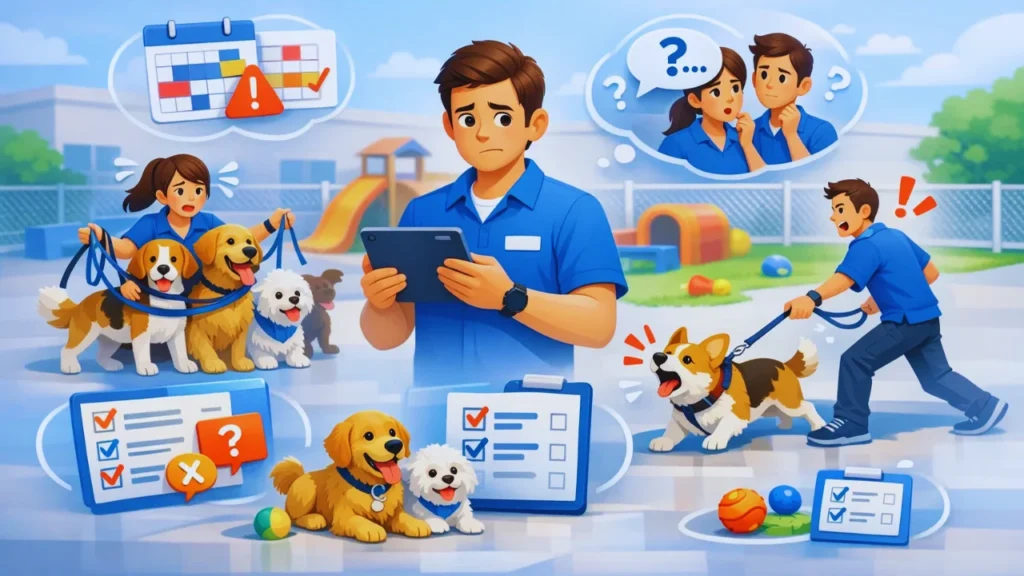
Many daycare owners face similar staff management challenges every single day. Understanding these common problems helps you prepare better solutions for your business. Learning from other people’s experiences saves you money and prevents frustration. Your facility will operate better when you know what to expect. Recognizing challenges early lets you fix them before they become serious. Most problems have practical solutions that don’t require expensive investments. Many successful daycare owners started by addressing these exact management challenges.
1. Scheduling and Shift Coordination
Scheduling difficulties occur when multiple employees need the same days off at the same time. Overlapping shifts might leave some time periods with too few staff members. Your team might feel frustrated when scheduling seems unfair or disorganized. Creating fair schedules that satisfy everyone is extremely difficult and time-consuming. Employees might not arrive on time when they don’t understand their schedule clearly. Communication about shift changes can confuse and result in no-shows. Without proper scheduling, your facility might not have enough staff for adequate pet supervision.
Structured scheduling improves operations and reduces stress for your entire team. When everyone knows their schedule well in advance, they plan better. Staff members can more easily arrange childcare and other responsibilities. Clear schedules prevent arguments about who should work which shifts. Your facility always has enough trained staff available for proper pet supervision. Organized scheduling reduces last-minute changes and emergency staffing problems. Fair scheduling systems show employees that you respect their time and personal needs. Good scheduling practices create a more positive and productive work environment.
2. Communication Between Staff Members
Miscommunication can cause serious operational issues and safety problems daily. Important information might not reach the staff members who need to know. One person might give a pet medication, while another tries to do the same. Staff members might not be aware of changes to the daily schedule or procedures. Some employees might feel unsure about what happened during previous shifts. Without clear communication, staff members cannot work together effectively. Safety incidents often happen because important information wasn’t communicated properly beforehand.
Clear communication improves teamwork and creates a safer environment for pets. When staff understand what needs to happen, they work together smoothly. Written notes and regular team meetings help everyone stay informed about changes. Staff members can ask questions and get clear answers about their responsibilities. Better communication reduces mistakes and prevents safety problems. Employees feel more confident in their jobs when information flows clearly. Strong communication creates trust between team members and improves overall morale. Your facility runs more safely when everyone understands what’s happening throughout the day.
3. Managing Daily Staff Responsibilities
Assigning tasks becomes difficult when many different jobs need to be completed each day. Monitoring staff activities requires time and effort that busy owners often lack. Some employees might not understand exactly what you expect from them. Unclear task assignments can result in important work getting completely forgotten. Different staff members might do the same job in very different ways. Your facility’s quality suffers when responsibilities aren’t clearly managed. Pets might not receive proper care when staff confusion exists about tasks.
Clear role definitions improve efficiency and help your facility run smoothly. Every employee should know exactly what they are responsible for each day. Written job descriptions help staff understand expectations and performance requirements. When roles are clear, staff members take pride in doing their jobs well. Consistent task completion ensures pets receive the same high-quality care every time. Organized responsibilities help you identify which employees work best in certain roles. Your facility becomes more professional when everyone understands their specific duties completely. Clear management of daily tasks creates order and improves your business operations.
4. Preventing Staff Burnout
Heavy workloads and long hours can affect employees negatively over time. Tired staff members make mistakes that can harm your pets or business. Your best employees might leave to find less stressful job opportunities. Burned-out workers provide lower-quality care and interact poorly with customers. Staff morale decreases when employees consistently feel overworked and underappreciated. High turnover rates mean you are constantly training new employees repeatedly. Burnout costs your business money in recruiting and training expenses. Unhappy employees create a negative atmosphere that spreads throughout the company.
Balanced workloads and proper scheduling are extremely important for staff wellbeing. Assign work fairly so no single person handles all the difficult tasks. Give employees regular breaks during their shifts to rest and relax. Recognize good work and appreciate your staff members’ efforts. Regularly listen to employee concerns about their workload and working conditions. Cross-training helps you distribute tasks more evenly across your entire team. When staff feel valued and not overworked, they stay longer at your facility. Preventing burnout improves employee satisfaction and business stability significantly over time.
5. Managing Difficult Pet Behaviours
Staff members sometimes face challenging situations with aggressive or anxious dogs. Handling difficult pets without proper training can result in injuries or stress. Employees might feel nervous when working with dogs that snap or growl. Some staff members lack confidence in their ability to control large or energetic animals safely. Unclear procedures for handling dangerous situations leave staff unsure how to respond. Your team needs guidance on when to separate problem dogs from the group. Without proper management, staff injuries increase and create liability problems for your business.
Training your staff to handle difficult pet behaviors improves safety and confidence. Teach employees about recognizing signs that a dog might become aggressive. Provide clear procedures for safely separating dogs when conflicts arise. Show staff how to use calming techniques with anxious or nervous animals. Regular practice sessions help employees feel more comfortable handling challenging situations. Document which dogs have behavioral issues so all staff are informed. Your team will feel more confident when they know how to respond. Proper training reduces injuries and creates a safer environment for everyone involved.
6. Tracking Employee Performance and Attendance
Monitoring employee attendance and performance consistency requires daily attention. Staff members might arrive late without notifying you. Some employees miss shifts without proper notice, leaving you suddenly short-staffed. Inconsistent attendance disrupts your facility’s operations and creates stress for remaining staff. Informal tracking makes it difficult to identify which employees need improvement. Without records, you cannot make fair decisions about promotions or discipline. Unclear performance expectations can leave employees unsure what constitutes good work. Managing these issues becomes complicated without proper systems and documentation methods.
Establishing clear attendance policies helps staff fully understand your expectations. Require employees to notify you before they will be absent from their shift. Document all attendance issues for future reference, if needed. Create performance metrics that clearly define what good work looks like for each role. Regular performance reviews help employees understand how they are doing in their jobs. Positive feedback encourages good behavior while constructive criticism helps improve performance. Fair evaluation processes show staff that promotions and recognition are earned. Organized performance tracking creates accountability and improves the quality of your entire team’s work.
7. Handling Staff Conflicts and Disagreements
Staff conflicts occur when employees disagree about how tasks should be completed. Personal disagreements between team members can create tension in your workplace. Unresolved conflicts damage team morale and disrupt daily operations. Some employees might blame each other when problems occur during their shifts. Angry staff members provide poor customer service and lower-quality pet care. Without conflict-resolution procedures, disagreements can quickly escalate into serious problems. Your facility’s atmosphere becomes negative when staff members don’t get along well. Unresolved conflicts lead to increased turnover and difficulty attracting new employees.
Addressing staff conflicts promptly prevents them from damaging your team relationships. Listen to both sides of any conflict without judging either employee harshly. Help employees understand each other’s perspectives and find reasonable compromises together. Establish clear policies about respectful behavior and professional communication standards. Team meetings can help address common conflicts affecting your entire workplace. Encourage employees to resolve small problems before they escalate into major disagreements. Management-led mediation shows staff that you take their concerns seriously. Building a positive team culture in which people respect one another helps prevent many conflicts.
How Dog Daycare Software Helps Manage Staff
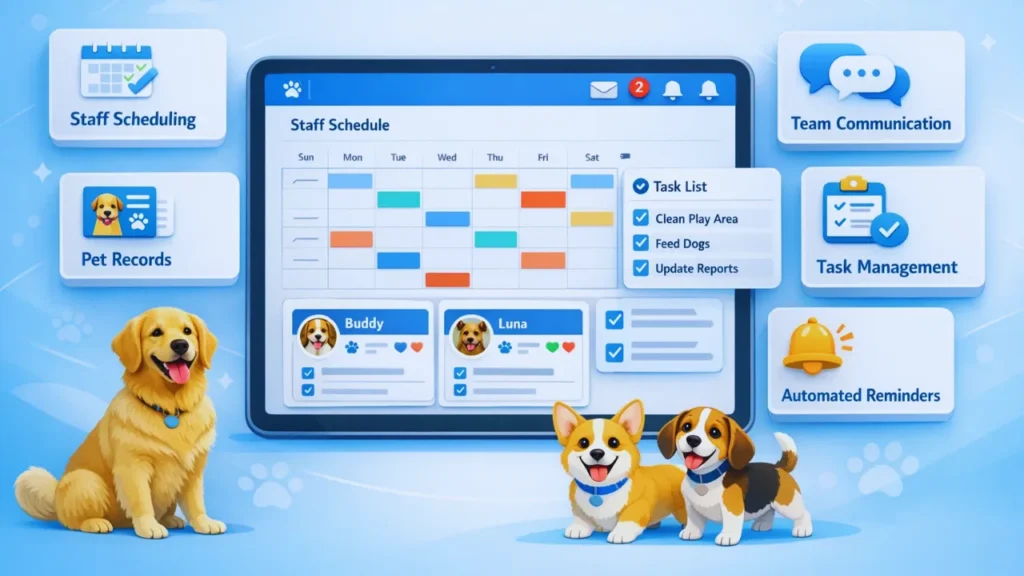
Modern daycare software helps organize scheduling, staff communication, and daily operations. Technology reduces the time owners spend on manual scheduling and paperwork. Pet Daycare Software systems automatically track employee shifts and hours worked each week. Automated features send reminders to staff about their upcoming work shifts. Digital organization makes it easy to quickly access important employee information. Staff can communicate through the software instead of using phone calls or messages. Real-time updates keep everyone informed about schedule changes and important updates. Software helps owners manage their teams more efficiently and effectively.
Technology reduces manual work and significantly improves operational efficiency. Staff members spend less time looking for information and more time helping pets. The software tracks which staff members are available on specific days. Automated scheduling prevents double-booking of shifts and reduces scheduling conflicts. Communication becomes faster when information is shared digitally through one system. Important pet information is organized and easily accessible to all staff. Efficiency improvements mean better service quality and happier customers overall.
Key Features of Dog Daycare Software for Staff Management:
- Staff Scheduling Tools: Easily create and manage employee schedules with digital tools that prevent conflicts.
- Appointment and Booking Coordination: Organize pet bookings so staff know how many pets to expect each day.
- Centralized Employee Communication: Send important messages and updates to your entire team instantly through the system.
- Digital Pet Records and Task Tracking: Track pet information, health notes, and daily tasks assigned to specific staff members.
- Automated Reminders and Notifications: Send automatic reminders to staff about their shifts, pet care tasks, and schedule changes.
Best Practices for Managing Dog Daycare Staff
Managing staff successfully requires practical strategies that address common challenges. Implementing these practices creates a more organized and efficient facility. Your team will work better together when these practices are in place. Staff members feel more valued and motivated when management is fair. Better organization always leads to improved pet care and customer satisfaction.
Practical Strategies for Effective Staff Management:
- Clearly Define Staff Roles and Responsibilities: Write detailed job descriptions so employees understand exactly what they should do daily.
- Create Consistent Staff Schedules: Provide schedules well in advance so staff can plan their personal lives accordingly.
- Train Employees Regularly: Teach staff about pet care, safety, and company procedures through ongoing training sessions.
- Maintain Proper Pet-to-Staff Supervision Ratios: Keep the right number of staff members for the number of pets in your facility.
- Encourage Teamwork and Communication: Foster a positive environment where staff members work together cooperatively and share important information.
Conclusion
Effective and organized staff management is extremely important for a dog daycare business. Your employees are your most valuable business asset every single day. Proper management ensures pets are always safe, healthy, and well cared for. Strong teams deliver excellent customer service, which builds your business reputation. Investing time in staff management creates a stronger and more stable business. Your facility will run more smoothly when staff management is handled well.
Modern technology and dog daycare software help owners manage staff effectively. Software systems organize schedules, communication, and daily operations in a single place. These tools reduce the time spent on administrative work and paperwork. Owners can focus more on growing their business and serving customers. Better organization means happier employees and more satisfied pet owners. When staff management and technology work together, businesses succeed. Your dog daycare will thrive when you consistently prioritise organized, fair staff management.
FAQs about Dog Daycare Staff Management
1. How many staff members are needed in a dog daycare facility?
The number depends on how many dogs you handle daily. Most facilities keep one staff member for every 10–15 dogs to ensure proper supervision and safety.
2. What skills should dog daycare staff members have?
Staff should understand dog behavior, basic pet care, and safe handling techniques. Good communication and teamwork skills are also important for daily operations.
3. How can dog daycare owners train new staff effectively?
New employees should receive hands-on training, safety instructions, and clear guidance about their daily responsibilities. Regular training sessions help maintain consistent care standards.
4. How can daycare software improve staff coordination?
Software helps organize staff schedules, track tasks, and share updates with the team. This makes it easier for employees to stay informed and work together efficiently.
5. What is the biggest mistake daycare owners make when managing staff?
One common mistake is failing to define clear responsibilities. When staff understand their roles and schedules clearly, the entire daycare operation runs more smoothly.