
Dogs can return from boarding with diarrhea or vomiting, mainly due to stress, excitement, changes in routine, or mild exposure to new germs, which can temporarily upset their stomachs. In most cases, these symptoms are short-lived and improve with rest, hydration, and a simple, bland diet once the dog is back in a familiar environment. Owners should watch for warning signs like ongoing vomiting, blood in stool, dehydration, or extreme lethargy, and contact a veterinarian if symptoms last more than a day or two or become severe.

A dog that has been boarded and has come back with diarrhea and vomiting is likely to be suffering from an upset stomach that is caused by stress, which is also known as stress colitis. New environments, diet, overstimulation, or slight infections or parasites may induce it. These problems are mostly temporary and can be remedied with proper care.
However, in some cases, diarrhea and vomiting may indicate severe issues, such as infections or toxin exposure. Owners of dogs should watch for signs of lethargy, dehydration, and loss of appetite, and consult a veterinarian if these symptoms persist or worsen.
Why Dogs Get Diarrhea and Vomiting After Boarding
Emotional stress and physical changes can affect a dog’s digestive system. Even healthy dogs may experience vomiting and diarrhea during pet boarding.
1. Stress From Being in a New Place
Stress in dogs is normal, which may lead to diarrhea, vomiting, or both. The nervous system can be overwhelmed when the dog is in a new environment with unfamiliar surroundings, smells, people, and other dogs. Such stress may cause the digestive tract to respond, leading to kennel stress diarrhea or, at times, vomiting.
2. Excitement and Anxiety of Returning Home
Although returning home is normally beneficial, some dogs experience eustress due to excitement. Excessive eating, water intake, or running might upset the stomach. Dog owners may observe vomiting soon after arrival. This reaction can be reduced by feeding and watering the dog when it calms down.
Common Causes of Stomach Issues After Boarding
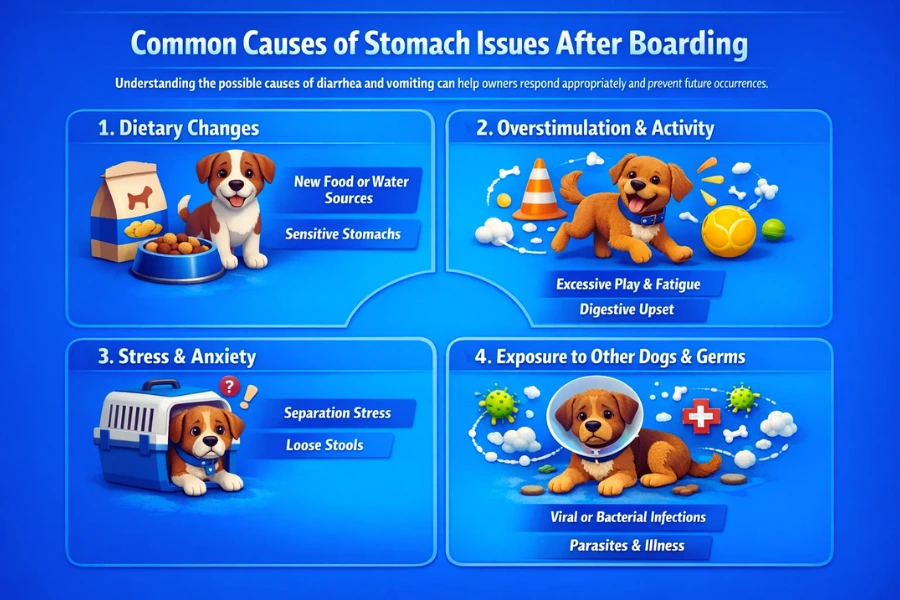
Understanding the possible causes of diarrhea and vomiting can help owners respond appropriately and prevent future occurrences.
1. Dietary Changes
Even minor dietary shifts, such as switching dog food, introducing new treats, or drinking from new water sources, can cause stomach upset in dogs when they are boarded. Dogs with sensitive digestive systems are more likely to experience vomiting or diarrhea after a sudden change in their diet.
2. Overstimulation and Activity
Boarding dogs get more playtime and attention than they do at home. The additional activity, along with new experiences and excitement, might make the dog tired after boarding and upset its digestion. After boarding, dogs may appear fatigued, burnt out, or even lethargic.
3. Stress and Anxiety
Dogs can develop separation diarrhea when separated from their owners and exposed to a foreign environment. Other dogs can also experience mild bowel irritation, which can cause loose stools, mucus, or temporary blood in the stool. These symptoms typically pass temporarily and improve once the dog returns to a familiar setting.
4. Exposure to Other Dogs and Germs
Boarding houses often house a large number of dogs in proximity. Although the facilities are reputable and well-maintained, in some cases, dogs can acquire mild infections or parasites from other dogs, which can result in vomiting or diarrhea. This is why owners should watch for symptoms after returning home.
Symptoms to Watch When Your Dog Returns From Boarding
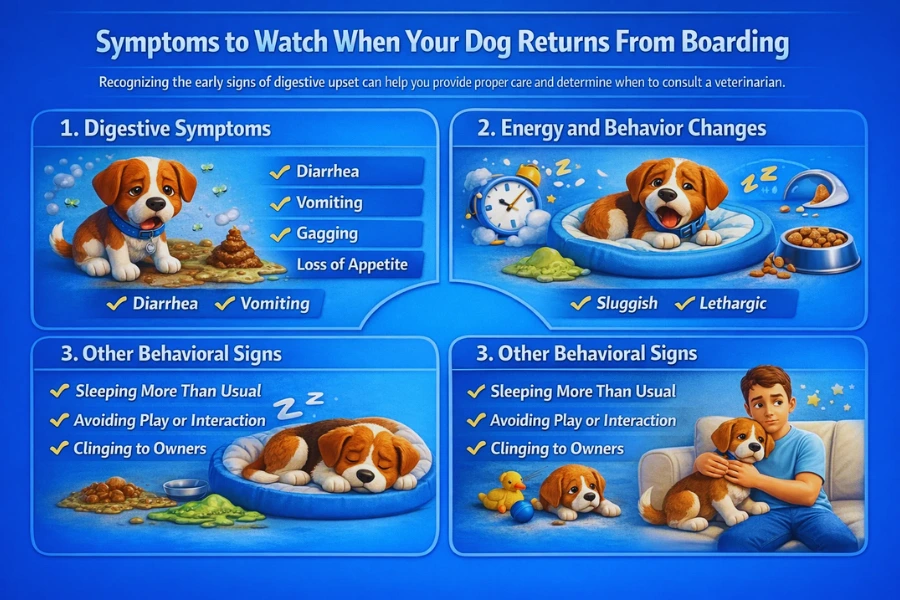
Recognizing the early signs of digestive upset can help you provide proper care and determine when to consult a veterinarian.
1. Digestive Symptoms
One of the most common signs after boarding is an upset stomach. Look for diarrhea, loose stool, watery stools, vomiting, or gagging. In some dogs, these symptoms occur together with loss of appetite, meaning your dog may not eat and have diarrhea at the same time.
- Diarrhea may be loose, watery, or contain mucus. Short-term diarrhea is often caused by boarding stress, dietary changes, or mild infections.
- Vomiting may occur once or repeatedly. Sometimes vomiting is caused by excitement after returning home or eating too quickly.
2. Energy and Behavior Changes
Along with digestive symptoms, many dogs may show changes in energy and behavior after boarding. Common signs include:
- Dog tired after boarding: Your dog may appear sluggish or uninterested in everyday activities.
- Dog lethargic after boarding: Some dogs move slowly, sleep more than usual, or seem unwilling to play.
- Dog exhausted after boarding: High levels of activity during boarding, combined with stress, can leave a dog physically and mentally drained.
Temporary fatigue is normal. The majority of dogs resume their usual stamina in one or two days and relax into the old ways. If your dog still seems unusually tired or weak, it might be dehydrated, chronically stressed, or have a medical issue that needs to be investigated by a veterinarian.
3. Other Behavioral Signs
In addition to digestive and energy changes, dogs may show subtle behavioral differences that reflect stress or recovery needs:
- Sleeping more than usual: Extra rest helps dogs recover from the stimulation of boarding.
- Avoiding play or interaction: Dogs may temporarily withdraw from social interaction as their bodies recover.
- Clinging to owners: Dogs may seek comfort from familiar people after a stressful experience.
Such actions do not last long and improve over several days as your dog settles into the house. The sustained behavior changes to continue with hiding, aggressiveness, or anorexia should be discussed with a veterinarian.
What to Do If Your Dog Has Diarrhea or Vomiting After Boarding

Signs of vomiting or diarrhea in your dog can be stressful for both you and your pet when your dog has been taken to a boarding facility. The majority of them are short-lived and triggered by stress in the boarding environment, dietary changes, or excitement. Yet, it is necessary to properly care for your dog at home to ensure its safe recovery. Here’s what to give a dog vomiting and diarrhea:
1. Create a Calm and Comfortable Space
Stress can worsen digestive issues. After a boarding stay, your dog may feel overwhelmed by the sights, smells, and sounds of home. Provide a quiet, cozy area where your dog can rest undisturbed. Limiting unnecessary movement and interaction allows the digestive system to settle and prevents further dog stomach upset after boarding.
2. Encourage Hydration
Dehydration is readily induced by vomiting and diarrhea. Give your dog small sips of fresh water more often rather than letting it gulp large amounts at once, which may lead to more vomiting. For dogs who are not so fond of water, you should provide ice cubes or a small amount of low-sodium broth to encourage them to drink more. It is particularly essential to ensure your dog is hydrated when it exhibits lethargy or exhaustion after boarding.
3. Rest the Stomach
If your dog is vomiting, it’s often best to withhold food for a short period, usually a few hours, to allow the stomach to settle. Once vomiting has stopped, gradually reintroduce a bland diet, such as plain boiled chicken and rice. This is a safe and effective way to manage dog vomiting and diarrhea without overloading the digestive system.
4. Monitor Energy and Behavior
Rather than returning to regular meals immediately, provide small portions of different meals several times a day. Until your dog is free of their illness, avoid treats, fatty foods, or anything rich or spicy. In dogs with no appetite and diarrhea, this progressive feeding helps restore appetite and soothes the stomach.
Why Your Dog Is Lethargic or Not Eating After Boarding
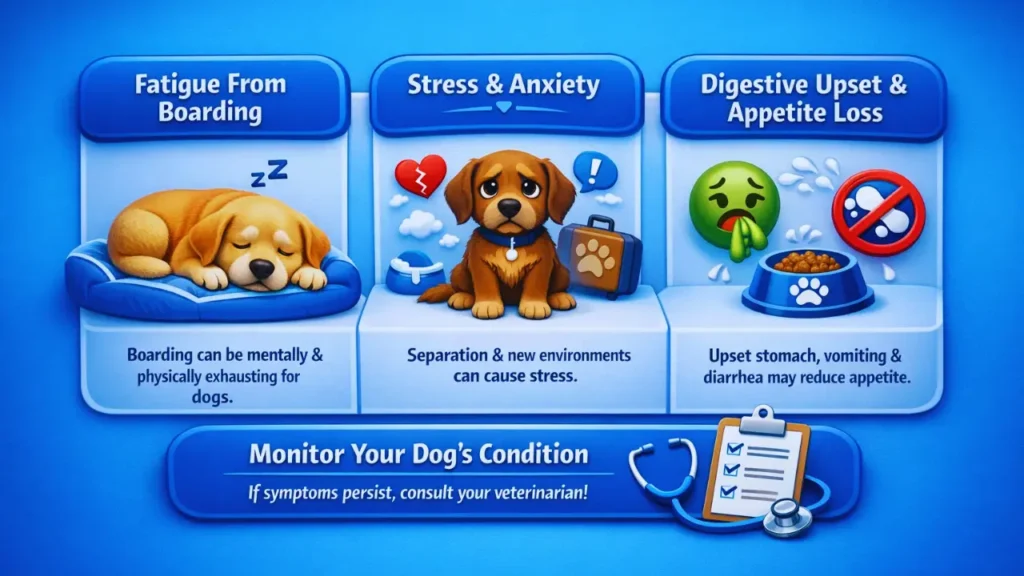
After being boarded, it is not unusual to see dogs appear tired, withdrawn, or uninterested in food. These changes can be a cause for concern to owners, but in most cases, they are a temporary response to stress, excitement, or minor stomach upset.
1. Fatigue From Boarding
Boarding can be mentally and physically tiring to dogs. Even if your dog was happy and playful at the facility, the combination of new surroundings, social interactions with other dogs, and increased activity can leave your dog feeling drained. Also, temporary tiredness is usually normal and eases as your dog is back on track with their routine at home with their family and other dog companions.
2. Stress and Anxiety
Stress is another underlying major factor that can influence both energy levels and appetite. Boarding stress in dogs may cause physical reactions such as vomiting and diarrhea, and cause dogs to refuse food for a period of time. Even after returning home, some dogs may need time to emotionally recover from the separation and stimulation of the boarding environment.
3. Digestive Upset and Appetite Loss
Unfed dogs with diarrhea may avoid eating due to stomach distress. Vomiting, diarrhea, or moderate nausea might temporarily reduce appetite. It is essential to monitor energy and appetite. If your dog won’t eat for more than a day, or if your dog is otherwise exhausted, ask your veterinarian to rule out underlying medical conditions.
Safe Foods and Home Remedies for Dogs With Diarrhea & Vomiting
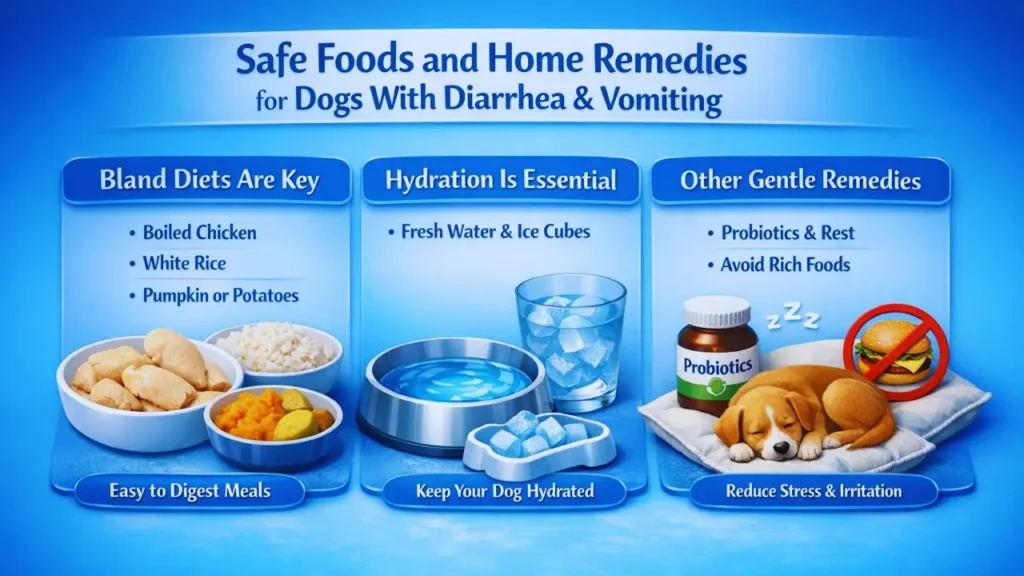
When your dog experiences vomiting or diarrhea after boarding, providing gentle care at home is the first step. Choosing the right foods and home remedies can help the stomach recover and prevent further digestive upset. Here’s what to give a dog vomiting and diarrhea
1. Bland Diets Are Key
After vomiting or diarrhea, give dogs bland, easy-to-digest meals. It settles the stomach and delivers necessary nutrients. Safe choices:
- Boiled chicken (skinless and unseasoned)
- Plain white rice
- Boiled potatoes or pumpkin (in small amounts)
These foods should be eaten often rather than all at once to reduce the risk of vomiting. When symptoms improve, slowly introduce regular meals over 2-3 days.
2. Hydration Is Essential
Dehydration may occur rapidly due to diarrhea and vomiting. You should make your dog drink small amounts of water throughout the day. Some dogs also like ice cubes or low-sodium broth to stay hydrated if they do not like drinking.
3. Other Gentle Remedies
- Probiotics: Help restore healthy gut bacteria, especially after diarrhea.
- Rest and calm environment: Reduce stress to help digestion recover.
- Avoid treats and rich foods: Fatty or heavily processed foods can irritate the stomach further.
When You Should Contact a Veterinarian
In case of vomiting or diarrhea, most of the time there is nothing to worry about, as they get better on their own in 1-2 days; however, there are some cases that require taking your pet to the vet immediately.
Warning Signs That Require Professional Care
Get in touch with a vet at once if your dog has any of these:
- Vomiting or diarrhea for more than 48 hours
- Presence of blood in either stool or vomit
- Not drinking water or exhibiting symptoms of dehydration
- Extreme tiredness or no energy (the dog is also tired after being boarded or is lethargic after being boarded)
- Discomfort, swelling, or strange behavior
Very young puppies, old dogs, or those with any underlying health issues should be taken to the vet sooner, even for mild symptoms. In that way, the pets will not only get the proper treatment but also the proper medications right away.
What Responsible Boarding Facilities Should Do When a Dog Shows Diarrhea or Vomiting Symptoms
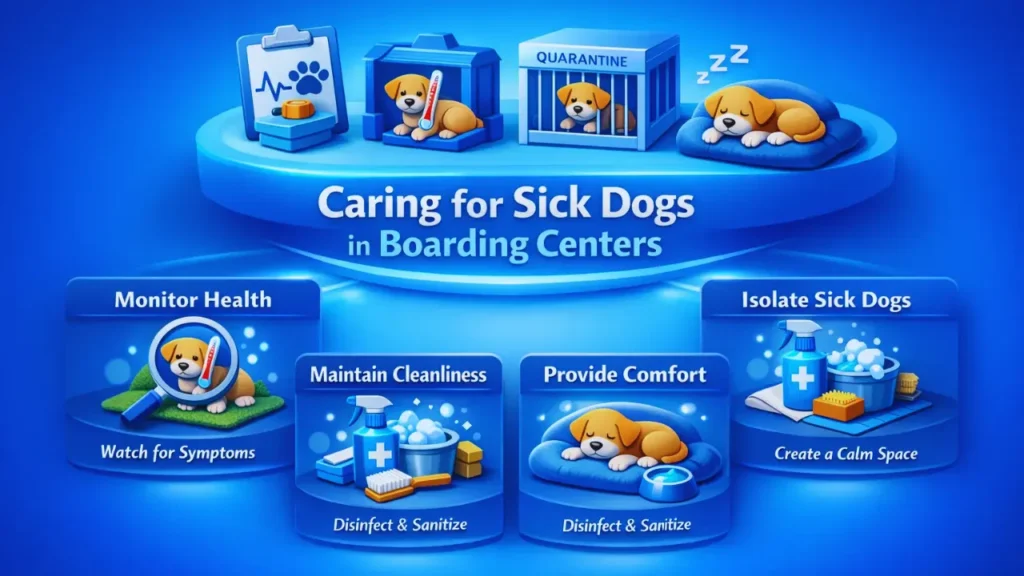
In responsible boarding centers, dogs with vomiting, diarrhea, or other digestive issues should be kept separate to prevent the spread of disease. The reverse response includes staff reaction that influences recovery. The dog must have proper surveillance, hygiene, and comfort, and be in contact with its owner to recover safely and quickly.
1. Closely Monitor Dogs for Early Signs
Employees are to note any dogs that have vomited, had diarrhea, or shown changes in appetite or energy. Monitoring these factors will help identify symptom aggravation in time and inform decisions about treatment or medical interventions.
2. Separate Dogs With Digestive Issues
Dogs with symptoms of dog stomach upset upon returning to the boarding should be isolated in a solitary place. Isolation is also used to avoid the spread of infections and provide an environment where one can recover.
3. Maintain Strict Hygiene and Cleanliness
Play areas, bedding, and bowls should be disinfected and washed frequently. Good hygiene helps limit the transmission of kennel cough to other dogs.
4. Give Comfort and Peaceful Nursing
You can help the recovery process by offering little water, low-stimulation zones, and soft care without imposing food or movement. The measures can be used to minimize stress and aid quicker recovery from boarding stress in dogs.
How to Prevent Diarrhea and Vomiting After Future Boarding Stays
It is always better to prevent post-boarding stomach distress than to treat it. The owners can avoid vomiting, diarrhea, and fatigue by training their dog, maintaining routines, and choosing a well-controlled facility. Even small stress can lead to stomach upsets; thus, pre- and post-boarding checks are essential.
1. Keep Food and Routine Consistent
Dog digestive systems are vulnerable to rapid alterations. Maintain your dog’s usual diet, feeding times, and walking or playing routines. Avoid changing the dog’s food or treats before or during boarding, as even slight changes may cause vomiting and diarrhea.
2. Reduce Stress Before Boarding
Familiarize your dog with the facility, consider short trial stays, and maintain a calm home routine. Reducing stress before boarding can prevent stress diarrhea in dogs.
3. Monitor Your Dog After Returning Home
Despite precautions, mild vomiting or diarrhea may occur. Notice your dog’s tiredness post-boarding, a slow dog post-boarding, and if your dog is not eating and has diarrhea. Attend to them with ease: water and a relaxing environment.
FAQs about Dog Diarrhea & Vomiting
1. What causes diarrhea in dogs after boarding?
Stress from a new environment, a change in diet, excitement, overstimulation, and mild infections/parasites can also cause diarrhea. Even short-term stress can disrupt the digestive system, resulting in loose stools.
2. Is stress diarrhea normal?
Yes, stress diarrhea is a common disorder in dogs, particularly when they are taken to a boarding house or away. It tends to heal within a few days once the dog is returned to familiar surroundings and routine.
3. How long will diarrhea last?
Stress-induced mild diarrhea or a small change in diet takes typically 1 to 3 days. Diarrhea (persisting after 48 hours or diarrhea with vomiting, lethargy, or blood in the diarrhea) ought to be examined by a veterinarian.
4. Is vomiting after boarding dangerous?
Vomiting from time to time due to excitement, stress, or eating habits is generally temporary. Nevertheless, when vomiting is repeated and contains blood, or dehydration is observed, it is necessary to seek medical attention. It may indicate a deeper issue, and a visit to a veterinary clinic is necessary.
5. Should I change their diet?
When a dog vomits and has diarrhea, you should not abruptly change the diet as soon as you place your dog in a boarding place. Feed on small, bland foods such as boiled chicken and rice until the digestive system cleanses itself, gradually returning to a normal diet.
6. Is diarrhea normal after boarding?
Yes, Temporary diarrhea on boarding is common due to stress, excitement, or a change in diet or routine. A few days of therapy can heal most pets.
7. Why is my dog not eating after boarding?
Loss of appetite can result from stress, excitement, or digestive upset. Offering small, bland meals and letting your dog rest usually helps. Persistent refusal to eat should be checked by a veterinarian.
8. Should I change my dog’s diet?
Only gradually if needed. Avoid introducing new foods right after boarding. Stick to familiar, bland foods until your dog’s digestive system settles.
9. Can boarding cause infections?
Yes. Even well-maintained boarding facilities can expose dogs to mild infections or parasites through contact with other dogs.